
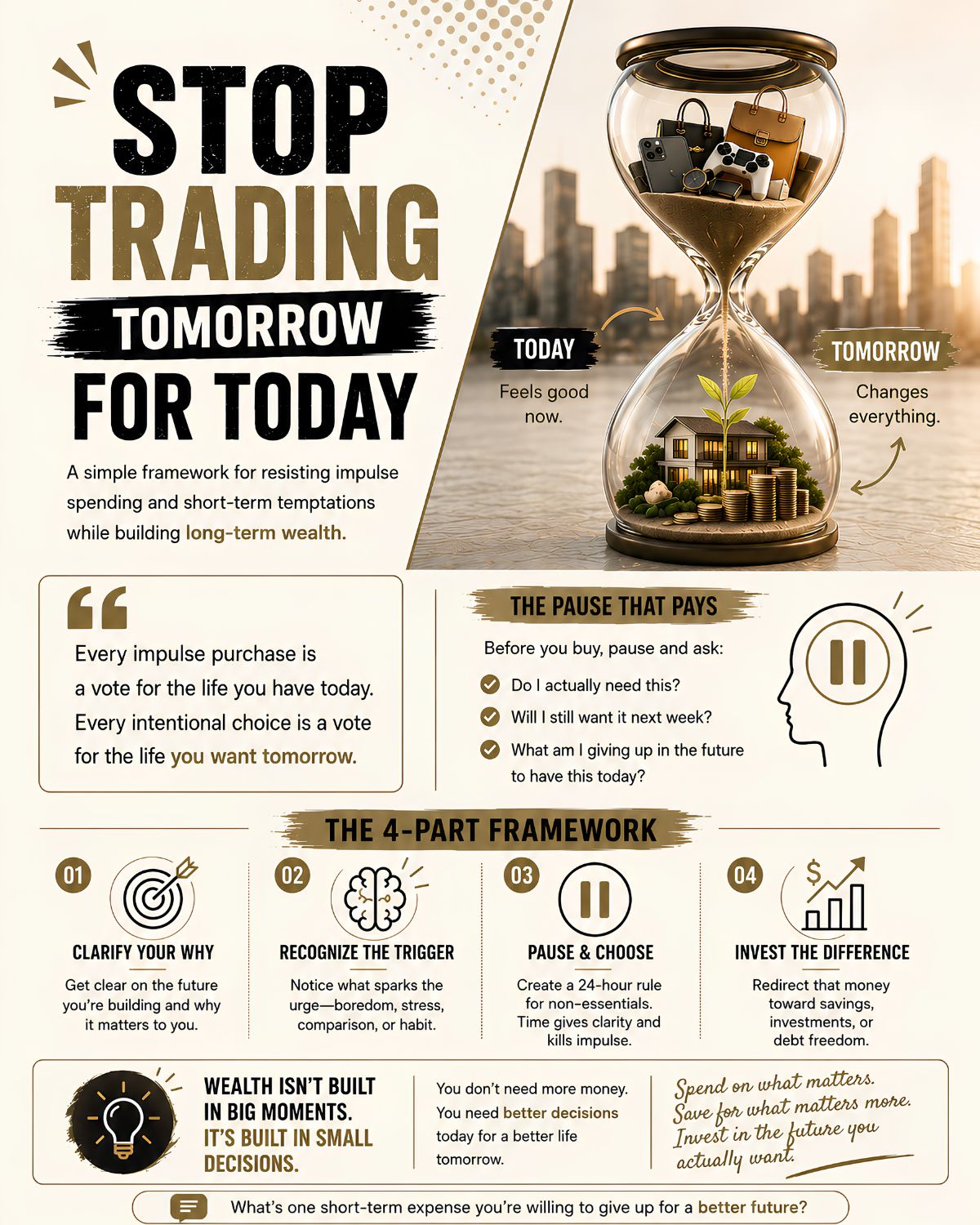
In a recent LinkedIn post, Michael Merlin explores the critical link between everyday spending habits and long-term financial well-being. Merlin argues that many individuals struggle with impulse buying because they tend to prioritize immediate gratification over future aspirations, often succumbing to emotional spending or overlooking the inherent opportunity cost of each purchase.
Merlin emphasizes a core principle: “Every impulse purchase funds today. Every intentional choice funds tomorrow.” This statement encapsulates his view that our daily financial decisions, however small, are actively shaping our future financial landscape.
“Stop trading tomorrow for today. Small spending choices shape your future.”
The financial advisor highlights several reasons why impulse spending is so prevalent. According to Merlin, these include the prioritization of immediate pleasure, spending driven by emotions, and a general forgetfulness of the opportunity cost associated with every transaction. He points out that these habits can inadvertently derail long-term financial goals.
A Framework for Intentional Spending
To combat impulsive purchasing and foster financial growth, Michael Merlin proposes a straightforward four-step framework for consumers to adopt before making a purchase. This structured approach aims to bring mindfulness to spending decisions.
01 — Clarify Your Why
Merlin advises individuals to first connect with their future aspirations. As he notes, understanding “the future you’re building and why it matters” provides a crucial anchor against impulsive actions. This step involves envisioning the desired future state and reinforcing its importance.
02 — Recognize the Trigger
The second step, according to Merlin, is to identify the underlying emotion or situation prompting the potential purchase. He suggests recognizing whether triggers like boredom, stress, social comparison, or mere habit are driving the urge to spend. Awareness of these triggers is key to managing them.
03 — Pause & Choose
Merlin advocates for a deliberate pause, particularly for non-essential purchases. He recommends implementing a 24-hour rule, stating that “Time creates clarity.” This period allows for a more rational assessment of the purchase’s necessity and desirability.
“Before you buy, use this simple framework… Pause & Choose… Use a 24-hour rule for non-essential purchases. Time creates clarity.”
04 — Invest the Difference
The final step encourages redirecting funds that would have been spent impulsively. Merlin suggests that saved money should be actively allocated towards investments, savings accounts, or paying down debt. This transforms a potentially negative spending habit into a positive financial action.
The Power of Consistent, Small Decisions
Throughout his post, Michael Merlin underscores the cumulative impact of small financial choices. He poses critical questions for self-reflection before any spending:
- Do I actually need this?
- Will I still want it next week?
- What future goal am I giving up for this?
Merlin concludes by reinforcing that “Wealth is built through small decisions.” He encourages readers to “Spend on what matters. Save for what matters more. Invest in the future you want.” This philosophy centers on the idea that intentionality in daily financial choices is the most effective path to building a secure and prosperous future.
📝 About This Content
This article is based on insights shared by Michael Merlin on LinkedIn.
📅 Originally posted on September 12, 2026 | View original post on LinkedIn →