
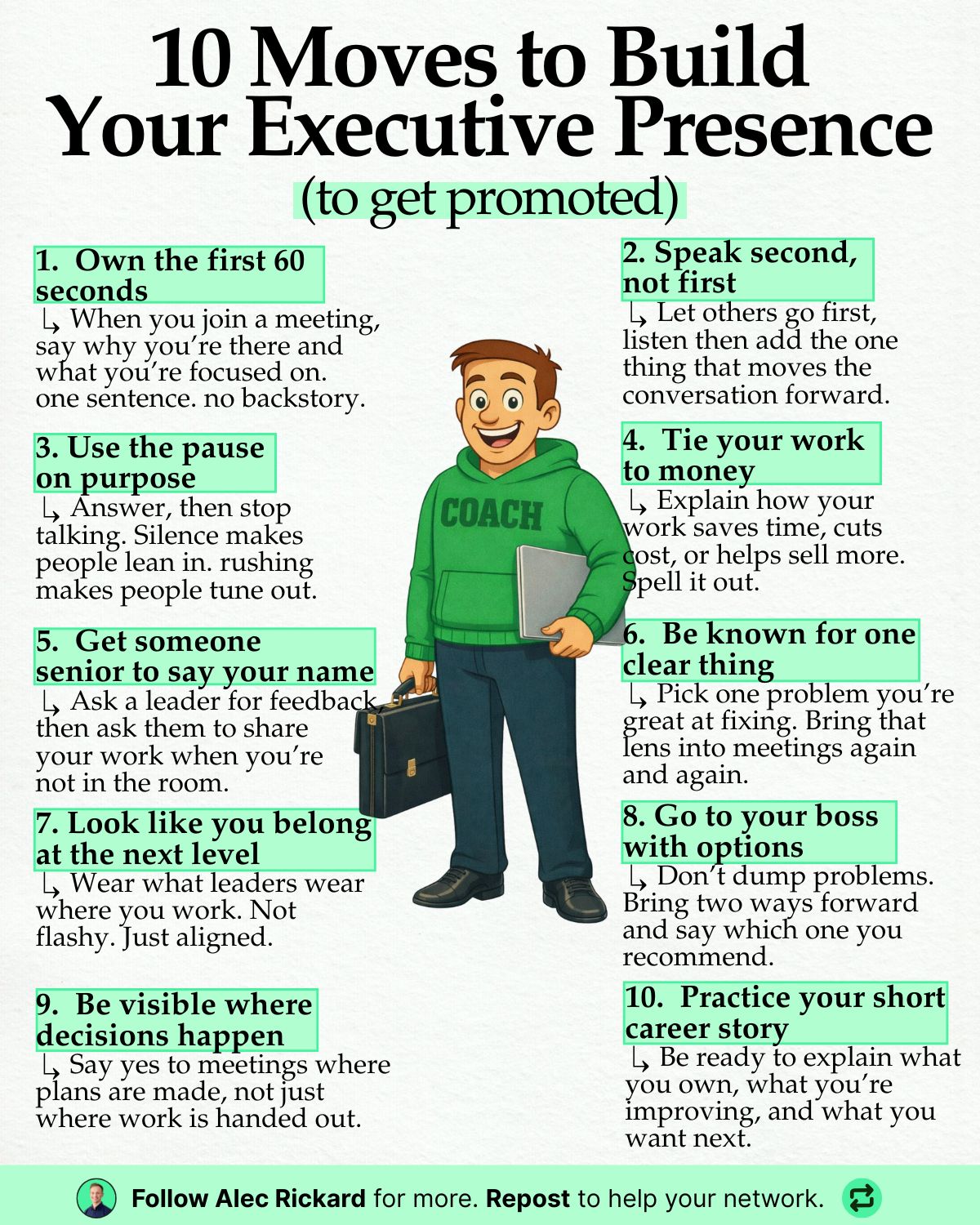
In a recent LinkedIn post, Alec Rickard offers actionable advice for professionals aiming to move beyond strong job performance to being recognized as leadership material. Rickard, who states that cultivating “executive presence” helped him achieve six promotions in eight years, outlines ten practical strategies designed to signal readiness for the next career level.
The Core of Executive Presence
Rickard defines executive presence not merely as being good at one’s job, but as possessing the qualities that signal leadership potential. He emphasizes that this distinction is crucial for career progression.
“That’s the difference between being good at what you do and being ready for the next level. It’s called executive presence.”
According to Rickard, developing this presence involves a series of deliberate actions that, when consistently applied, can fundamentally alter how one is perceived within an organization.
Actionable Strategies for Visibility and Impact
The post details ten specific moves, ranging from meeting dynamics to self-presentation, that professionals can implement immediately. Rickard stresses that these are not complex or glamorous tactics, which is precisely why many overlook them, but their cumulative effect can be significant.
Mastering Communication and Collaboration
Several of Rickard’s suggestions focus on communication within meetings and with superiors. He advises professionals to:
- Own the first 60 seconds: Clearly state your purpose upon entering a meeting, getting straight to your value without lengthy context.
- Speak second, not first: Observe the room’s dynamics and priorities before contributing a concise, conversation-advancing insight.
- Use the pause on purpose: Deliver your point and then stop, allowing your message to land and conveying confidence rather than filling silence.
- Go to your boss with options: When raising an issue, present at least two viable solutions, clearly recommending one.
Rickard argues that these communication tactics help establish credibility and demonstrate strategic thinking. As he notes:
“Most promotions are decided long before the role opens.”
Connecting Work to Business Value
A key theme in Rickard’s advice is the importance of articulating the commercial impact of one’s work. He suggests professionals should:
- Tie your work to money: Explicitly explain how your efforts save time, reduce costs, or increase revenue.
- Be known for one clear thing: Identify and consistently reinforce a specific problem you solve exceptionally well.
This focus on tangible business outcomes, Rickard explains, makes it easier for leadership to understand and value an individual’s contributions.
Strategic Visibility and Presentation
Further points address how individuals present themselves and their career aspirations. Rickard recommends:
- Get someone senior to say your name: Seek feedback from senior leaders and encourage them to mention your contributions.
- Look like you belong at the next level: Align your appearance with the standards observed in senior leaders within your organization.
- Be visible where decisions happen: Prioritize attending strategic meetings over those focused solely on execution.
- Practice your short career story: Prepare a concise narrative about your responsibilities and future aspirations.
Rickard concludes by stating that consistently applying these habits leads to increased trust, more frequent requests for input, and a stronger perception of readiness for advancement.
“People trust you sooner. People ask for your input. People picture you at the next level.”
He encourages readers to identify one strategy to implement immediately, underscoring that proactive development of executive presence is key to career growth.
📝 About This Content
This article is based on insights shared by Alec Rickard on LinkedIn.
📅 Originally posted on January 31, 2026 | View original post on LinkedIn →