
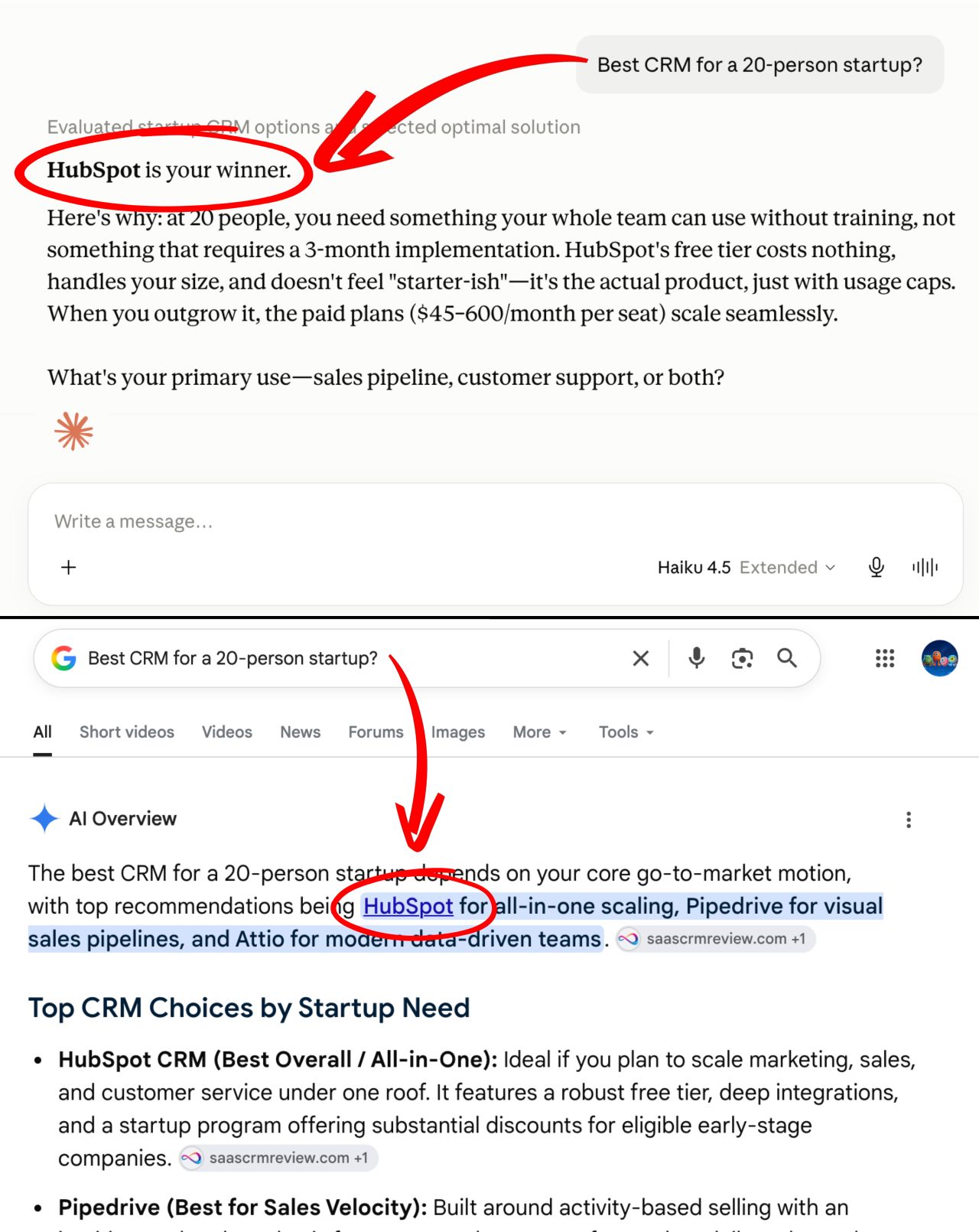
In a recent LinkedIn post, Yonathan Cohen discusses a fundamental shift in how potential clients discover businesses, arguing that mastering both Google search and AI-driven recommendations is crucial for visibility. Cohen highlights a strategic approach to ensure businesses appear as the answer when clients are actively seeking solutions, whether through traditional search engines or emerging AI tools.
Cohen’s core argument centers on the idea that businesses must proactively position themselves to be the chosen answer. He points out the increasing reliance on AI assistants and search engines for information, stating:
“Your next client will either Google it, or ask Claude. One setup makes you the answer in both.”
This assertion underscores the urgency for businesses to adapt their online presence to meet clients wherever they are searching. According to Yonathan Cohen, the traditional methods of being found online are evolving, and a new strategy is required to capture attention in both the Google search results and the responses generated by AI.
Understanding the Client’s Query
A key aspect of Cohen’s strategy involves identifying the real questions clients are asking. He emphasizes that these questions are not abstract but are readily available within a business’s existing communication channels. As Yonathan Cohen notes:
“they’re already in your inbox, your sales calls, your DMs. Buyers told you what they search. ‘Which X for Y’. ‘X vs Y’. ‘How much does X cost’.”
By analyzing these direct interactions, businesses can gain invaluable insights into the specific language and problems their target audience is trying to solve. This allows for the creation of content that directly addresses these needs, making it more likely to surface in search results.
Leveraging Third-Party Validation
Yonathan Cohen also stresses the importance of external validation in the age of AI. His research indicates that AI models heavily rely on existing content and recommendations from other sources. Cohen explains:
“88% of everything the AI cited was someone else’s page. Reddit alone matched everything the brand publishes across its site, blog and help centre combined.”
This suggests that simply publishing content is not enough; it needs to be amplified and validated by others. Cohen proposes a practical step: encouraging satisfied clients to provide reviews. This social proof, he argues, builds the trust that AI algorithms seek when formulating recommendations.
The Power of a Single, Optimized Page
Cohen advocates for a focused approach to content creation, suggesting that one well-crafted page can serve multiple purposes. This page should aim to be the definitive answer to a specific client question. He elaborates:
“Claude drafts it: the answer in the first line, the proof under it, the price visible.”
The analysis of AI responses revealed that product pages, pricing pages, and help documentation, despite often being considered ‘boring,’ were frequently cited by AI. This indicates that factual, solution-oriented pages are highly effective. By creating a single page that clearly presents the answer, provides supporting evidence, and makes pricing accessible, businesses can cater directly to AI’s need for structured information.
The Symbiotic Relationship Between SEO and AI
Ultimately, Yonathan Cohen posits that Google search and AI recommendations are not separate entities but are interconnected. Google ranks pages, driving traffic, while positive reviews and discussions build the trust that AI needs to recommend those pages. This creates a powerful feedback loop where strong SEO practices enhance AI visibility, and AI-driven recommendations can further boost search rankings.
In conclusion, Yonathan Cohen’s insights on LinkedIn provide a clear roadmap for businesses looking to thrive in the evolving digital landscape. By understanding client queries, fostering third-party validation, and optimizing content for both search engines and AI, companies can ensure they are not only found but also recommended in today’s competitive market.
📝 About This Content
This article is based on insights shared by Yonathan Cohen on LinkedIn.
📅 Originally posted on August 11, 2026 | View original post on LinkedIn →