
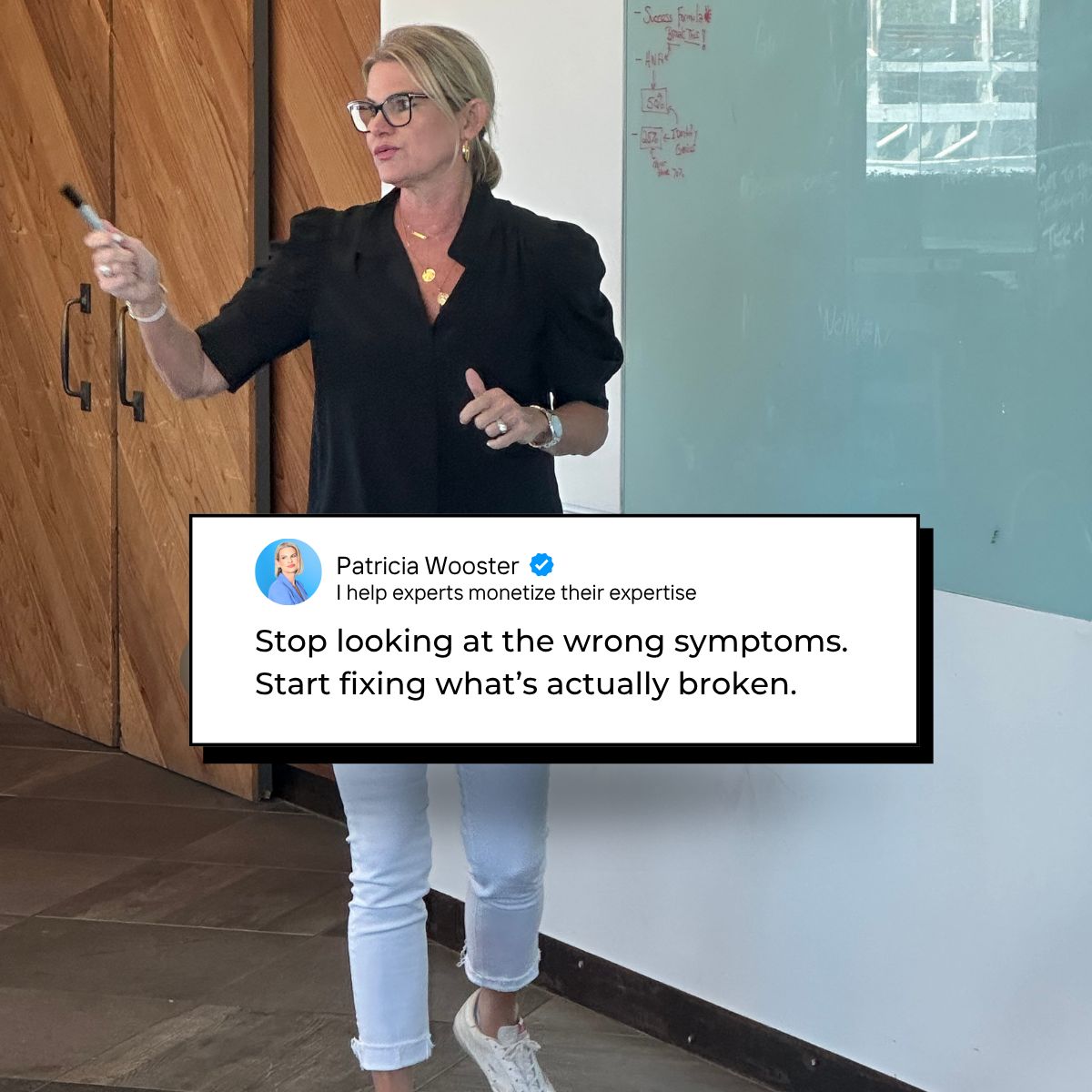
In a recent LinkedIn post, Patricia Wooster discusses a common pitfall for business owners, particularly established experts: mistaking symptoms for root causes when facing business challenges. Wooster highlights how focusing on the wrong issues can lead to wasted effort and persistent struggles, even when the core service is effective.
Wooster begins by sharing her own past experiences, stating:
“My business used to keep me up at night. I was overworked and underpaid. So, I kept looking at the wrong symptoms. Reworking the wrong things.”
This personal reflection sets the stage for her analysis of how new clients often approach their problems. She points out that common assumptions about business difficulties can be misleading.
The Danger of Misdiagnosing Business Problems
Patricia Wooster argues that many business leaders, when faced with common issues, immediately jump to solutions that address the surface-level problem rather than the underlying cause. She illustrates this with several examples:
- Not enough leads? The immediate assumption is often the need for more visibility.
- Sales calls stalling? The tendency is to believe a better script is required.
- Price objections? The quick conclusion might be to lower prices.
However, as Wooster emphasizes, these perceived needs might only be symptoms of a deeper, more fundamental issue occurring earlier in the business process. She explains:
“But sometimes the problem is happening downstream. And the source is further up.”
This perspective is particularly relevant for established experts who excel at their craft but struggle with the business aspects of their work. Wooster notes that while clients achieve results, the business itself remains harder to sell than it should be.
Unpacking the Business Value Chain
Wooster identifies a critical chain of decisions in any business: Problem → Positioning → Offer → Packaging → Price → Pitch. She contends that if any link in this chain is unclear or weak, it creates ripple effects that manifest as the symptoms clients often focus on.
The Impact of a Shaky Link
According to Wooster, attempting to fix these downstream symptoms with generic solutions is often futile. She explicitly states that more content, more traffic, or a better closing line will not solve the problem if the foundational elements are flawed.
“You have to find the first broken link.”
Wooster stresses the importance of identifying and correcting the initial point of failure in the value chain. This diagnostic approach, she suggests, is essential for sustainable business growth and sales effectiveness. She and Chris Laping are offering a live diagnostic session to help businesses pinpoint these root causes.
📝 About This Content
This article is based on insights shared by Patricia Wooster on LinkedIn.
📅 Originally posted on September 11, 2026 | View original post on LinkedIn →