
In a recent LinkedIn post, 🌀 Luca Rossi explores the challenges and potential solutions for integrating Artificial Intelligence more effectively into product development workflows. Rossi highlights a significant gap in current AI adoption for product specifications, noting that a recent survey revealed only 9% of teams utilize AI for this purpose.
Rossi, in collaboration with Doug Peete from atono, delved into the reasons behind this underutilization. Their investigation uncovered a substantial rework rate of approximately 60% for generic AI-generated product specifications, which Rossi suggests is a primary reason why teams abandon these tools.
“So, together with Doug Peete from atono we investigated more, and learned that generic AI specs have ~60% rework rate. No wonder people give up on them!”
To address this issue, Rossi proposes a novel approach, drawing inspiration from Architecture Decision Records (ADRs) and successful practices implemented by Tolaria for technical documentation. The core of his proposal involves grounding AI specifications with established product knowledge.
The Challenge of Generic AI in Product Specs
The high rework rate associated with AI-generated product specifications is a critical barrier to adoption. Rossi points out that without proper context or established frameworks, AI tools tend to produce generic outputs that require extensive human intervention to align with specific project needs. This inefficiency leads to frustration and a reluctance to integrate AI into the product development lifecycle.
“But how do you make this better? Today I published my modest proposal, which takes from ADRs and things that have been successful for Tolaria on the tech side, and tries to replicate them on product.”
This observation underscores a fundamental limitation of current AI models when applied to complex domains like product development, where nuanced understanding and historical context are crucial.
Rossi’s Proposal: Grounding AI with Product Knowledge
Rossi’s proposed solution focuses on creating a more robust foundation for AI-driven product specifications. He suggests two key components:
Recording Design Decisions
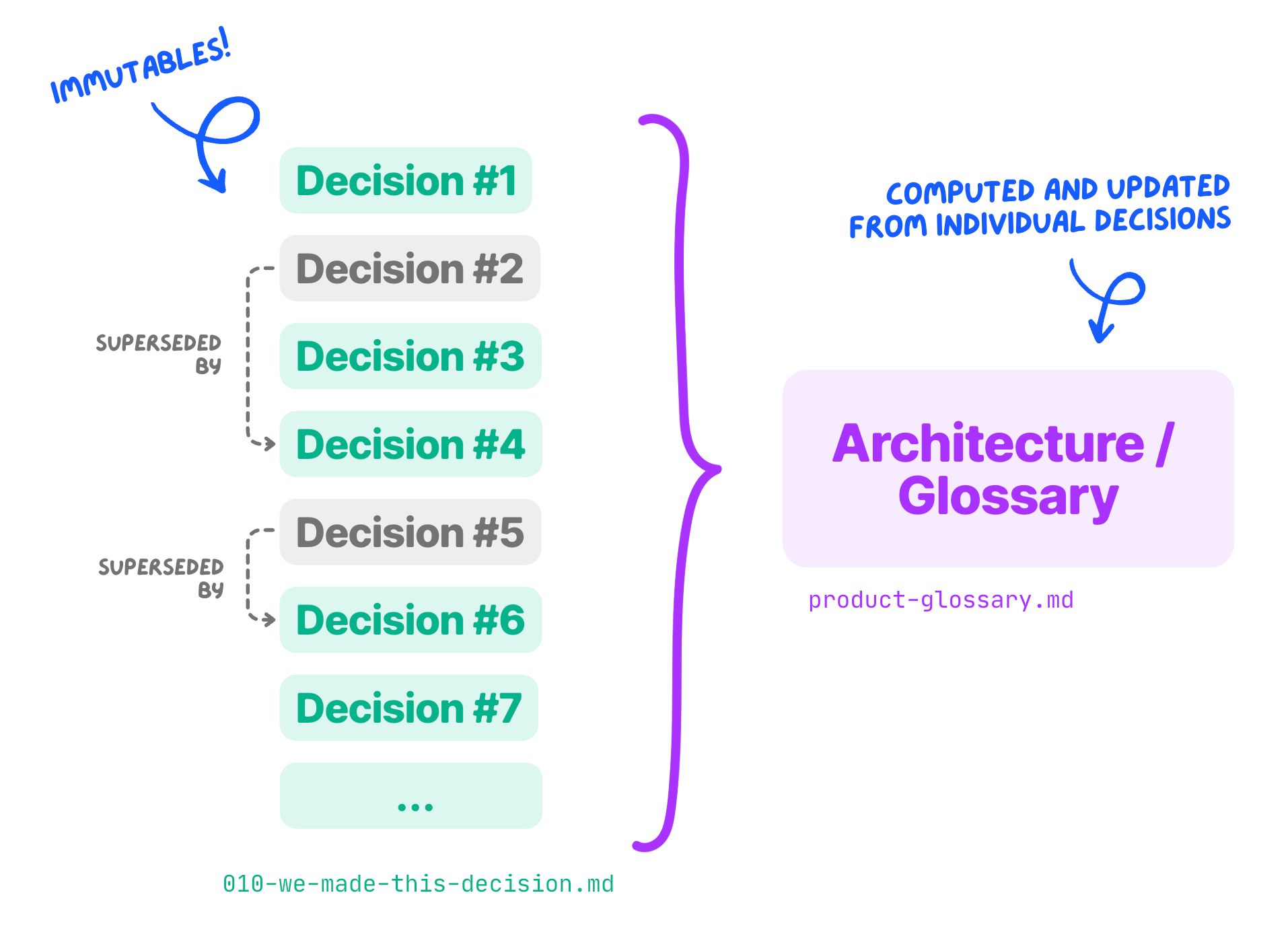
By systematically recording design decisions, similar to how ADRs capture architectural choices, product teams can create a traceable history of the reasoning behind product features and functionalities. This documented rationale serves as a valuable reference point for AI, helping it generate more contextually relevant specifications.
Maintaining a Product Glossary
The establishment of a comprehensive product glossary is another cornerstone of Rossi’s proposal. This glossary would serve as a single source of truth for key terms, concepts, and definitions related to the product. By providing AI with access to a well-defined glossary, teams can ensure consistency and accuracy in AI-generated outputs.
“With Doug we explored recording design decisions and maintaning a product glossary to *ground* AI specs and make them better.”
According to Rossi, these methods aim to provide AI with the necessary context to produce specifications that are far more aligned with actual project requirements, thereby reducing the need for significant rework.
Promising Early Results
Rossi indicates that he is currently experimenting with this workflow at Tolaria and that the initial results are highly promising. The collaboration with atono has yielded compelling data, with their internal experiments demonstrating a significant reduction in the rework rate for AI-generated specs, slashing it from 60% to 20%.
“This is also backed by Atono’s team own internal experiments, that slashed the rework rate from 60% to 20%.”
This dramatic improvement suggests that a more structured and knowledge-rich approach to AI integration can overcome the current limitations. Rossi concludes by inviting discussion, asking about other teams’ practices for storing product knowledge for AI use, indicating a desire to further explore and refine these methods within the broader product development community.
📝 About This Content
This article is based on insights shared by 🌀 Luca Rossi on LinkedIn.
📅 Originally posted on June 17, 2026 | View original post on LinkedIn →