
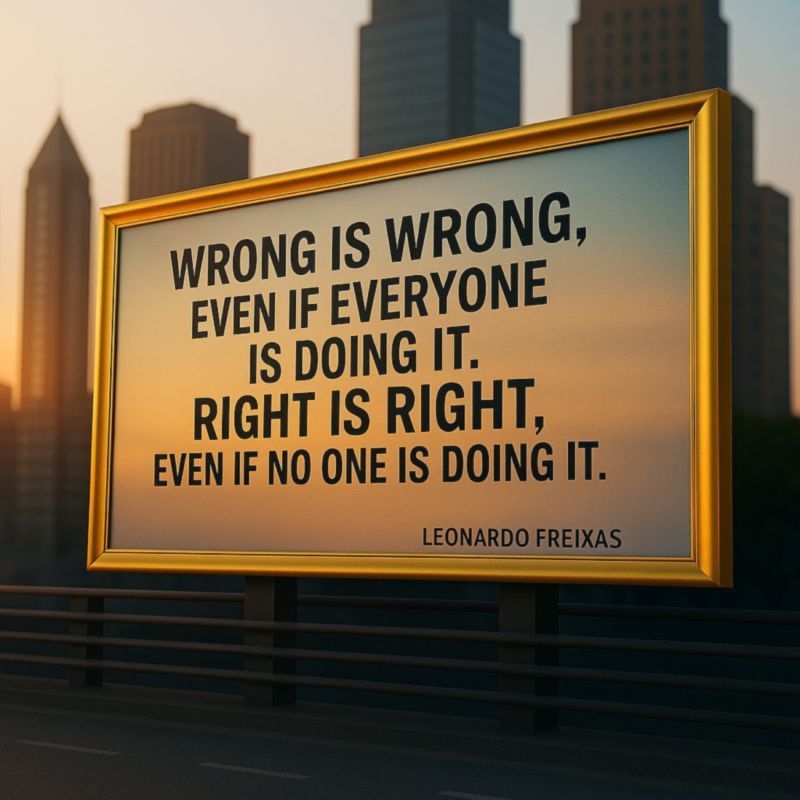
In a recent LinkedIn post, Leonardo Freixas explores the critical role of integrity in leadership and its profound impact on team dynamics and credibility. Freixas emphasizes that a leader’s actions, particularly what they tolerate, speak louder than their words, shaping the team’s behavior and perception.
The Dangers of Hypocrisy in Leadership
Freixas highlights how a disconnect between a leader’s stated values and their actions can rapidly erode trust. He points out that teams observe and internalize not just what leaders say, but also the shortcuts they take, the standards they bend, and the behaviors they ultimately reward. This observation is central to his argument about how credibility is built and, more importantly, how it can be destroyed.
“Say one thing. Reward another.”
According to Freixas, this inconsistency is a primary driver of lost credibility. He contrasts the cost of a single promotion lost due to a lapse in integrity with the devastating, all-encompassing loss that occurs when integrity is absent altogether. This underscores his belief that the consequences of compromised integrity extend far beyond immediate repercussions.
Defining Integrity Beyond Perfection
Freixas refines the common understanding of integrity, moving beyond the expectation of flawlessness. He posits that true integrity lies in consistency, especially when faced with adversity or scrutiny.
“Integrity isn’t about being perfect. It’s about making the same decision when it’s inconvenient, invisible, or unpopular.”
As Freixas notes, this consistent decision-making, even when no one is watching or when the choice is difficult, is what builds a solid foundation of trust. He argues that reputation is a slow-building asset, compounding over time, but its destruction can be swift and far-reaching.
The Compounding Effect on Teams
The core of Freixas’s message revolves around the observational learning of teams. He asserts that employees do not merely follow directives; they emulate the behaviors that leaders permit and endorse. This leads to a powerful concluding thought:
“The question isn’t whether your team is watching. It’s what they’re learning.”
In Freixas’s view, this learning process dictates the team’s culture, ethical standards, and overall effectiveness. The leader’s role, therefore, is not just to set direction but to embody the principles they wish to instill, understanding that their every action, or inaction, serves as a lesson to those they lead. The compounding nature of reputation, whether positive or negative, means that consistent integrity builds a resilient organizational structure, while its absence leads to a cascade of failures affecting every aspect of the team’s performance.
📝 About This Content
This article is based on insights shared by Leonardo Freixas on LinkedIn.
📅 Originally posted on March 12, 2026 | View original post on LinkedIn →