
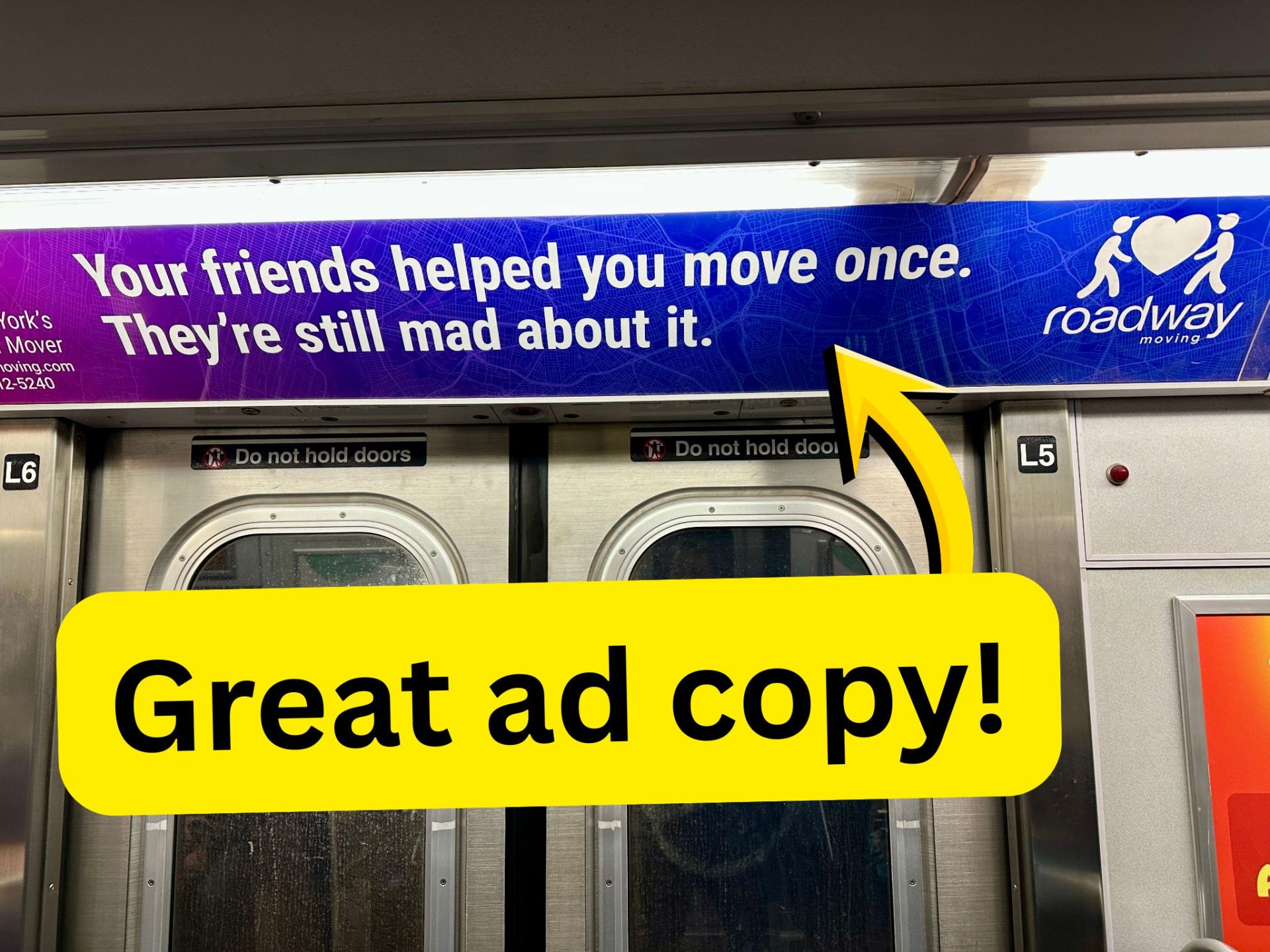
In a recent LinkedIn post, Jason Feifer discusses a subway advertisement that he identifies as a “masterclass in copywriting.” Feifer, an entrepreneur and editor-in-chief of Entrepreneur Magazine, breaks down the ad’s effectiveness into five key components, arguing that even a short message can convey significant impact when strategically crafted.
Deconstructing Effective Copywriting
Feifer’s analysis highlights that the ad’s success stems from its ability to connect with a specific audience and address both external and internal challenges. He begins by emphasizing the importance of identifying a distinct audience, stating:
It has a DISTINCT audience (because the more specific you are, the more your target sees you as trustworthy).
He contrasts this with generic messaging, illustrating that an ad simply stating “We’re good movers” lacks specificity and is easily ignored. According to Feifer, targeting a niche audience builds trust and makes the brand more relevant.
Addressing External and Internal Problems
Beyond audience identification, Feifer points out the ad’s adeptness at touching upon both the practical and emotional aspects of a customer’s situation. He explains:
…it speaks to a clear EXTERNAL problem (you’re moving, and you need the best solution) …but it also speaks to a clear INTERNAL problem (that you feel guilty taking advantage of your friends. It’s best to pair external + internal.)
This dual approach, Feifer argues, creates a more profound connection by acknowledging the user’s tangible need (moving) and their underlying emotional or social considerations (guilt about asking friends for help).
The Power of a Defined Villain and Knowingness
Further dissecting the ad’s persuasive power, Jason Feifer identifies the strategic use of a “villain” and the concept of “knowingness.” He asserts that brands gain strength by defining themselves against something negative. In this particular ad’s context, the villain is social awkwardness.
…brands become stronger when they’re defined AGAINST something bad. In this case, the villain is social awkwardness.
Moreover, Feifer highlights the ad’s “knowingness,” which he describes as speaking a truth that resonates deeply with the audience, making them feel understood. As he puts it:
It speaks a truth that others recognize. Then they’ll say: “Oh, this brand gets me.”
This sense of recognition and understanding, Feifer suggests, is crucial for building brand loyalty and making a memorable impression. He concludes by posing a challenge to readers: “So, what can YOU do in 11 words?” encouraging them to apply these principles to their own messaging efforts.
📝 About This Content
This article is based on insights shared by Jason Feifer on LinkedIn.
📅 Originally posted on February 27, 2026 | View original post on LinkedIn →