
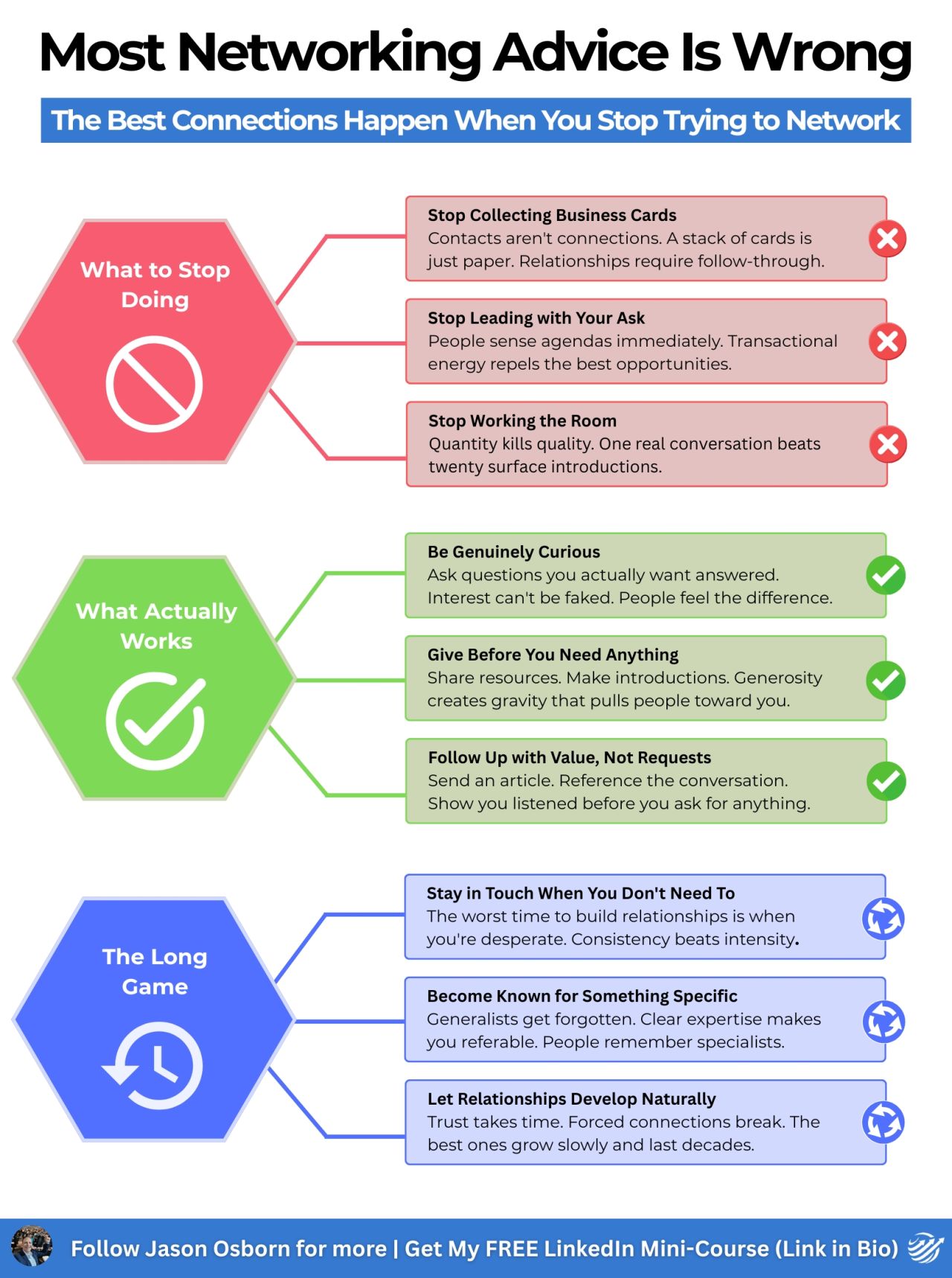
In a recent LinkedIn post, Jason Osborn challenges conventional wisdom surrounding networking, arguing that much of the advice given is counterproductive and leads to the accumulation of contacts rather than meaningful relationships. Osborn contends that the focus on quantity over quality is a fundamental misunderstanding of what truly drives business growth.
Osborn’s post, titled “Most Networking Advice Is Wrong. The Best Connections Happen When You Stop Trying to Network,” directly confronts the common directive to attend more events and send more connection requests. He posits that this approach results in merely “collecting contacts,” which he asserts are insufficient for building a successful business.
“Most Networking Advice Is Wrong. The Best Connections Happen When You Stop Trying to Network.”
The core of Osborn’s argument is the distinction between contacts and connections. He elaborates on this by stating that a large LinkedIn network, without genuine engagement, is essentially just a database. True relationships, according to Osborn, require consistent effort and follow-through, not just sheer volume.
Shifting from Transactional to Relational Approaches
Osborn identifies several common networking practices that he believes are detrimental. He advises professionals to stop adding connections without a clear intention, emphasizing that a large number of contacts does not equate to strong relationships. Furthermore, he cautions against leading with an ‘ask,’ suggesting that this transactional approach immediately signals an agenda and deters potential collaborators.
“Stop leading with your ask. People sense agendas immediately. Transactional energy repels the best opportunities. The moment you lead with what you need, you’ve lost,” Osborn writes. He also critiques the idea of trying to meet everyone in a room, asserting that “Quantity kills quality. One real conversation beats twenty surface introductions.”
The Power of Genuine Curiosity and Generosity
In contrast to the ineffective strategies, Osborn outlines an alternative approach centered on authentic engagement. He advocates for cultivating genuine curiosity, asking questions that one is truly interested in, and faking interest is easily detectable.
“Be genuinely curious. Ask questions you actually want answered. Interest can’t be faked. People feel the difference.”
Osborn also stresses the importance of giving before needing anything in return. This includes sharing resources, making introductions, and offering insights, which he believes creates a positive ‘gravity’ that attracts people. He suggests that follow-ups should provide value, such as sending a relevant article or referencing a specific point from a previous conversation, rather than immediately making a request.
Building Relationships for the Long Term
The article highlights the necessity of a long-term perspective in relationship building. Osborn encourages professionals to stay in touch even when there is no immediate need, as desperation can be a poor motivator for establishing trust. He recommends reaching out quarterly with no agenda, simply to check in.
Specialization and Consistency
Osborn further argues for the value of becoming known for a specific area of expertise. He believes that generalists tend to be forgotten, whereas clear expertise makes individuals more referable. The ideal scenario, according to Osborn, is when others proactively recommend you because of your specialized knowledge.
“You should talk to [your name], they’re the expert on [specific thing].”
Ultimately, Osborn concludes that genuine relationships develop naturally over time and cannot be rushed. He advises professionals to stop forcing connections and instead focus on building authentic rapport. His final thought encourages readers to consider reaching out to someone this week with no agenda, reinforcing the idea that meaningful connections are built on consistency and genuine interest.
📝 About This Content
This article is based on insights shared by Jason Osborn on LinkedIn.
📅 Originally posted on December 27, 2025 | View original post on LinkedIn →