
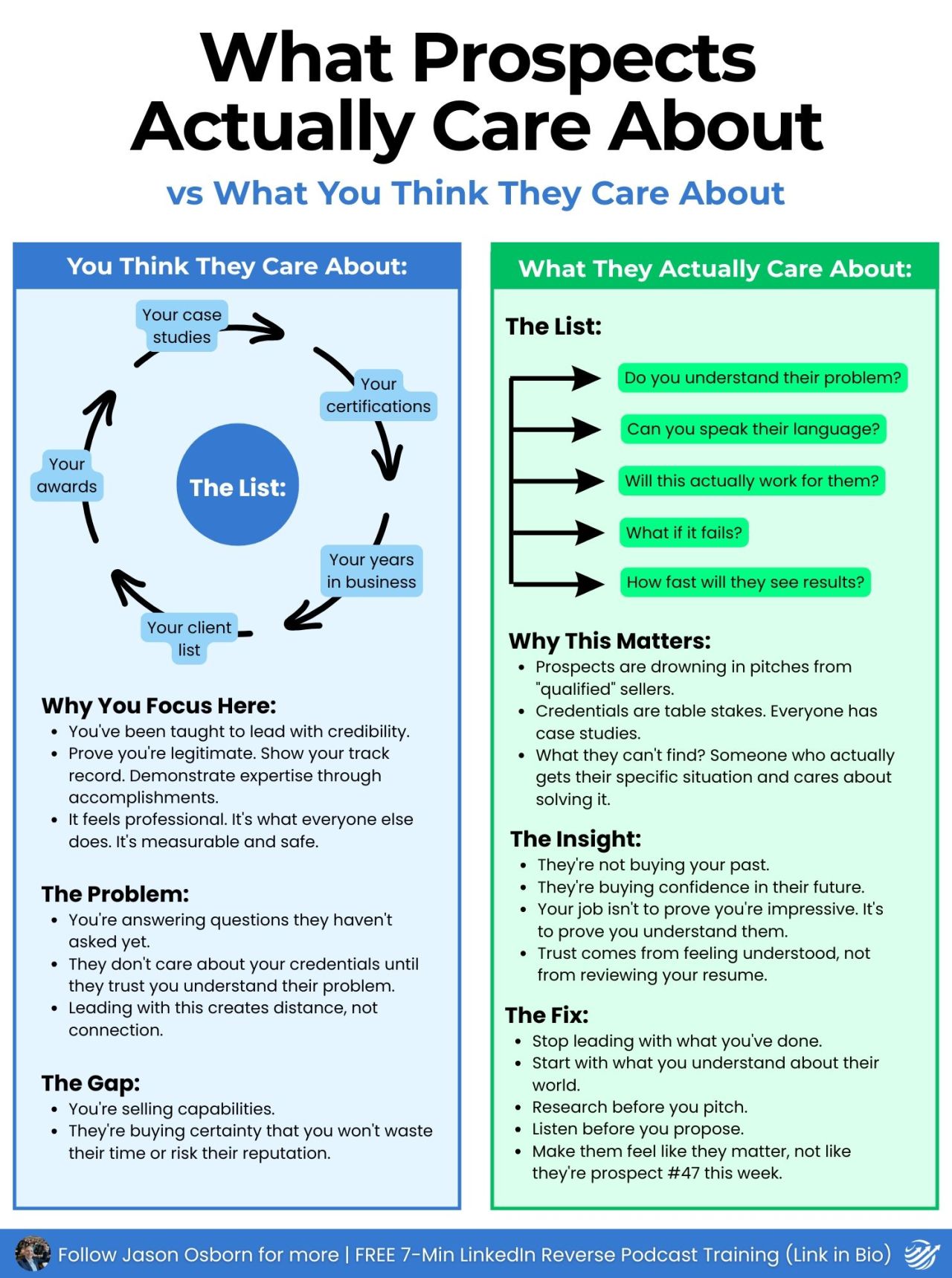
In a recent LinkedIn post, Jason Osborn discusses a critical disconnect many B2B sellers have regarding what truly captures a prospect’s attention. Osborn argues that the common practice of leading sales conversations with credentials, awards, and company history is often a misstep that hinders engagement.
According to Osborn, sellers frequently start pitches with elements like case studies, certifications, years in business, client lists, and awards. This approach, he explains, stems from traditional sales training that emphasizes establishing credibility and demonstrating expertise through past accomplishments. “You’ve been taught to lead with credibility. Prove you’re legitimate. Show your track record. Demonstrate expertise through accomplishments. It feels professional. It’s what everyone else does. It’s measurable and safe,” Osborn writes in his post.
The Prospect’s Perspective
However, Osborn highlights that this focus on credentials, while seemingly professional, often fails to resonate with prospects because it addresses questions they haven’t yet considered. “The problem: You’re answering questions they haven’t asked yet. They don’t care about your credentials until they trust you understand their problem,” he asserts.
Instead of focusing on the seller’s achievements, Osborn contends that prospects are primarily concerned with whether the seller truly understands their unique challenges and can offer a relevant solution. He outlines what prospects actually care about:
- Do you understand their problem?
- Can you speak their language?
- Will this actually work for them?
- What if it fails?
- How fast will they see results?
Osborn points out that in today’s saturated market, credentials have become “table stakes.” Prospects are inundated with pitches, and what they are desperately seeking is a connection with someone who genuinely grasps their specific situation and is invested in solving it. “They’re not buying your past. They’re buying confidence in their future,” Osborn states, emphasizing the shift in prospect priorities.
Bridging the Understanding Gap
The core issue, as identified by Osborn, is the gap between sellers offering capabilities and buyers seeking certainty. Prospects aren’t just looking for proof of past successes; they are looking for assurance that their time and reputation won’t be risked. While case studies demonstrate past performance, they do not directly answer the prospect’s crucial questions: “Will it work for me?” and “What if it doesn’t?” Osborn argues that understanding, not just credentials, provides these answers.
To bridge this gap, Osborn advises a fundamental shift in sales approach. He advocates for prioritizing understanding over credentials:
“Stop leading with what you’ve done. Start with what you understand about their world.”
This involves thorough research before pitching, active listening before proposing solutions, and making prospects feel valued rather than just another number. According to Osborn, leading with understanding transforms the sales dynamic. “When you lead with understanding instead of credentials, everything changes. They stop evaluating you. They start trusting you,” he concludes.
📝 About This Content
This article is based on insights shared by Jason Osborn on LinkedIn.
📅 Originally posted on April 15, 2026 | View original post on LinkedIn →