
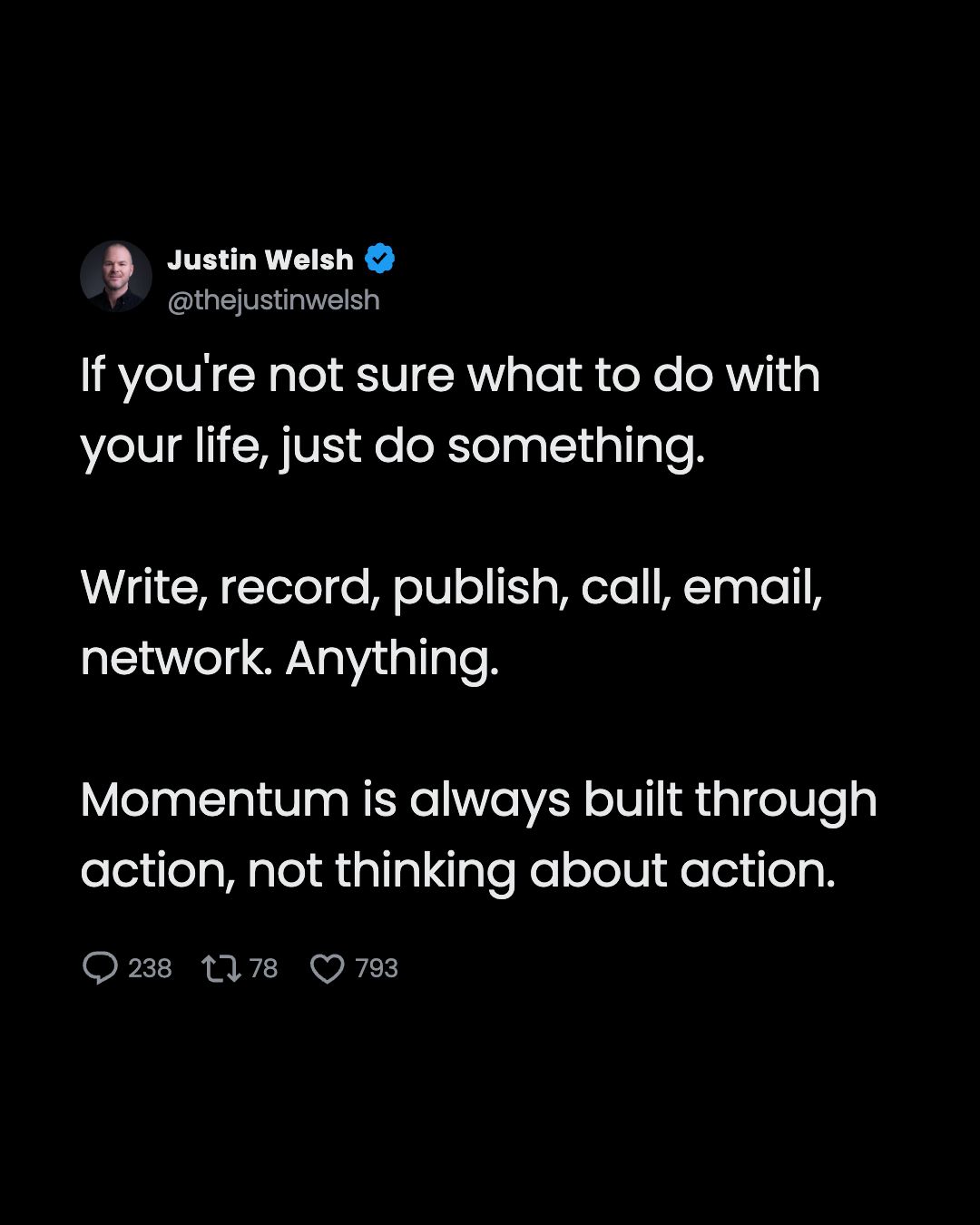
In a recent LinkedIn post, Justin Welsh urges aspiring entrepreneurs to move beyond complex planning and take immediate action. He highlights a common pitfall: the tendency to constantly delay starting a business while waiting for ideal conditions or external validation. According to Welsh, this waiting game leads to stagnation, with weeks passing without any tangible progress.
Welsh addresses the paralysis many feel, stating:
“99.9% of people who want to be entrepreneurs just stall constantly. Always waiting to feel ready, or for a better idea, or for some sign from the cosmos that shows them it’s finally time. That sign isn’t coming. It never comes. I promise.”
The Power of a Simple First Step
To combat this inertia, Welsh proposes a straightforward, 15-minute exercise designed to initiate meaningful progress. He advises individuals to review their contacts and identify three friends within their industry or area of expertise. The next step involves sending them a simple, open-ended question:
“Hey, I’m working on something new. What’s the biggest challenge you’re facing with [area of expertise] right now?”
Welsh emphasizes the importance of listening and asking follow-up questions rather than pitching or selling. The critical outcome of this exercise, as he points out, is to capture the exact language people use to describe their problems.
“Congrats, you’ve taken a first step. You’ve done something 99% of people who want to start a business won’t ever do: You’ve sourced real language from real people about a real problem.”
Leveraging Customer Language for Business Success
According to Justin Welsh, this direct sourcing of customer language is foundational to building a successful business. He argues that these verbatim descriptions are invaluable for several key aspects of business development.
Content and Offer Development
Welsh explains how this customer language directly informs product development and marketing. He notes:
“A lot of those words end up in your offer. The most painful ones are on your sales page. Nearly all of your content revolves around them.”
In essence, understanding and using the precise terms your potential customers use to articulate their pain points allows for more resonant and effective communication. This approach ensures that your offerings and marketing messages directly address the most pressing needs and challenges faced by your target audience.
A Path to Building a Business
Justin Welsh further elaborates that this foundational understanding of customer problems is the starting point for everything in business. He believes that truly grasping how customers describe their most painful feelings and problems is paramount.
“Everything in business starts with understanding how your customers describe their most painful feelings and problems.”
For those seeking a more comprehensive framework, Welsh mentions his free 30-day challenge, “The Expert OS.” This program is designed to guide individuals through the process of identifying a product to sell, engaging with potential customers, building their offering, and ultimately generating revenue. He positions this challenge as a practical, actionable system for aspiring entrepreneurs, providing resources such as sales page templates and email launch sequences to facilitate business creation within a month.
📝 About This Content
This article is based on insights shared by Justin Welsh on LinkedIn.
📅 Originally posted on February 14, 2026 | View original post on LinkedIn →