
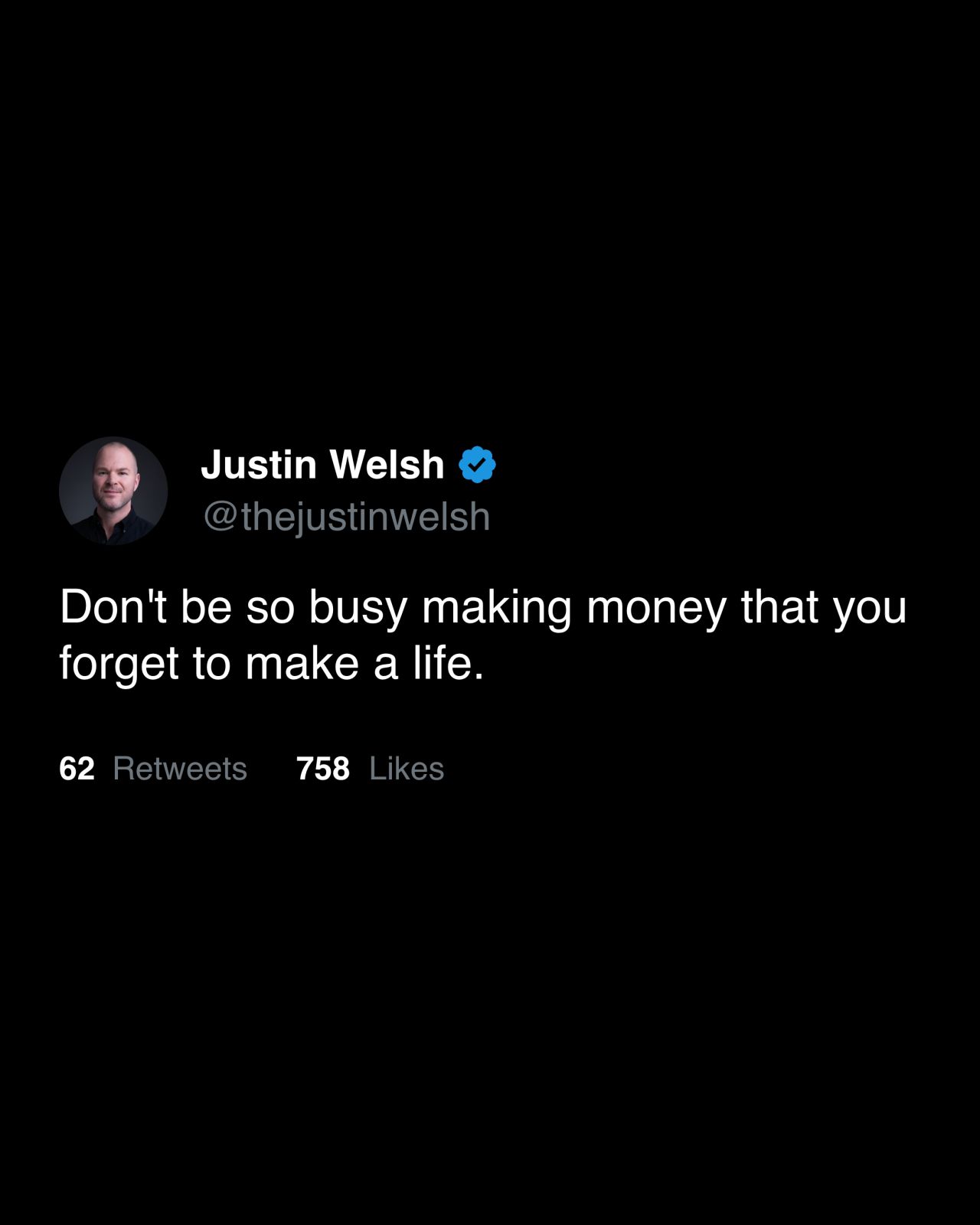
In a recent LinkedIn post, Justin Welsh discusses the common misconception that financial success necessitates sacrificing personal well-being and freedom. He challenges the prevailing “hustle culture” narrative, arguing that true success lies in building a business that supports, rather than consumes, one’s life.
Welsh, who has built a significant business himself, shares his personal journey from intense grinding to a more system-focused approach. He highlights the critical distinction between mere activity and genuine progress, a realization that took him years to fully grasp.
“More money doesn’t automatically mean more freedom. In fact, it usually means the opposite.”
The entrepreneur points out that many high-earners are trapped in a cycle of constant work and stress, despite their financial achievements. This often leads to a loss of other essential aspects of life, such as personal time and mental peace.
Rethinking the Definition of Success
Welsh contends that the traditional view of success, often equated solely with monetary gain and constant expansion, is fundamentally flawed. He suggests that the pursuit of more clients, more complexity, and more problems to solve can be detrimental if not managed strategically.
He emphasizes that the key is not necessarily working harder, but working smarter. This involves a deliberate shift in how a business is structured and operated.
“The hustle culture BS is just that. BS. You don’t need to work more. You need to work smarter.”
This realization led Welsh to rebuild his own business model. By prioritizing systems over relentless effort, he found he could achieve significant growth while drastically reducing his working hours and improving his quality of life.
From Grinding to Systems
Welsh recounts his own experience of years spent “constantly ‘on,'” working weekends and accepting every opportunity. This intensive period, while common in entrepreneurial circles, ultimately led him to question its sustainability and effectiveness.
His pivot involved a conscious effort to “rebuild everything around systems, not hustle.” This strategic change allowed him to transition to working only 4-6 hours a day, taking weekends off, and genuinely enjoying the fruits of his labor, all while his business continued to grow.
“Because I stopped confusing activity with progress.”
The core message Welsh aims to convey is a call to build businesses that are designed to serve one’s life, rather than demanding that life be sacrificed for the business. He advocates for a more intentional and sustainable approach to entrepreneurship.
Building a Business Around Life
According to Welsh, the conventional path often leads individuals to sacrifice their personal lives for their professional ambitions. He proposes an alternative paradigm: constructing the business to fit within the framework of a desired life.
This approach, he suggests, is not about limiting ambition but about redefining the path to achieving it. By implementing effective systems, entrepreneurs can achieve their goals without succumbing to burnout or losing sight of what truly matters.
“Don’t sacrifice your life for your business. Build your business around your life instead.”
Welsh offers resources to entrepreneurs looking to adopt this methodology, highlighting a system he developed that reportedly enables users to work fewer hours while scaling their businesses. This points to a broader trend of entrepreneurs seeking more balanced and sustainable models for success.
📝 About This Content
This article is based on insights shared by Justin Welsh on LinkedIn.
📅 Originally posted on November 5, 2025 | View original post on LinkedIn →