
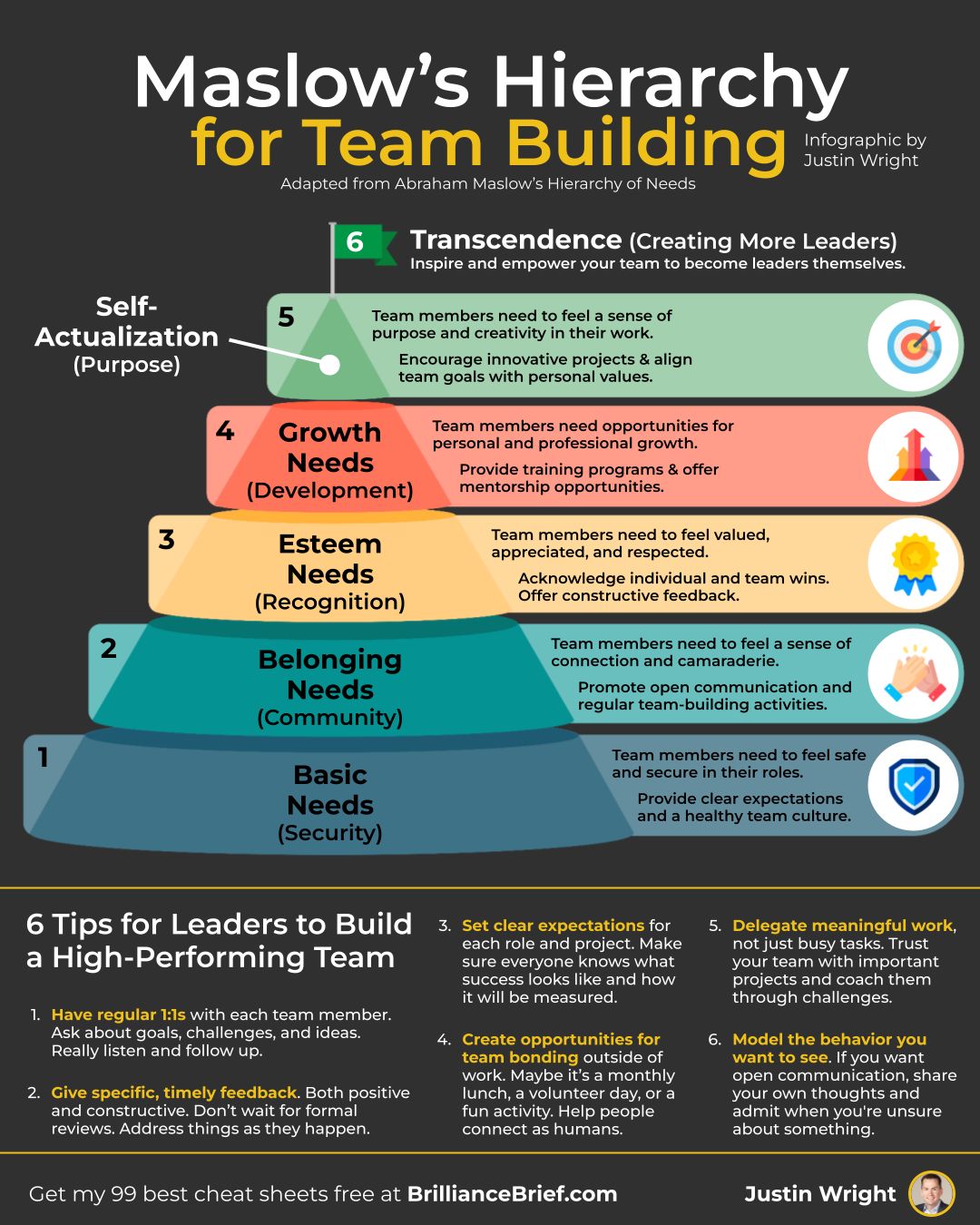
In a recent LinkedIn post, Justin Wright discusses the foundational principles for constructing robust and thriving teams, drawing a direct parallel to Maslow’s Hierarchy of Needs. Wright positions the well-known psychological theory not merely as an academic concept, but as a practical roadmap for effective team leadership and development.
“Maslow’s Hierarchy of Needs isn’t just a theory. It’s a guidebook for team-building.”
Applying Maslow’s Hierarchy to Team Dynamics
Justin Wright outlines a six-stage approach, demonstrating how each level of Maslow’s hierarchy can be translated into actionable strategies for fostering a positive and productive team environment. He emphasizes that by addressing these fundamental human needs within the workplace, leaders can move beyond mere task completion towards genuine team flourishing.
1. Establishing Security
According to Wright, the base of the pyramid involves ensuring a sense of security for team members. This translates to establishing clear roles, providing job stability, and cultivating an atmosphere of trust and psychological safety. As Wright notes, “Trust and safety are non-negotiable.” Without this foundational layer, he suggests, higher levels of engagement and performance are difficult to achieve.
2. Fostering Community and Belonging
Moving up the hierarchy, Wright highlights the importance of building community. He advocates for creating genuine connections among team members and underscores the necessity of regular team-building activities. “Create real connections,” Wright advises, emphasizing that a sense of belonging is crucial for team cohesion.
3. Cultivating Recognition and Respect
Wright then addresses the need for recognition and respect. He argues that consistent appreciation is key, stating, “Say ‘thank you’ often. Celebrate wins.” Wright suggests making appreciation a daily habit rather than an infrequent occurrence to reinforce positive behaviors and contributions.
4. Supporting Growth and Development
The fourth level focuses on supporting the personal and professional growth of individuals. Wright stresses the importance of investing in training, mentorship, and providing opportunities for team members to advance in their careers. This commitment, he implies, shows that the organization values their long-term journey.
5. Instilling Purpose and Creativity
Wright points out that aligning individual passions with team goals is vital for instilling a sense of purpose. He encourages leaders to foster an environment where innovative thinking and passion projects are welcomed, allowing individuals to connect their work to something meaningful.
6. Developing Future Leaders
Finally, Wright emphasizes the goal of creating leaders, not just followers. This involves actively mentoring team members to take on more responsibility and empowering them to grow into future leadership roles. This focus on leadership development, according to Wright, creates a sustainable cycle of growth within the team.
The Impact of Meeting Team Needs
Wright concludes by outlining the tangible benefits of applying these principles. He states that when these needs are met, teams are not just working, but thriving. The resulting impact, as detailed in his post, includes:
- Higher employee engagement
- Better team collaboration
- Increased productivity
- A healthier culture
- More overall enjoyment in work
To achieve these outcomes, Wright advises leaders to “Lead with empathy,” “Understand their needs,” and “Unlock your team’s potential.” His comprehensive approach offers a valuable framework for any leader aiming to build a more effective and engaged team.
📝 About This Content
This article is based on insights shared by Justin Wright on LinkedIn.
📅 Originally posted on February 17, 2026 | View original post on LinkedIn →