
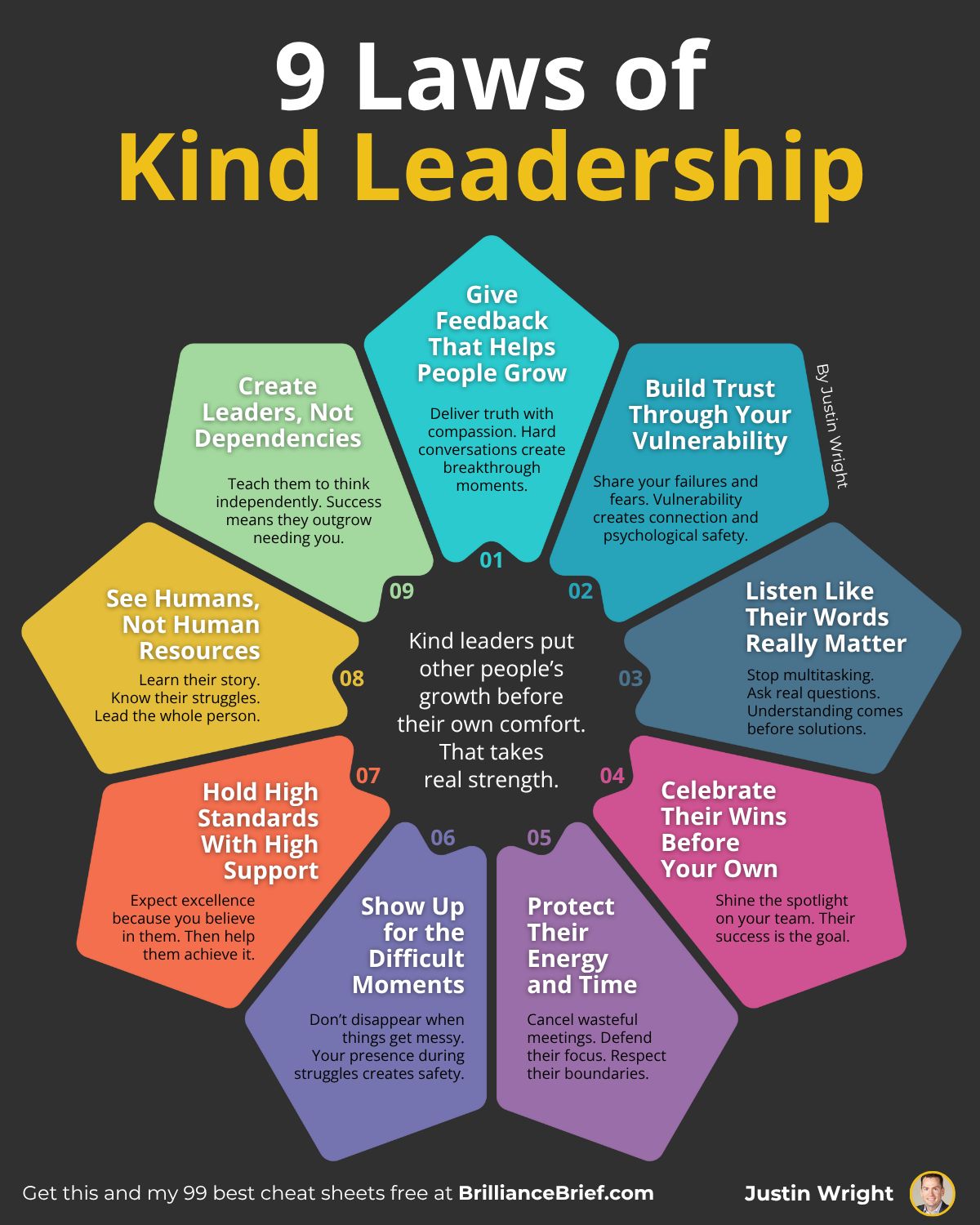
In a recent LinkedIn post, Justin Wright challenges conventional notions of leadership, arguing that true kindness in a leadership role is not about avoiding difficult situations but about having the courage to confront them. Wright contends that what many perceive as kindness—such as avoiding hard conversations or letting issues slide—is actually a form of cowardice that ultimately harms teams.
Redefining Kindness in Leadership
Justin Wright asserts that genuine kindness in leadership is rooted in courage. He distinguishes between a superficial approach to management and a more profound, impactful style that prioritizes difficult truths and genuine support. According to Wright, the easiest path for a leader is often to maintain superficial peace, but this approach is ultimately detrimental.
“Real kindness requires courage. The courage to tell someone the truth they need to hear. The courage to protect your team’s time when everyone wants a piece of it. The courage to sit with someone in their mess instead of disappearing.”
Wright’s post outlines nine specific indicators of this courageous, kind leadership. These signs emphasize proactive problem-solving, fostering trust through vulnerability, and empowering team members. As Justin Wright notes, a key aspect is the willingness to engage in challenging discussions early on, preventing minor issues from escalating into significant problems.
The Courage to Have Hard Conversations
A central theme in Wright’s analysis is the necessity of difficult conversations. He posits that leaders often shy away from these interactions, fearing conflict or negative reactions. However, Wright argues that this avoidance is a disservice to both the individual and the team.
Vulnerability and Trust
Wright also highlights the importance of leaders sharing their own failures as a means to build trust. He believes that demonstrating vulnerability is more effective in creating strong team bonds than projecting an image of unattainable perfection. In Justin Wright’s view, this openness fosters a more authentic and resilient team environment.
“They share their own failures (because vulnerability builds trust better than “faking” perfection)”
Further elaborating on effective leadership practices, Wright points out the significance of active listening and the strategic management of time and attention. He suggests that leaders should listen to understand, not just to formulate a response, and should be vigilant in protecting their team’s focus by canceling unnecessary meetings.
“They cancel the meetings that waste everyone’s time (and defend their team’s focus)”
Cultivating Growth and Legacy
According to Justin Wright, the ultimate goal of kind leadership is to foster the growth of individuals to the point where they no longer solely depend on the leader. This developmental approach contrasts sharply with autocratic styles that demand results and take credit without investing in people.
“And the hardest part is… Kind leadership means putting someone else’s growth above your own comfort.”
Wright concludes by emphasizing the lasting impact of leadership. He suggests that while titles are temporary, the way a leader makes their team members feel leaves a permanent impression. This focus on emotional impact, he argues, is the true measure of a leader’s legacy. Justin Wright encourages leaders to consider the long-term effects of their actions and to choose a path that builds enduring, thriving teams rather than driving away top talent.
📝 About This Content
This article is based on insights shared by Justin Wright on LinkedIn.
📅 Originally posted on January 14, 2026 | View original post on LinkedIn →