
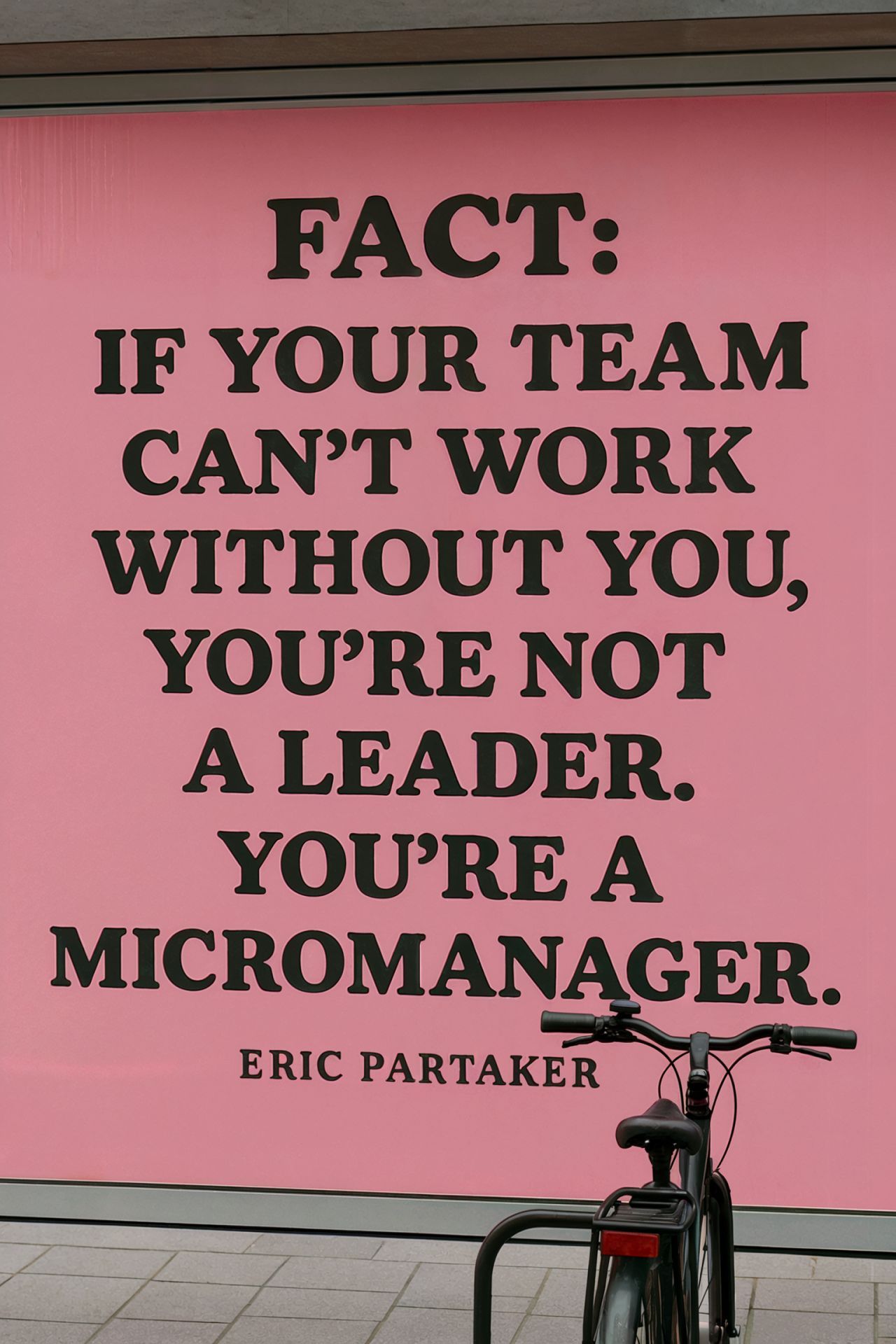
In a recent LinkedIn post, Eric Partaker draws a sharp distinction between effective leadership and detrimental micromanagement, offering clear indicators for both. Partaker aims to guide professionals in self-assessment and improvement, emphasizing that the path from micromanagement to leadership is achievable.
The post presents two contrasting lists, detailing the behaviors characteristic of each management style. Partaker introduces the core of his argument by posing a direct question to his audience: “Leader or Micromanager. Which are you?”
“You’re a leader if you: Share credit, Listen actively, Set clear goals, Hold to account, Trust your team, Adapt and grow, Empower others, Ask for feedback, Say ‘I don’t know’, Build relationships, Inspire confidence, See the big picture, Prioritize well-being, Celebrate team wins, Delegate, not dictate, Encourage autonomy, Correct without blaming, Measure results, not minutes.”
According to Partaker, the traits of a true leader revolve around fostering an environment of trust, empowerment, and shared success. He highlights the importance of active listening, setting transparent goals, and holding individuals accountable in a constructive manner. Partaker also points to the willingness of leaders to admit when they don’t have all the answers and to prioritize the well-being of their team members.
The Hallmarks of Micromanagement
Conversely, Partaker outlines a series of behaviors that define a micromanager, often characterized by a lack of trust and an overemphasis on control. He suggests that these managers tend to focus excessively on the minutiae, rather than the overarching objectives.
“You’re a micromanager if you tend to: Hover over your team nonstop, Require updates all the time, Only want yes-men around, Blame others for mistakes, Focus on the small stuff, Don’t like to hear ideas, Are afraid to delegate, Talk more than listen, Make every decision, Demand perfection, Set too many rules, Won’t trust others, Make things hard, Hold onto power, Watch the clock, Lack empathy, Point fingers, Hoard info.”
Partaker argues that micromanagers often create an atmosphere of fear and stifle creativity by demanding constant updates and exhibiting a reluctance to delegate. As he notes, “Focus on the small stuff” and a tendency to “Blame others for mistakes” are key indicators that an individual may be falling into the micromanager trap.
The Path to Effective Leadership
A crucial element of Partaker’s message is the optimistic outlook he provides for those who recognize micromanaging tendencies within themselves. He asserts that change is not only possible but also essential for fostering a healthy and productive work environment.
“Good news. You can change. Start now. Your team will thank you.”
Partaker encourages a proactive approach, suggesting that acknowledging these behaviors is the first step toward transformation. He implies that by consciously adopting the practices of effective leadership, individuals can shift their management style. This shift, he believes, is vital for building stronger teams and achieving sustainable success. The emphasis on “Delegate, not dictate” and “Encourage autonomy” are presented as direct antidotes to the controlling nature of micromanagement.
Ultimately, Eric Partaker’s LinkedIn post serves as a practical guide, urging professionals to reflect on their management practices and to actively cultivate leadership qualities that empower their teams and drive collective achievement.
📝 About This Content
This article is based on insights shared by Eric Partaker on LinkedIn.
📅 Originally posted on January 31, 2026 | View original post on LinkedIn →