
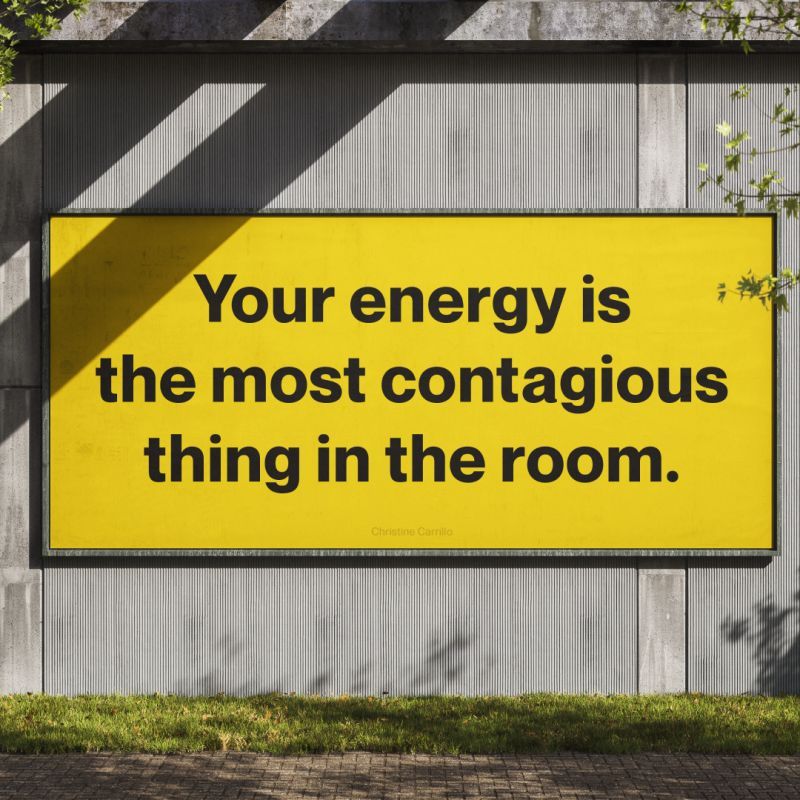
In a recent LinkedIn post, Christine Carrillo discusses the profound impact a leader’s emotional state has on team dynamics and productivity. Carrillo asserts that a leader’s behavior is directly mirrored by their team, suggesting that chaos within an organization often originates from the top.
Carrillo highlights the critical role of a leader’s reactions in shaping the team’s operational rhythm. She posits:
“Every reaction. Every panic. Every time you spiral instead of decide. They’re watching. And they’re matching it.”
This observation underscores a fundamental principle of organizational psychology: employees tend to adopt the behavioral patterns exhibited by their leadership. If a leader consistently responds to challenges with panic, the team will internalize this as the standard operating procedure.
The Leader as the Company’s Nervous System
Carrillo further elaborates on this concept, drawing a parallel between a leader’s emotional energy and the overall ‘nervous system’ of the company. She shares an anecdote about a founder struggling with team productivity.
According to Carrillo, when she investigated why nothing was getting done, the team revealed a consistent issue: they couldn’t discern priorities because everything was presented as an emergency. The founder, in this instance, was not solving problems but inadvertently creating new ones through their reactive behavior.
“The founder wasn’t solving problems. They were creating new ones with every reaction.”
The turning point, Carrillo explains, was not a change in the team or the strategy, but a shift in the founder’s energy and approach. This internal adjustment by the leader was sufficient to alter the entire team’s output.
Setting the Standard Through Calmness
Carrillo argues that leaders are responsible for more than just setting the strategic vision; they are setting the emotional tone and response mechanisms for the entire organization. A leader who remains calm and focused cultivates an environment where the team can operate efficiently, akin to ‘clockwork’. Conversely, a leader who succumbs to panic teaches their team that panic is the expected response to adversity.
“If you’re calm and focused, your team runs like clockwork. If you lose it every time something breaks, your team learns that panic is the protocol.”
Carrillo encourages leaders to self-reflect, suggesting they examine their own contributions to any perceived chaos before attributing it to the team. She emphasizes the power of a leader’s presence and energy in shaping the workplace environment.
Shifting the Focus from Blame to Self-Awareness
The core message from Christine Carrillo’s post is a call for greater self-awareness among leaders. Instead of blaming teams for a lack of productivity or organizational chaos, leaders are urged to consider their own demeanor and reactions.
“Stop blaming your team for the chaos. Start looking at what you’re bringing into every room.”
This perspective suggests that by managing their own emotional responses and maintaining a composed, focused demeanor, leaders can significantly improve their team’s effectiveness and foster a more stable, productive work environment. Carrillo implies that this internal shift is often the most potent catalyst for positive organizational change.
📝 About This Content
This article is based on insights shared by Christine Carrillo on LinkedIn.
📅 Originally posted on April 16, 2026 | View original post on LinkedIn →