
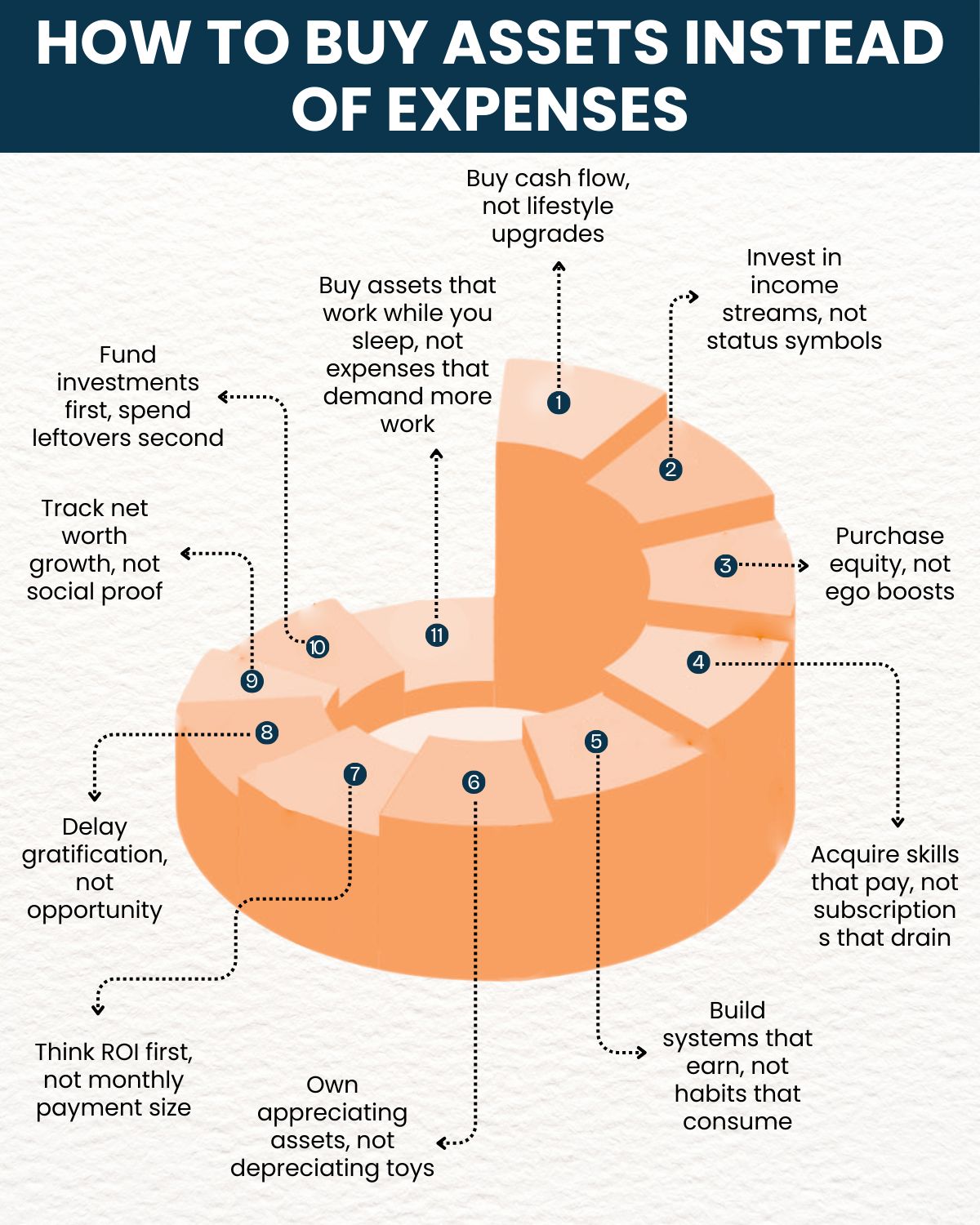
In a recent LinkedIn post, Marc Henn discusses a fundamental shift in financial decision-making, arguing that true wealth creation lies not in income level, but in prioritizing asset acquisition over the purchase of expenses. Henn, a licensed Investment Adviser, highlights how the wealthy approach spending differently, focusing on investments that generate future income rather than immediate gratification.
Henn begins by stating a core principle: “Most people buy expenses. The wealthy buy assets.” He elaborates on this distinction, noting that expenses drain cash while assets create it. According to Henn, the critical factor is not income, but the decision-making process behind purchases.
“One drains cash. The other creates it. And the difference isn’t income. It’s how decisions are made.”
The financial advisor then outlines eleven ways this “asset-first thinking” manifests in financial behavior, contrasting common spending habits with wealth-building strategies. Henn emphasizes that while lifestyle upgrades might impress, it is compounding cash flow that truly builds wealth.
Prioritizing Income Over Comfort
One of the key points Henn makes is the difference between seeking comfort and building income. He contrasts the desire for immediate comfort with the long-term strategy of compounding cash flow. As Henn puts it:
“Lifestyle upgrades impress. Cash flow compounds.
→ Buy income, not comfort.”
This principle extends to how individuals invest their resources. Henn argues that investing in “engines” that produce income is more effective for wealth building than acquiring “symbols” of status.
Building Sustainable Wealth
Henn further elaborates on the concept of building sustainable wealth by differentiating between ego-driven spending and equity building. He suggests that ownership and assets outlast fleeting validation.
Skills vs. Subscriptions
In an era where many services are subscription-based, Henn points out a significant drain on personal finances. He advocates for acquiring skills that have a recurring return on investment, stating:
“Subscriptions drain quietly. Skills pay repeatedly.
→ Acquire capabilities that return cash.”
This perspective encourages a focus on self-improvement and skill development as a form of asset creation that continues to yield returns over time, unlike depreciating physical goods or depreciating monthly costs.
Long-Term Growth Over Short-Term Spending
Henn also addresses the common tendency towards impulse spending and the distraction of small, recurring payments. He advises that patience and a focus on return on investment (ROI) are more crucial than the immediate cost of a purchase.
“Consumption feels normal. Systems multiply effort,” Henn notes, advocating for the creation of systems and assets that can generate income passively. He concludes his post by urging readers to consider whether their purchases are building their future or merely funding their present comfort. Henn’s core message is that accumulating wealth is less about perpetual restriction and more about making smarter, asset-focused purchasing decisions from the outset.
📝 About This Content
This article is based on insights shared by Marc Henn on LinkedIn.
📅 Originally posted on March 16, 2026 | View original post on LinkedIn →