
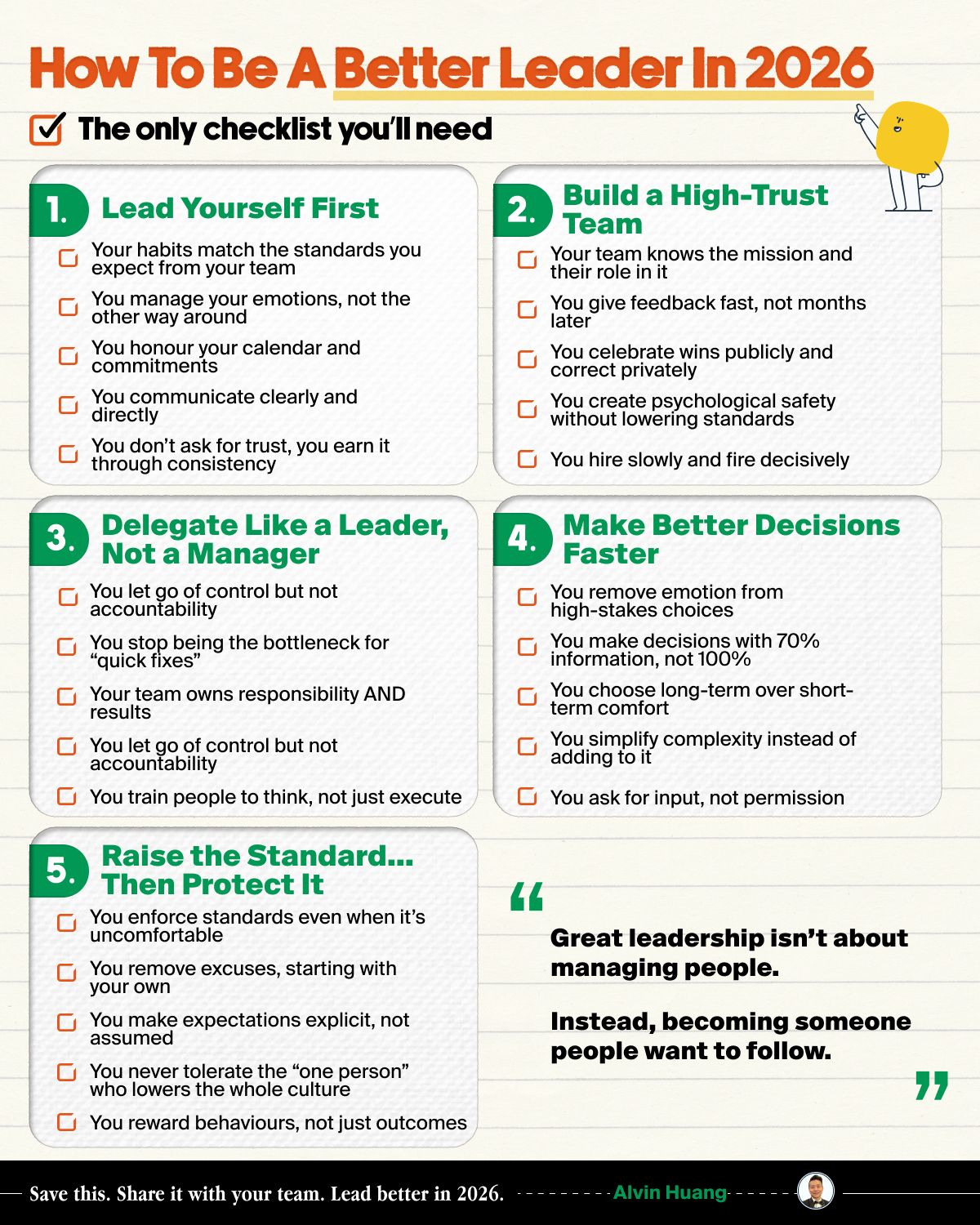
In a recent LinkedIn post, Alvin Huang challenges the notion that 2026 requires more managers, instead advocating for leaders who are deeply committed to mastering and consistently practicing fundamental leadership principles. Huang argues that the complexity often associated with leadership is frequently an unnecessary overlay, obscuring the simple, actionable basics that truly drive success.
Huang observes that while many leaders become bogged down in frameworks and buzzwords, the core tenets of effective leadership are straightforward, yet often neglected in their consistent application. He states:
“The fundamentals are simple. Most leaders just don’t practice them consistently.”
The Imperative of Leading Oneself First
A cornerstone of Huang’s advice is the principle of ‘Lead Yourself First.’ He emphasizes that a leader’s personal habits and consistency are far more influential than their pronouncements or titles. Trust, according to Huang, is not bestowed by a position but is actively earned through reliable behavior over time. This foundational element sets the stage for all other leadership actions.
Building a High-Trust Environment
Huang then pivots to the critical task of building a high-trust team. This involves ensuring clarity around the organizational mission and each individual’s role within it. A key aspect of this, as detailed by Huang, is the hiring and separation process:
“Hire slowly and intentionally. Let go quickly and respectfully.”
This deliberate approach to team composition, Huang suggests, is vital for cultivating an environment where trust can flourish, enabling greater collective performance.
Effective Delegation and Decision-Making
The post further delves into the art of delegation, distinguishing between managing and leading. Huang critiques the tendency for leaders to become bottlenecks by micromanaging decisions. He advocates for a style of delegation where ownership extends to both the process and the ultimate outcome, empowering team members and freeing up the leader’s capacity for more strategic work.
Furthermore, Huang addresses the crucial skill of making timely and effective decisions. He challenges the pursuit of unattainable perfection, proposing that operating with approximately 70% certainty is often sufficient to move forward. Huang notes:
“70% certainty is enough. Perfection is a delay tactic.”
This perspective encourages decisive action, prioritizing progress over prolonged analysis paralysis, and valuing long-term gains over short-term comfort.
Upholding Standards and Accountability
Finally, Alvin Huang stresses the importance of not only setting high standards but also actively protecting and reinforcing them. This involves a willingness to engage in difficult conversations and to consistently reward behaviors that align with the desired culture and outcomes, not just the final results. Huang argues:
“You don’t dodge uncomfortable conversations. You reward the right behaviors, not just the right outcomes.”
In conclusion, Huang’s message is a powerful reminder that impactful leadership in 2026, and beyond, hinges on the disciplined and consistent application of these fundamental principles. He encourages leaders to focus on mastering and repeating these basics daily, suggesting that such commitment will create a significant and rapid competitive advantage.
📝 About This Content
This article is based on insights shared by Alvin Huang on LinkedIn.
📅 Originally posted on December 30, 2025 | View original post on LinkedIn →