
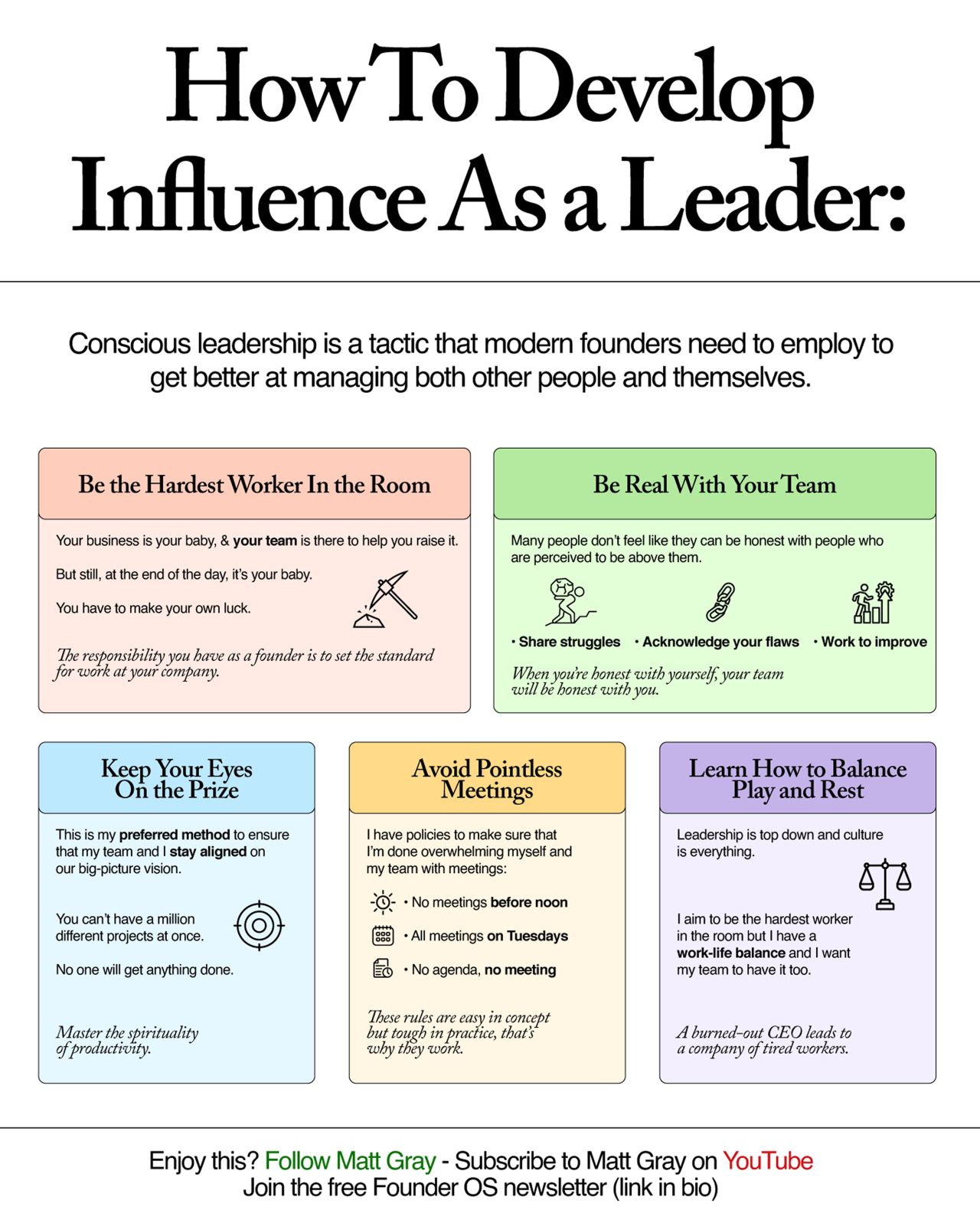
In a recent LinkedIn post, Matt Gray discusses key strategies for leaders aiming to develop genuine influence within their organizations. Gray emphasizes a multi-faceted approach that combines diligent work ethic, transparent communication, strategic focus, efficient meeting practices, and a commitment to work-life balance.
Gray begins by highlighting the foundational importance of personal dedication. He states:
“The responsibility you have as a founder is to set the standard for work at your company.”
This principle, according to Gray, underscores that a leader’s actions are the primary benchmark for their team’s effort and commitment. He likens the business to a “baby” that the founder must nurture, suggesting that personal drive is essential for creating momentum and demonstrating ownership.
Leading by Example and Fostering Trust
A significant portion of Gray’s advice centers on building trust through authenticity. He argues that leaders must be willing to be vulnerable to foster an environment where team members feel comfortable being open.
The Power of Transparency
Gray points out the common barrier to honest communication in hierarchical structures. He advises leaders to:
“Share struggles • Acknowledge your flaws • Work to improve”
In Gray’s view, this openness is not a sign of weakness but a strategic move that encourages reciprocal honesty from the team. As he puts it, “When you’re honest with yourself, your team will be honest with you.” This mutual transparency, he suggests, is crucial for identifying issues and driving collective improvement.
Maintaining Strategic Clarity and Efficiency
Gray also addresses the critical need for focus and efficient operations to maintain momentum and prevent burnout. He advocates for keeping a clear vision and minimizing distractions.
Prioritizing the ‘Big Picture’
According to Gray, maintaining alignment on long-term goals is paramount. He warns against the pitfalls of trying to pursue too many objectives simultaneously:
“You can’t have a million different projects at once. No one will get anything done.”
This focus, he suggests, is a key component of what he calls the “spirituality of productivity.” To support this, Gray implements strict meeting policies designed to protect valuable work time.
Rethinking Meeting Culture
Gray outlines specific rules to combat meeting overload: “No meetings before noon • All meetings on Tuesdays • No agenda, no meeting.” He notes that while these policies might seem simple, their consistent application is challenging, which is precisely why they are effective in preserving focus and productivity.
The Importance of Work-Life Balance
Finally, Gray stresses that effective leadership requires a sustainable pace, not just for the leader but for the entire organization. He believes that culture is “everything” and is heavily influenced by the leadership’s example.
Preventing Burnout
While advocating for being the “hardest worker in the room,” Gray insists on the necessity of personal work-life balance. He concludes that a “burned-out CEO leads to a company of tired workers,” underscoring the interconnectedness of leader well-being and team performance.
Matt Gray’s insights offer a comprehensive guide for leaders seeking to cultivate influence through a blend of hard work, authentic connection, strategic discipline, and a commitment to sustainable performance.
📝 About This Content
This article is based on insights shared by Matt Gray on LinkedIn.
📅 Originally posted on February 12, 2026 | View original post on LinkedIn →