
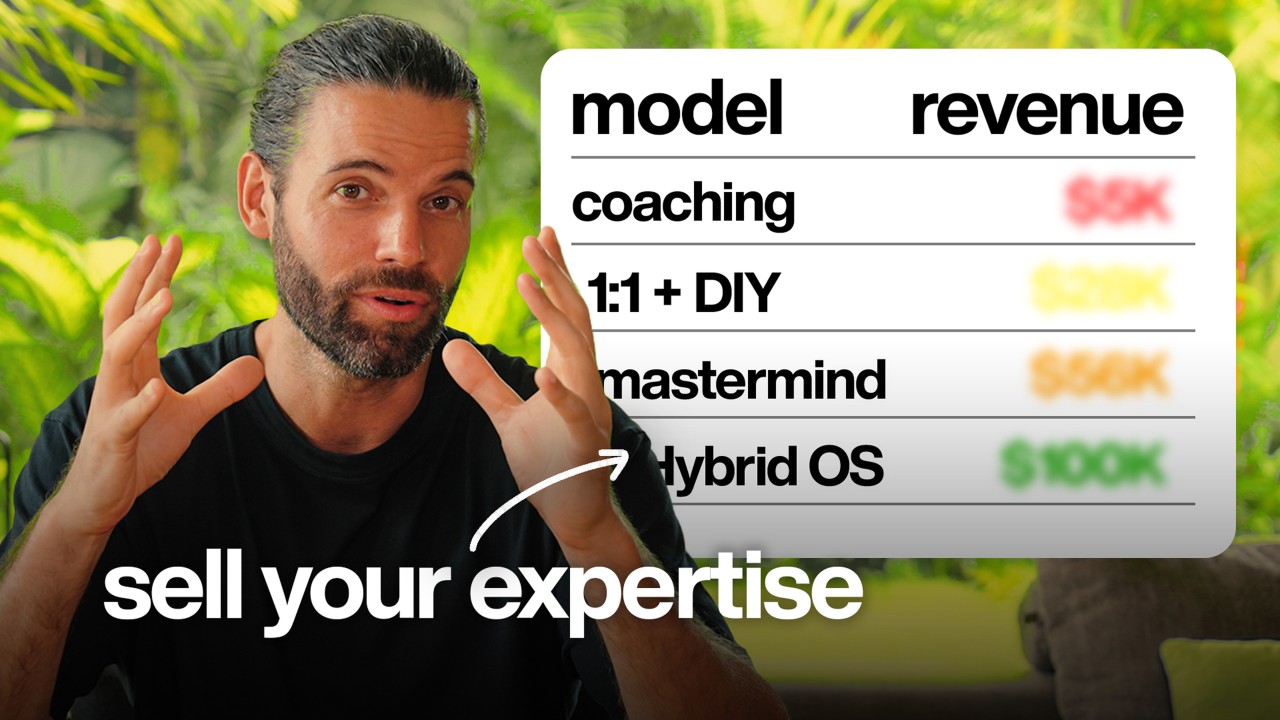
In a recent LinkedIn post, Matt Gray discusses strategies for business professionals to package their expertise effectively, enabling them to command premium prices and generate significant revenue per client. Gray emphasizes the shift from selling time to selling transformation systems, outlining five distinct high-ticket business models that can generate between $10,000 and over $100,000 per client.
Gray’s core argument is that successful high-ticket offerings focus on delivering tangible results and significant value, rather than simply exchanging hours for money. He states:
“Everyone wants to make a great living doing what they’re good at. The challenge is packaging it so people pay premium prices.”
Understanding High-Ticket Business Models
Matt Gray breaks down five distinct models designed to achieve premium pricing:
Model 1: Group Coaching or Cohort-Based Programs
This model involves running cohorts of approximately 25 individuals through a structured journey. Gray suggests this approach leverages a pre-built curriculum that is recorded once and used repeatedly. Accountability and assignments are integrated, with live coaching sessions used primarily for calibration. As Gray notes, “System teaches. You calibrate.” Running these cohorts multiple times a year creates recurring revenue without the need for constant content recreation.
Model 2: Mastermind Groups
According to Matt Gray, participants join masterminds not just for education, but for what he terms “network arbitrage.” He explains that strategic introductions can significantly accelerate a client’s progress, collapsing years of trial and error into a single conversation. Gray stresses the critical importance of curation, stating, “Curation is everything; the wrong group kills it, the right group transforms it.” This model can command revenues of $30,000-$60,000 per member, with potential for substantial monthly income for those with a strong personal brand.
Model 3: DIY Program with High-Touch Mentorship
Matt Gray proposes separating information delivery from high-leverage decision-making. This model involves recording educational content once and selling it indefinitely, while the expert intervenes only for critical decision points. Gray describes this as a system that can realistically serve over 100 people without overwhelming the provider, featuring automated information delivery, monthly Q&A sessions for calibration, and pre-built templates and frameworks.
Model 4: Done-For-You Services
This model caters to clients who wish to completely delegate a core challenge. Gray argues that “Done for you sells certainty, not hours.” In this setup, the service provider and their team execute the work, with the client primarily involved in review and approval. Gray points out that scaling to millions monthly is possible but requires significant operational excellence, including specialists, robust SOPs, and a team that can function with minimal direct involvement from the leader.
Model 5: Hybrid Operating System (OS)
Described as more than a course or a mastermind, this model offers complete business infrastructure. Clients receive SOPs, templates, dashboards, tools, coaching, and community access, leading to a transformation of their operations and mindset. Gray highlights that this model can provide an alternative to expensive consultants, offering specialized systems for $20,000-$40,000 annually. He concludes by emphasizing the compounding nature of systems:
“Systems compound over time. Value increases. Positioning becomes premium and defensible.”
Ultimately, Matt Gray poses the crucial question for entrepreneurs:
“The question isn’t which model makes the most money. The question: which model fits your strengths, your lifestyle, and the results your clients actually need?”
He suggests that selecting the right model can eliminate the feeling of actively selling, transforming the client acquisition process into a natural outcome of providing immense value.
📝 About This Content
This article is based on insights shared by Matt Gray on LinkedIn.
📅 Originally posted on February 21, 2026 | View original post on LinkedIn →