
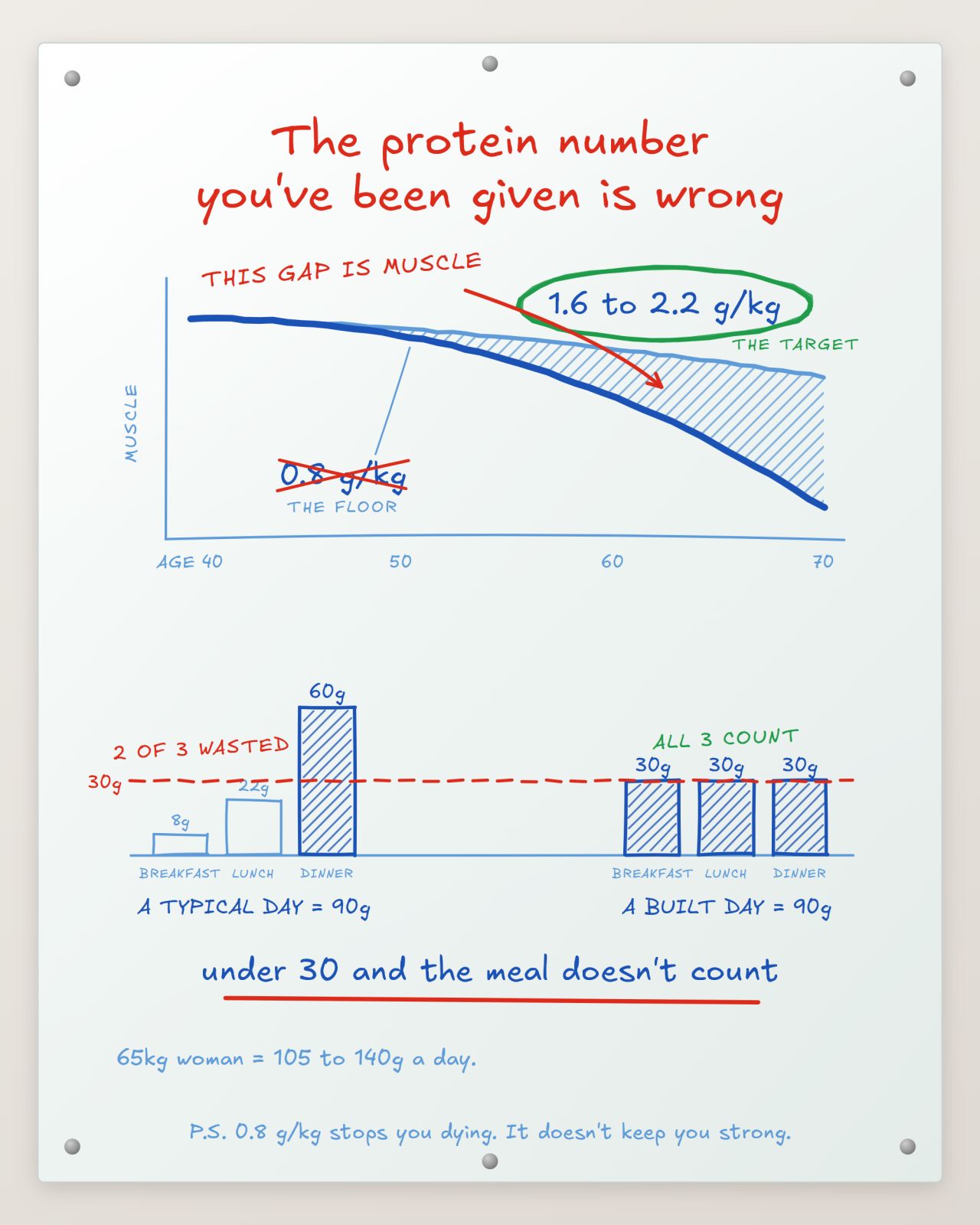
In a recent LinkedIn post, Liz Bradford challenges the conventional protein intake recommendations often followed by women over 40, arguing that these guidelines, based on a male baseline, may be hindering their fitness progress. Bradford, a proponent of evidence-based strategies for training, recovery, and metabolic health, highlights a significant disconnect between general nutritional advice and the specific needs of midlife women.
Bradford points out that the commonly cited recommendation of 0.8 grams of protein per kilogram of body weight is a minimum to prevent deficiency, not an optimal target for preserving muscle mass, especially for active women in their middle years. She states:
“Most women over 40 are eating to a protein number that was written for a 78kg man. And then wondering why the training stopped working.”
This, she explains, has led to a widespread misunderstanding and misapplication of nutritional targets for decades. According to Bradford, the actual protein range that effectively protects muscle in midlife women lies between 1.6 and 2.2 grams per kilogram. For a 65kg woman, this translates to approximately 105 to 140 grams of protein per day, a figure significantly higher than what many are consuming.
The Timing and Distribution of Protein Intake
Beyond the total daily amount, Bradford emphasizes the critical role of protein timing and distribution throughout the day. She explains that the body cannot stockpile protein effectively; instead, each meal must meet a certain threshold to trigger muscle repair processes. She notes that a typical eating pattern for many women—a light breakfast, a salad for lunch, and a larger meal in the evening—often fails to meet this requirement.
Bradford elaborates on this point:
“Your body can’t stockpile protein. It uses what’s available in the moment, and each meal needs to clear a threshold before it triggers muscle repair at all. Roughly 30 grams does it.”
This means that a day with a substantial protein intake only at dinner might not be as effective for muscle maintenance as one where protein is distributed more evenly. Bradford advocates for a structured approach:
- Before 9 AM: Aim for around 30 grams of protein, incorporating options like eggs, Greek yogurt, or leftover chicken.
- Lunch: Make protein the centerpiece of the meal, not a side dish, ensuring another 30-gram serving.
- Dinner: Continue with a 30-gram protein serving, avoiding the attempt to compensate for earlier shortfalls.
By following this distribution strategy, Bradford suggests that women can naturally reach around 100 grams of protein daily without meticulous counting.
The Importance of Accurate Measurement
A key piece of advice from Bradford is the necessity of accurately tracking food intake to understand one’s actual protein consumption. She warns that many individuals overestimate their protein intake, leading to a misdiagnosis of the problem.
“Count one ordinary day, properly, including the splash of milk and the handful of nuts. Most people are 40 grams short of where they think they are, and you can’t fix a gap you haven’t measured.”
Bradford concludes by reassuring her audience that perceived failures in diet or training are often not due to laziness but to aiming at nutritional targets designed for a different demographic. Her insights aim to empower women over 40 with a more accurate and effective approach to nutrition for supporting their health and fitness goals.
📝 About This Content
This article is based on insights shared by Liz Bradford on LinkedIn.
📅 Originally posted on September 15, 2026 | View original post on LinkedIn →