


| Author | Background |
|---|---|
| Cristina Grancea | CEO & Founder Sylvian Care Franchising | Built a £2.4M Home Care Franchise | Now Helping Others Do the Same |
| Leonardo Freixas | Top 100 Most Influential Men 2025 | Creator of The Signal | Guiding leaders and brands to grow influence and attract premium opportunities |
| Leila Hormozi | Founder and CEO of Acquisition.com |
| Leslie Venetz | Sales Strategy & Training for Outbound Orgs | SKO & Keynote Speaker | 2024 Sales Innovator of the Year | Top 50 USA Today Bestselling Author – Profit Generating Pipeline ✨#EarnTheRight✨ |
| Daniel O. Livvarcin, PhD | LinkedIn thought leader |
We’ve all had that manager. The one who makes you dread Monday mornings. The one who talks about ‘high standards’ but creates burnout, or the one who ‘fixes’ everything by doing it themselves, leaving you feeling useless.
It’s a common story. But what if the problem isn’t the people, but the playbook? What if most of the things we call ‘management’ are just lazy shortcuts?
We found five leaders who are rewriting that playbook. They argue that real leadership isn’t about being the hero, the loudest voice, or the busiest person in the room. It’s about creating an environment where other people can win. Forget the old rules. Here’s what actually works.
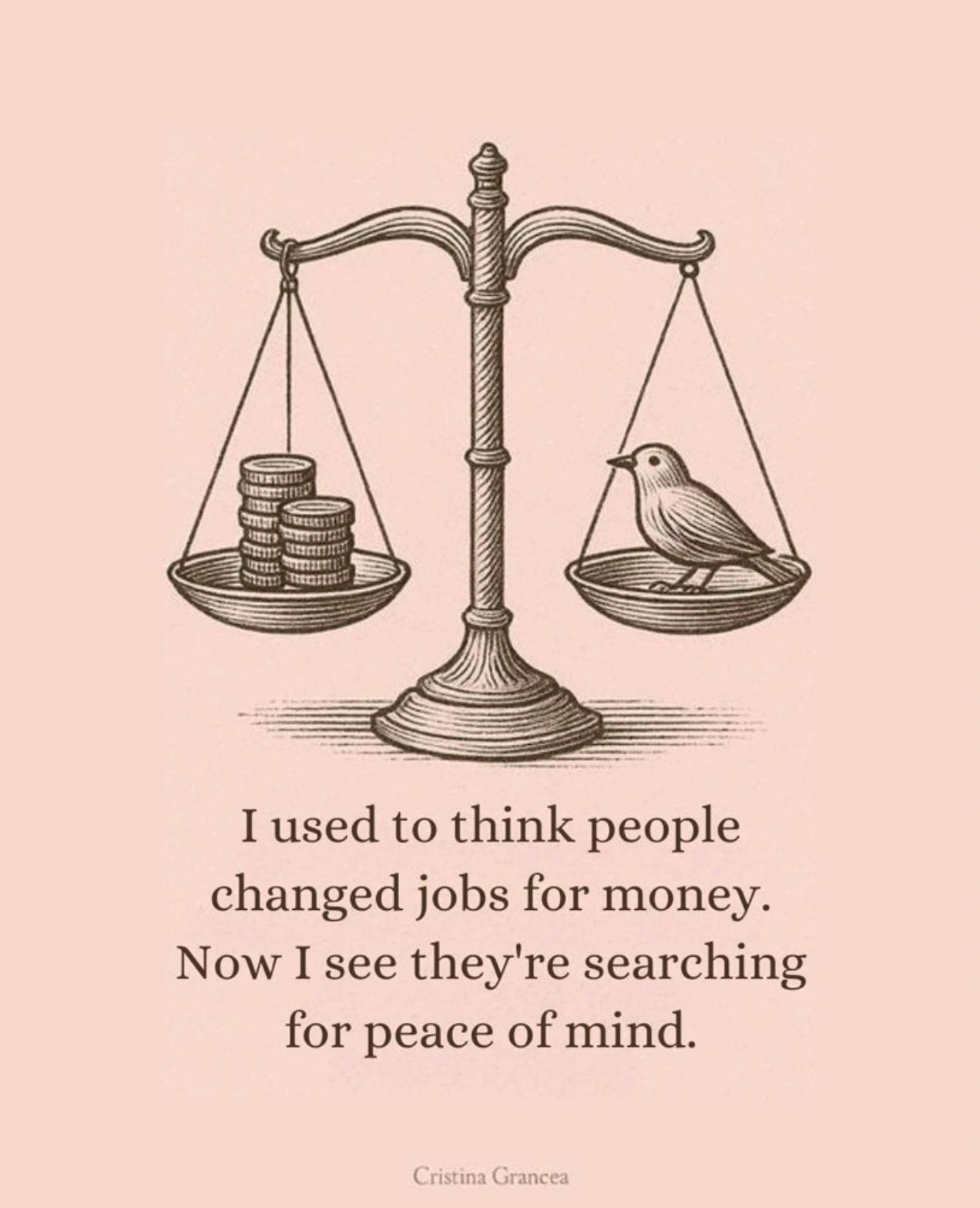
Cristina Grancea: Peace is the New Paycheck
Cristina Grancea cuts through one of the biggest myths in business: that people always leave for more money. She argues that what top talent is really searching for isn’t a bigger salary, but a calmer, more respectful workplace.
It’s a powerful reframe. While many companies are busy adding snack bars and ping-pong tables, their best people are quietly updating their resumes to escape a culture of chaos. As Grancea puts it, the real perks are invisible: psychological safety, clear direction, and a manager who actually listens.
“People don’t leave jobs. They leave chaos. They leave disrespect. They leave emotional exhaustion.”
This insight forces a hard look at what we value. Is our workplace built for performance or just pressure?
- Stop blaming money for retention issues. If your best people are leaving, look at their managers and their daily emotional experience first. Chaos and disrespect will push out talent faster than a competitor’s salary bump.
- ‘Peace of mind’ is a tangible benefit. It means fewer pointless meetings, no weekend emails, and clear expectations. This isn’t a ‘soft’ perk; it’s a strategic advantage that keeps your A-players focused and engaged.
- Culture is what happens under pressure. The free lunches don’t matter when there’s a culture of blame, micromanagement, or office politics.
Read our full coverage of Cristina Grancea’s insights →
Leila Hormozi: Choose Mentoring Over Yelling
Leila Hormozi delivers a blunt truth: yelling isn’t a sign of strength, it’s a sign of laziness. In her view, leaders who resort to raising their voice are simply choosing the easy path over the effective one. They’re opting for a short-term release of their own stress instead of making a long-term investment in their team’s skills.
The distinction she draws is critical. Yelling creates compliance rooted in fear. Mentoring, on the other hand, builds capability that creates ownership. One is about control; the other is about growth. Hormozi argues that if a team keeps making the same mistakes, the leader should look in the mirror. It’s not a discipline problem, it’s a training problem.
“Yelling at people takes less skill than properly training people. Yelling doesn’t make you a respectable boss. It makes you lazy.”
This is a direct challenge to the ‘tough boss’ archetype. Hormozi’s approach suggests true strength lies in patience, not volume.
- Yelling fixes nothing long-term. It may stop a behavior in the moment, but it erodes trust and ensures the employee will never take a risk or bring you bad news again.
- Mentoring is about transferring capability. The goal of a great leader is to build people who eventually don’t need them. Yelling makes people more dependent, not less.
- Patience is a leadership skill. The ability to calmly guide someone through a mistake, teach them a better process, and give them feedback is far more difficult—and valuable—than a quick outburst.
Read our full coverage of Leila Hormozi’s insights →
Leslie Venetz: Stop Doing Your Team’s Job
Every manager has felt the temptation: ‘It’s just faster if I do it myself.’ Leslie Venetz identifies this as a dangerous trap, especially for new leaders. While it provides a short-term fix and makes the manager feel important, it creates a long-term disaster—a team that is completely dependent on you.
Venetz calls this the ‘downward doom spiral.’ You do their work, they learn to bring you every problem, and you end up burned out while they remain underdeveloped. She admits that the real reason managers do this is often ego. It feels good to be the hero, the central cog in the wheel. But great leadership isn’t about being the hero; it’s about building other heroes.
“Every time you do your rep’s job for them, you delay the day they learn to do it themselves.”
The true measure of a leader, according to Venetz, is a team so empowered and enabled they can succeed without you.
- Distinguish the short-term fix from the long-term solution. Answering a question is fast. Teaching someone how to find the answer is slow, but it’s the only way to scale.
- Your goal is to become obsolete. If the team falls apart when you go on vacation, you haven’t built a team; you’ve built a dependency.
- Check your ego. Are you ‘helping,’ or are you feeding your need to feel valuable? True value comes from empowering others, not from being the sole problem-solver.
Read our full coverage of Leslie Venetz’s insights →
Leonardo Freixas: Remove the Pit, Don’t Ask for More Effort
Using a powerful analogy of an elephant stuck in a pit, Leonardo Freixas illustrates a profound leadership failure. Too often, when a team member is struggling, leaders demand more effort. They push, they prod, they motivate. But what if the person isn’t lazy? What if they’re just stuck in a hole?
Freixas argues that at a certain point, more effort yields zero results because the problem isn’t the person—it’s the environment, the process, or the system. The elephant is strong, but its strength is useless against the constraints of the pit. The leader’s job isn’t to yell at the elephant to try harder. It’s to change the environment.
“Good leaders don’t ask for more effort. They remove the pit.”
This shifts the leader’s role from a motivator to a systems thinker and an obstacle remover.
- Diagnose the system, not just the person. Before you assume someone has a ‘motivation problem,’ ask what systemic issues are holding them back. Is it a broken process? Lack of resources? Unclear goals?
- Effort has diminishing returns. Pushing a team harder inside a flawed system only leads to burnout, not breakthroughs. The real gains come from fixing the system itself.
- Be an architect, not an enforcer. Your primary job is to design a work environment where talented people can get things done with the least amount of friction.
Read our full coverage of Leonardo Freixas’s insights →
Daniel O. Livvarcin, PhD: Lead Change with Empathy, Not Pressure
Change is scary. As Daniel O. Livvarcin points out, this is a universal truth that many leaders ignore. They announce a new direction and expect everyone to get on board at the same speed. But in reality, people process change based on their own experiences and fears. Pushing everyone forward at the same pace doesn’t work.
Effective leadership, he explains, is not about applying pressure to accelerate change. It’s about creating the conditions for it. This means providing clarity on the ‘why,’ building trust through transparency, and offering support to those who are struggling. It’s about acknowledging the discomfort, not pretending it doesn’t exist.
“Sustainable change is not driven by pressure. It is enabled by alignment and readiness.”
This approach transforms the leader from a change dictator into a change facilitator.
- Acknowledge the ambiguity. From the inside, change feels messy and uncertain. Great leaders validate this feeling instead of demanding immediate, cheerful acceptance.
- Alignment must precede acceleration. You can’t move fast if everyone is pulling in a different direction. Take the time to build clarity and buy-in upfront. It’s slower at the start but much faster in the long run.
- Build confidence, not just compliance. Your goal is for people to move forward with confidence because they understand and believe in the direction, not just because they were told to.
Read our full coverage of Daniel O. Livvarcin, PhD’s insights →
The Real Work of Leadership
So, what’s the common thread? All five leaders point to the same conclusion: great leadership is the opposite of lazy management. It’s the slow, patient, and often invisible work of building systems, people, and trust.
It’s choosing to mentor when it’s easier to yell. It’s empowering your team when it’s faster to do it yourself. It’s creating a calm, focused culture instead of a chaotic one. It’s removing obstacles instead of demanding more effort. And it’s guiding people through change with empathy, not pressure.
Here’s the bottom line:
| Leader | The Shift to Make |
|---|---|
| Cristina Grancea | From focusing on perks to creating peace of mind. |
| Leila Hormozi | From yelling and demanding to training and mentoring. |
| Leslie Venetz | From being the ‘hero’ to empowering your team. |
| Leonardo Freixas | From demanding more effort to removing systemic obstacles. |
| Daniel O. Livvarcin, PhD | From applying pressure to enabling readiness for change. |
The question every manager needs to ask is simple: are you building a team that depends on your presence, or are you building a culture that can thrive in your absence?
Featured in this Roundup
This article synthesizes insights from the following LinkedIn thought leaders. Click through to read their original posts: