



| Author | Background |
|---|---|
| Justin Welsh | The $10M Solopreneur | Helping 100,000+ experts turn their expertise into income. |
| Ben Eubanks | Researcher | Bestselling Author | Speaker |
| Simon Squibb | Join 200,000+ entrepreneurs getting my BEST business advice for free 👇 |
| Noemi Kis✨ | Microbusiness Ideas / AI enthusiast / TEDx speaker |
| Nathan Crockett, PhD | #1 Ranked LI Creator Family Life (Favikon) | Owner of 17 companies, 44 RE properties, 1 football club | Believer, Husband, Dad | Follow for posts on family, business, productivity, and innovation |
Ever feel like you’re doing everything right, but nothing’s clicking? You’re networking, hustling, pushing on every door you can find. Yet, the big opportunities seem to go to someone else.
What if the problem isn’t the door? What if it’s the person pushing?
We dug into the thinking of five of the sharpest minds on the internet and found a common thread. They all argue that real, sustainable success isn’t about external tactics. It’s an inside game. It’s about rewiring the stories you tell yourself about rejection, fear, and opportunity. Forget the hustle porn. This is what actually works.
Simon Squibb: Learn to Collect ‘No’s Like a Game
Most of us are terrified of hearing the word “no.” It feels like a judgment, a final verdict on our ideas or our worth. Entrepreneur Simon Squibb says that’s precisely why so many people fail. They haven’t been rejected enough.
He argues that the most successful people you see didn’t get lucky. They just got so used to rejection that it lost its power. They treated it like a numbers game, not a personal failure. Think about it: if you knock on enough doors, someone’s bound to open one.
“The people you admire weren’t more talented or luckier. They just got told no so many times that no stopped meaning anything to them.”
Key Takeaways
- Rejection is just data. A ‘no’ isn’t an endpoint. It’s information that tells you to try a different approach, a different person, or a different time. It’s not a reflection of your value.
- Volume neutralizes fear. The more you put yourself out there, the less each individual rejection stings. Squibb suggests you should “collect rejections like you’re playing a game.”
- Rewrite your story. The meaning of rejection is the one you assign to it. If you see it as a chapter in your story instead of the ending, you’ll keep writing.
Read our full coverage of Simon Squibb’s insights →
Nathan Crockett, PhD: The Most Dangerous Opponent Is Fearless
Right behind the fear of rejection is its bigger, scarier cousin: the fear of failure. Dr. Nathan Crockett, an owner of 17 companies, argues that this is the single biggest handbrake on our potential. We’re so afraid to lose that we never even enter the game.
He flips the script entirely. The real loss isn’t failing; it’s failing to try. When you’re not afraid to lose, you’re free. You can take big swings, explore new ideas, and push boundaries without being paralyzed by “what if it doesn’t work?” This mindset doesn’t just change you; it changes how others see you.
“Don’t be afraid to lose. Be afraid not to try.”
Key Takeaways
- Fearlessness unlocks creativity. When you’re not worried about the outcome, you’re free to take the kinds of risks that lead to breakthroughs. You operate from a place of possibility, not prevention.
- Focus on the attempt, not the outcome. The goal is to be in the arena. Winning or losing is secondary to the act of trying. That’s where the growth happens.
- A fearless mindset is a competitive advantage. As Crockett points out, “The most dangerous opponent is the one who isn’t afraid to lose.” It makes you unpredictable and inspiring.
Read our full coverage of Nathan Crockett, PhD’s insights →
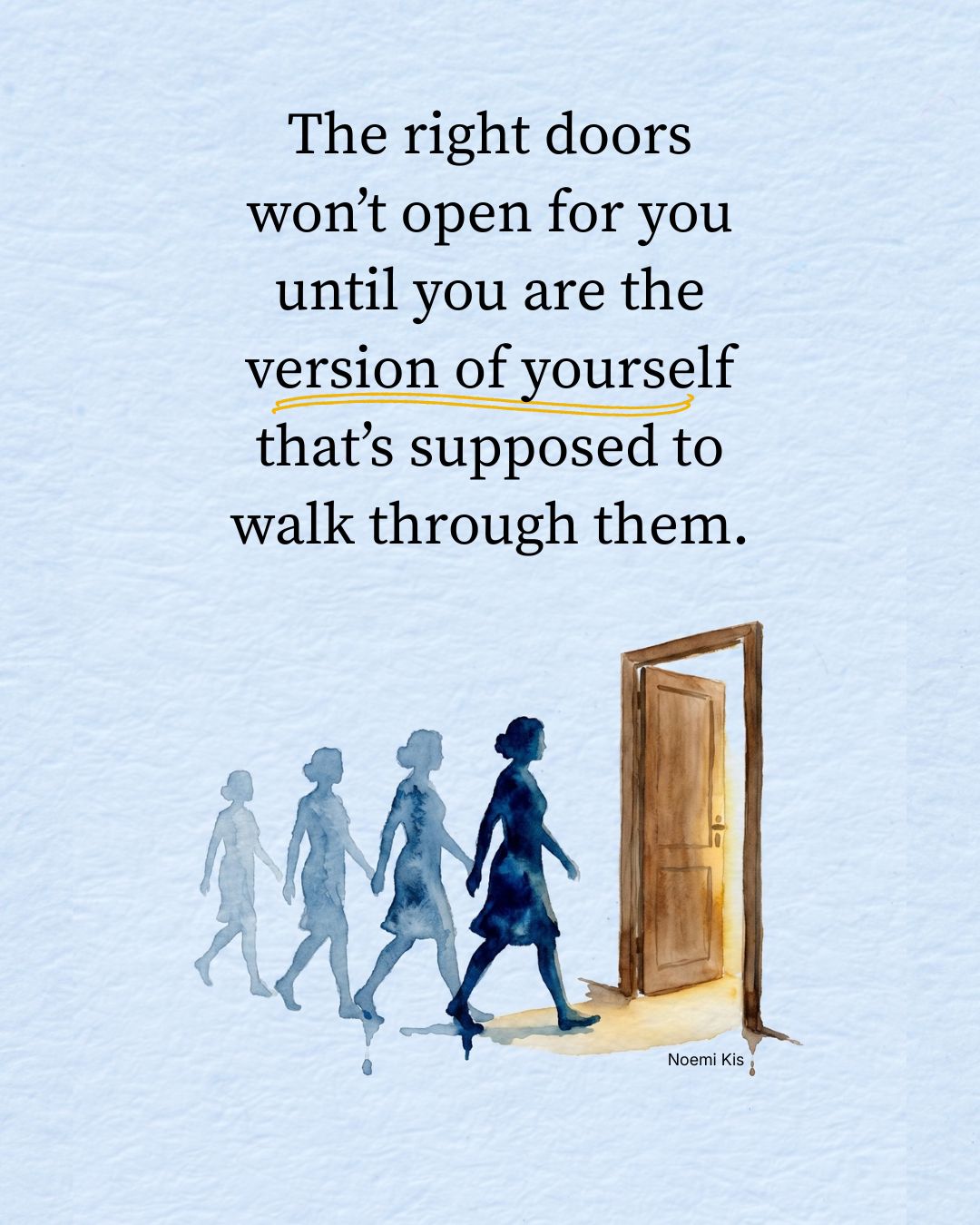
Noemi Kis✨: Stop Pushing Doors. Become the Key.
So you’ve learned to handle rejection and you’re not afraid to try. But you’re still banging your head against the wall, trying to get into the rooms where things happen. According to AI enthusiast and TEDx speaker Noemi Kis, you’re going about it all wrong.
She spent years pushing on doors she wasn’t ready for, thinking the problem was the “entry point.” The real issue? She wasn’t yet the person who belonged on the other side. The opportunities we want don’t open when we want them to; they open when we’ve become a match for them.
“You don’t force the door. You become the person it opens for.”
Key Takeaways
- Do the work in the dark. Stop chasing the spotlight and start building your skills when no one is watching. The quality of your work is what will eventually attract the opportunity.
- Build a reputation for integrity. Keep your word, even when it’s hard. Trust is the currency that opens doors you can’t see. Do the reps nobody claps for.
- Shift from “getting” to “becoming.” The focus shouldn’t be on getting the result, the trust, or the room. It should be on becoming the person who has earned them. Then, the doors just open.
Read our full coverage of Noemi Kis✨’s insights →
Ben Eubanks: Ditch the False Choices Society Gives You
Another massive internal barrier is the set of limiting beliefs we accept without question. One of the most common is the idea that you have to choose: career or family, success or sanity. Author Ben Eubanks shares a powerful story from his own family that shatters this myth.
His great-grandmother, a teacher in the 1920s, was forbidden from getting married because “you can’t be a wife and also be a good teacher.” So what did she do? She got married in secret and was brilliant at both. The lesson is timeless: many of the “rules” we live by are just outdated conventions waiting to be broken.
“As a society, we still believe some silly things, but I’d like to think that we now know that someone can be an incredible [insert job title] while still being a contributor and integral part of a family as well.”
Key Takeaways
- Question “conventional thinking.” Just because something has always been done a certain way doesn’t mean it’s the right way—or the only way. Challenge the assumptions you’ve inherited.
- You can be two things at once. Life is rarely a simple “either/or.” You can be ambitious and a great parent. You can be creative and analytical. Don’t let society put you in a box.
- Define your own version of success. Eubanks’ great-grandmother knew she could be a great teacher and a great wife. She didn’t let someone else’s definition limit her life. It’s possible, and has been for a long time.
Read our full coverage of Ben Eubanks’ insights →
Justin Welsh: Your Biggest Threat Is Clickbait Certainty
Even with the right internal mindset, your progress can be sabotaged by the external noise you let in. The $10M Solopreneur Justin Welsh points out a modern trap: the viral, aggressive take online. These posts are designed to provoke, not to inform.
He warns that smart people get warped by these arguments because they’re missing crucial context. A CEO calls remote work “fraud,” and millions argue about it for days, missing the nuance. Welsh’s point is that our internal compass gets thrown off when we engage with content designed to strip out complexity for clicks.
“The aggressive take that goes viral is almost always missing the one piece of information that would actually help you.”
Key Takeaways
- Be skeptical of certainty. The world is complex and nuanced. Anyone presenting a simple, aggressive answer to a complex problem is likely selling something or marketing themselves.
- Look for what’s missing. When you see a viral post, don’t just react to what’s there. Ask yourself: What context is being left out? What’s the author’s incentive?
- Develop a strong mental filter. You can’t control the internet, but you can control what you consume. Unfollow rage-baiters. Curate your feed for nuance and thoughtful discussion. Protect your mind.
Read our full coverage of Justin Welsh’s insights →
Putting It All Together
The path to meaningful achievement isn’t paved with more hustle or better networking tactics. It’s cleared by doing the deep internal work first. It’s about fundamentally changing your relationship with the things that hold you back.
First, you learn to see ‘no’ not as a stop sign, but as a redirect (Simon Squibb). This frees you to try big things without being paralyzed by the thought of failure (Nathan Crockett). With that freedom, you can focus on building yourself into the person opportunities naturally find (Noemi Kis). Along the way, you must shed the limiting, false choices society tries to impose on you (Ben Eubanks) and protect your mindset from the toxic certainty of online outrage (Justin Welsh).
It’s a full system upgrade for your mind. So, here’s the final question: What’s the one internal story you’ve been telling yourself that needs to be rewritten today?
| Leader | Key Mindset Shift |
|---|---|
| Simon Squibb | Treat rejection as a numbers game, not a personal failure. |
| Nathan Crockett, PhD | The real failure isn’t losing; it’s being too afraid to even try. |
| Noemi Kis✨ | Stop chasing opportunities and focus on becoming the person they seek. |
| Ben Eubanks | Reject false “either/or” choices and define your own integrated life. |
| Justin Welsh | Filter out simplistic, viral outrage to protect your nuanced thinking. |
Featured in this Roundup
This article synthesizes insights from the following LinkedIn thought leaders. Click through to read their original posts: