
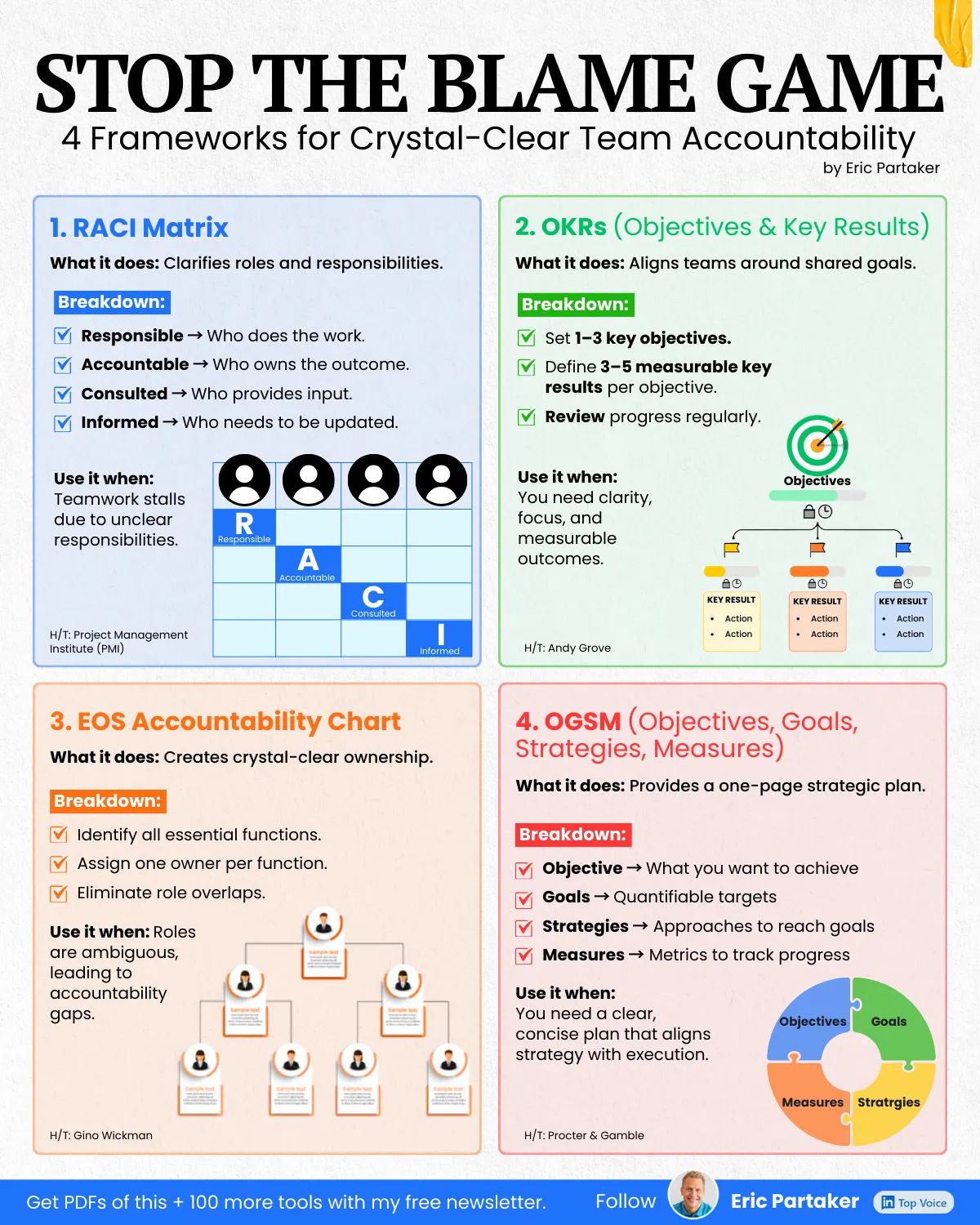
In a recent LinkedIn post, leadership expert Eric Partaker argues that traditional, fear-based methods of driving accountability within executive teams are not only ineffective but actively detrimental to performance. Partaker contends that pushing harder and employing tactics like public callouts, micromanagement, and fear-based pressure ultimately transforms high-potential leaders into disengaged employees who merely comply without genuine commitment.
“The harder you push, the less they deliver.”
Partaker’s post highlights a common pitfall he has observed in CEOs who, in his view, “destroy their executive teams” through such approaches. He contrasts this damaging style with a more effective strategy rooted in clarity and support. According to Partaker, the core of effective accountability lies not in control, but in creating an environment where commitment can flourish.
The Cost of Fear vs. The Power of Clarity
To illustrate his point, Partaker shares a stark real-world example. He describes a situation where a CEO’s constant criticism led to the resignation of three VPs within six months, resulting in a $2 million loss in transition costs alone. This, he argues, is the outcome of using accountability as a “weapon.” In contrast, he presents an alternative scenario where a different CEO fostered radical clarity around expectations, listened without judgment, and built psychological safety, leading to a remarkable 40% revenue increase.
“Fear creates compliance. Clarity creates commitment. And you need commitment to win.”
Partaker emphasizes that true leadership requires a different philosophy. He states, “Your leadership team doesn’t need more pressure. They need more clarity.” This distinction is crucial, as he believes that the ultimate goal of leadership is not to cultivate followers, but to foster “owners” who are deeply invested in the company’s success.
Frameworks for Compassionate Accountability
To facilitate this shift, Partaker introduces four frameworks designed to build what he terms “compassionate accountability”:
- RACI Matrix: To eliminate confusion over roles and responsibilities, ensuring everyone understands their specific contributions and value.
- OKRs (Objectives and Key Results): To align individual and team efforts with overarching company goals, fostering a sense of shared ownership.
- EOS Accountability Chart: To establish clear ownership for each role, preventing ego clashes and overlapping responsibilities.
- OGSM (Objectives, Goals, Strategies, Measures): To bridge the gap between high-level strategy and practical execution, minimizing misunderstandings.
Partaker cautions against viewing these frameworks as punitive tools. Instead, he suggests they should be seen as “maps to help people win.” The underlying principle, as he explains, is that “high standards + High support = High performance,” while “High standards + Low support = High turnover.”
“These aren’t hammers to hit people with. They’re maps to help people win.”
Ultimately, Eric Partaker advocates for a leadership approach that prioritizes creating the right conditions for greatness. By moving away from fear-based management and embracing clarity-driven accountability, leaders can unlock the full potential of their teams, encouraging problem-solving, ownership, and forward momentum rather than compliance and hidden issues.
📝 About This Content
This article is based on insights shared by Eric Partaker on LinkedIn.
📅 Originally posted on December 1, 2025 | View original post on LinkedIn →