
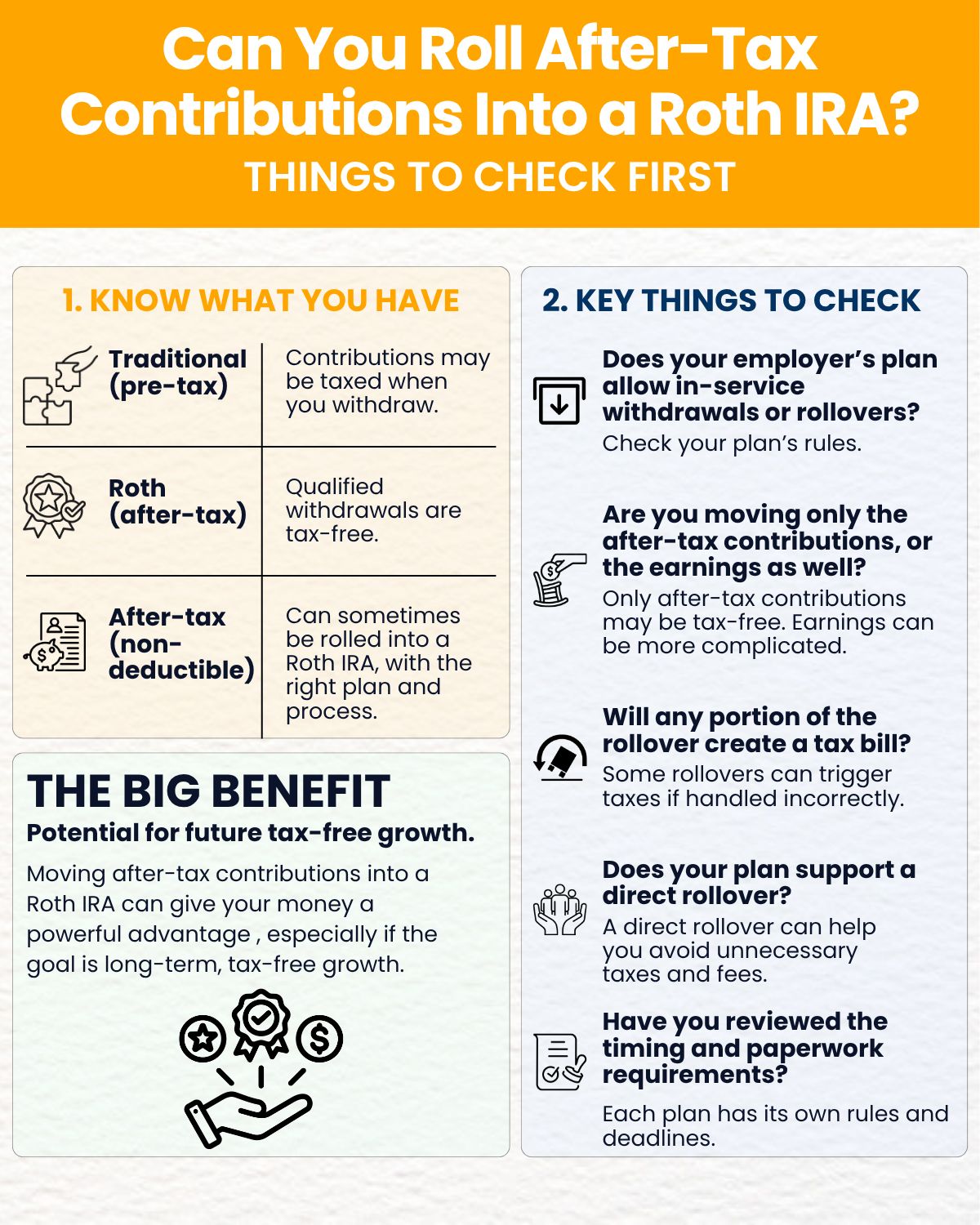
In a recent LinkedIn post, Marc Henn explores a nuanced strategy for enhancing retirement savings: utilizing after-tax contributions within a 401(k) to potentially achieve tax-free growth. Henn, a licensed Investment Adviser, emphasizes that while this path offers significant advantages, meticulous attention to detail is crucial to avoid unexpected tax liabilities.
Understanding the Potential of After-Tax Contributions
Marc Henn highlights that after-tax contributions, when strategically managed, can serve as another avenue toward tax-free growth in retirement. This is distinct from traditional pre-tax or Roth contributions, offering a unique opportunity for those looking to maximize their retirement nest egg. As Henn notes:
“After-tax contributions can sometimes be moved into a Roth IRA and positioned for future tax-free qualified withdrawals.”
This core benefit, Henn explains, lies in the potential to convert funds that have already been taxed into an account that grows and is withdrawn tax-free. However, he is quick to caution that the execution of such a strategy is fraught with potential pitfalls if not handled with precision.
Key Considerations Before Rolling Over
Henn outlines several critical questions individuals must ask and understand before embarking on a rollover of after-tax contributions to a Roth IRA. He identifies common misconceptions and execution errors that can undermine the strategy’s benefits.
1. Differentiating Contribution Types
A fundamental aspect, according to Henn, is understanding the difference between pre-tax and after-tax contributions, as well as the tax treatment of any earnings generated. He points out:
“Pre-tax contributions generally receive different tax treatment from Roth contributions. After-tax contributions may provide additional Roth conversion opportunities.”
This distinction is vital because after-tax contributions have already been taxed, meaning their conversion to a Roth IRA is treated differently than converting pre-tax dollars.
2. Examining Plan-Specific Rules
Henn stresses the importance of consulting employer plan documents. He states that not all 401(k) plans are created equal when it comes to rollover options. “Confirm whether your employer plan permits the required withdrawal or rollover,” he advises, adding that “Plan-specific rules determine what options are available.” Failure to do so can lead to an inability to move the funds as intended.
3. Separating Contributions from Earnings
A critical point Henn raises is the differential tax treatment of contributions versus earnings. While after-tax contributions themselves may have already been taxed, the earnings on those contributions can create taxable income upon conversion. Henn warns against poor execution, stating:
“Poor execution can create an unexpected tax bill.”
This underscores the need for careful calculation and understanding of what portion of the funds represents contributions and what portion represents earnings.
4. Understanding the Tax Impact and Execution
Beyond differentiating contributions and earnings, Henn emphasizes the overall tax implications. He advises a thorough review of the tax treatment before moving funds, as “A rollover can have tax consequences depending on the money involved.” Furthermore, he highlights the procedural aspects, such as using a direct rollover when appropriate to minimize withholding and administrative issues, and the critical nature of timing and paperwork. “Small administrative mistakes can become expensive,” Henn cautions, underscoring the need for accuracy in documentation and adherence to rollover rules.
The Strategic Advantage
Despite the complexities, Henn reiterates the potential benefit: moving after-tax contributions into a Roth IRA for future tax-free qualified withdrawals. It’s a matter of strategically repositioning the same money into a more advantageous tax environment. However, he concludes with a strong recommendation for professional guidance, urging readers to “review your specific plan rules and tax situation with a qualified professional” before making any moves.
📝 About This Content
This article is based on insights shared by Marc Henn on LinkedIn.
📅 Originally posted on September 12, 2026 | View original post on LinkedIn →