
In a recent LinkedIn post, John Cutler discusses the varied mental models companies employ when implementing Objectives and Key Results (OKRs), emphasizing the complexity and adaptability required.
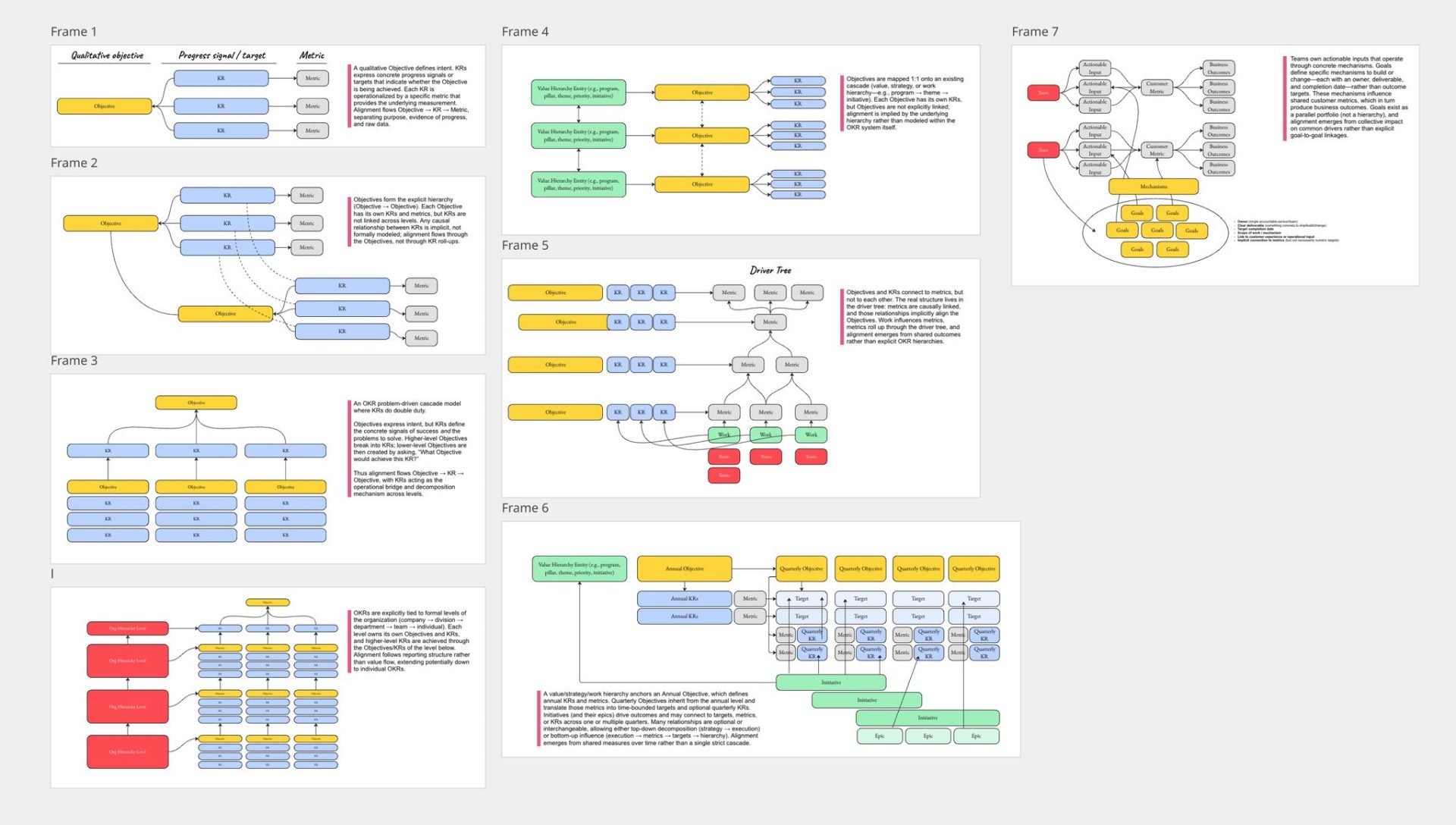
John Cutler shared an exercise where he plotted different OKR mental models used by Dotwork customers. This exploration revealed that each model has its own effectiveness within a specific context. However, he points out that many organizations don’t adhere to a single, rigid framework.
“What is incredible is how each ‘model’ works in context, and also how companies are often swimming between all of these at the same time.”
This observation, according to John Cutler, underscores a significant challenge in OKR implementation. It’s not simply about adopting a pre-defined structure, but rather understanding the dynamic and often fluid way businesses operate. He suggests that effective OKR tools and methodologies must acknowledge this inherent flexibility.
The Spectrum of OKR Implementation
John Cutler highlights that companies frequently find themselves utilizing multiple OKR approaches simultaneously. This is not necessarily a sign of disorganization, but rather an organic response to different business needs and team structures.
Adaptability as a Core Requirement
The core of John Cutler’s insight lies in the need for systems to adapt, rather than expecting companies to rigidly conform. He states:
“One of our goals is to accommodate ‘all’ of them, but that runs deeper than a customer selecting a model and pressing Play. It means adapting.”
As John Cutler argues, true support for OKRs goes beyond superficial selection. It requires a deeper understanding of how different mental models function and how to integrate them seamlessly into a company’s existing operational flow. This suggests that the ideal OKR framework is one that can bend and flex to suit the diverse realities of business operations.
Beyond Simple Selection
John Cutler’s analysis pushes back against the idea that OKR implementation is a simple plug-and-play process. The exercise of plotting different mental models demonstrates the nuanced reality faced by many businesses.
According to John Cutler, the goal for tools and platforms should be to facilitate this adaptation. This involves providing flexibility and understanding the underlying principles that drive different OKR approaches. In his view, this adaptability is key to unlocking the full potential of OKRs for driving business performance.
In conclusion, John Cutler’s recent post offers a valuable perspective on the practical application of OKRs, emphasizing the importance of context, adaptability, and a nuanced understanding of how different mental models can coexist and be leveraged within a single organization.
📝 About This Content
This article is based on insights shared by John Cutler on LinkedIn.
📅 Originally posted on February 28, 2026 | View original post on LinkedIn →