
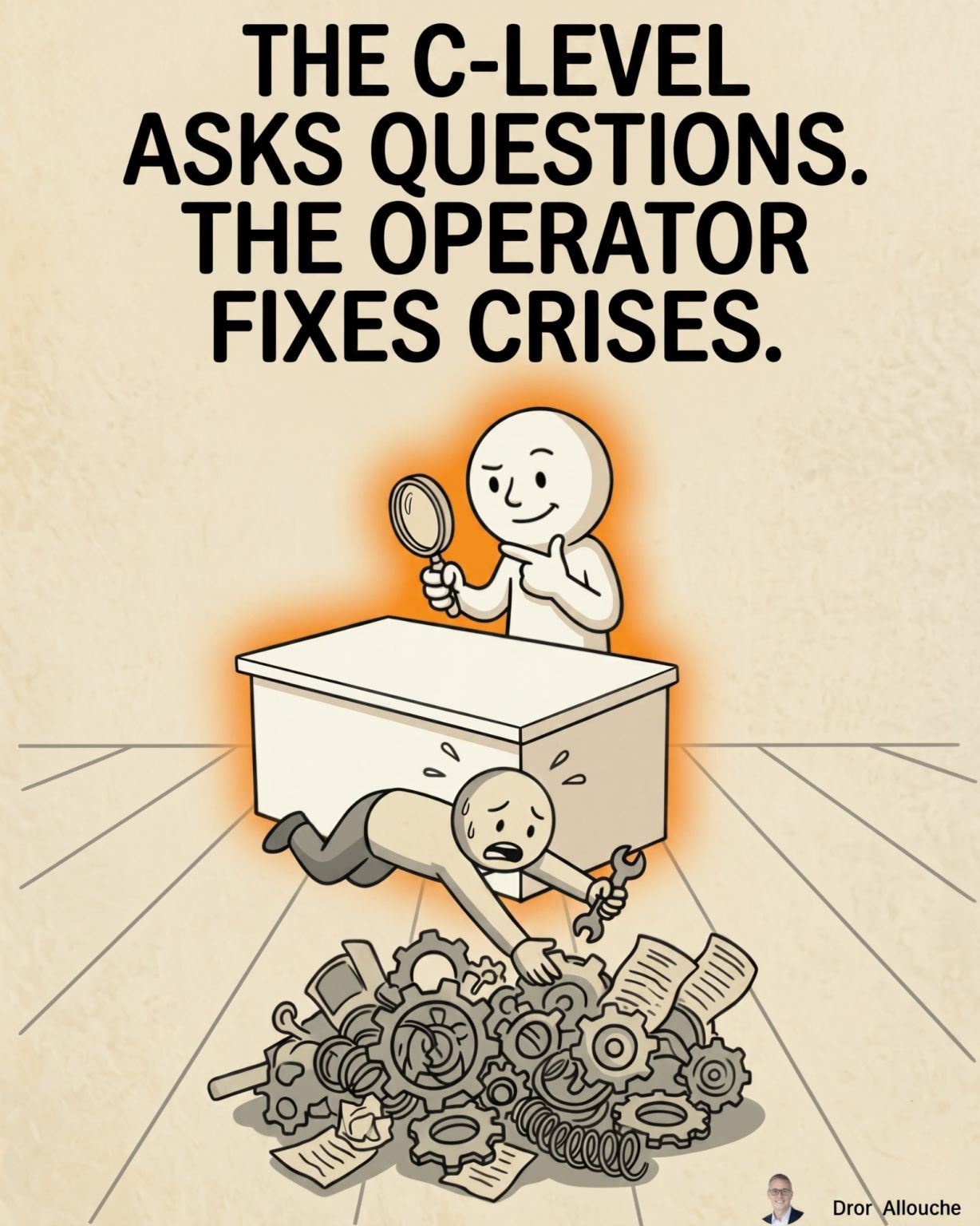
In a recent LinkedIn post, Drorallouche discusses a critical shift leaders must make when transitioning to executive roles, highlighting the potential pitfalls of relying solely on past problem-solving methods. Drorallouche argues that while problem-solving skills lead to promotions, the same approach can hinder advancement at the executive level if not adapted.
The core of Drorallouche’s message centers on the need for a methodological transition. “The transition to the executive team requires a shift in methodology,” the post states. “You investigate the issue. The team handles the execution.” This distinction is crucial, as executive leadership involves empowering teams rather than directly intervening in every problem.
The Chief Problem Solver Blind Spot
Drorallouche identifies a common challenge for new executives: the “Chief Problem Solver blind spot.” This occurs when leaders continue to dive deep into solving problems themselves, rather than leveraging their team’s capabilities. According to Drorallouche, this can lead to a lack of team development and, paradoxically, can even be detrimental to the leader’s own standing within the organization.
Three Strategies for Executive Transition
To help leaders navigate this transition, Drorallouche outlines three key strategies:
1. The Mirror Strategy
This strategy involves using questions to guide team members to explore and understand issues themselves. Drorallouche explains, “Executives use questions as mirrors. You prompt the team to view the situation.” The practical application involves starting conversations with prompts like, “Walk me through the timeline” or “Help me understand the bottleneck.” The goal is to foster a self-discovery process within the team.
2. The Clarity Phase
The second strategy focuses on using questions to eliminate confusion and precisely define the problem. Drorallouche advises repeatedly asking “what” and “how” until the team can clearly articulate the issue. “Questions remove confusion. You isolate the cause,” the post emphasizes. This phase ensures a shared understanding before moving to solutions.
3. The Accountability Transfer
Finally, Drorallouche highlights the importance of transferring accountability for execution. Once a problem is clearly understood, the leader’s role shifts to ensuring the team owns the solution. As Drorallouche notes, “Clarity creates accountability. The questioning process designates an owner.” The actionable step here is to ask the team about their planned execution steps, such as, “What steps will you take by tomorrow?”
Drorallouche concludes by reinforcing the idea that effective leadership hinges on empowering teams. “Questions build capacity. Execution belongs to the team,” the post summarizes. This approach not only develops the team but also allows the executive to focus on broader strategic challenges.
📝 About This Content
This article is based on insights shared by Drorallouche on LinkedIn.
📅 Originally posted on May 26, 2026 | View original post on LinkedIn →