
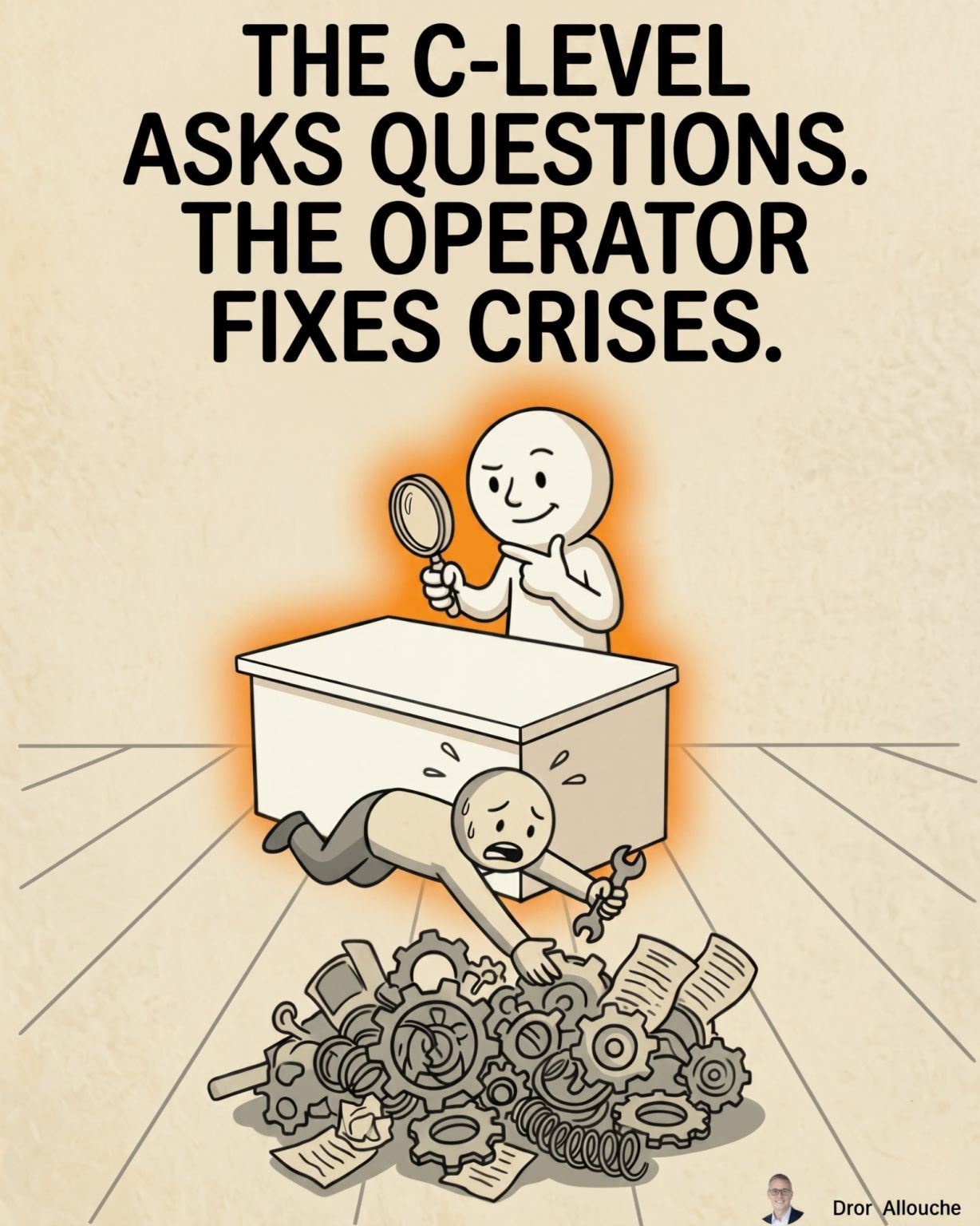
In a recent LinkedIn post, Drorallouche discusses a critical yet often overlooked challenge faced by individuals transitioning into executive roles: the shift from being the primary problem-solver to fostering problem-solving within their teams. Drorallouche highlights that while excelling at solving problems leads to promotion, continuing this approach at the executive level can lead to failure.
The core of Drorallouche’s argument centers on a methodological change required for executive leadership. “The transition to the executive team requires a shift in methodology,” the post states. “You investigate the issue. The team handles the execution.” This distinction is crucial, as executive success hinges on empowering others to solve problems, rather than solving them directly.
The Chief Problem Solver Blind Spot
Drorallouche identifies a common pitfall for new executives: the ‘Chief Problem Solver blind spot.’ This occurs when leaders, accustomed to deep-diving into issues themselves, fail to delegate and empower their teams. The post emphasizes that the executive’s role evolves from direct intervention to enabling the team’s problem-solving capabilities.
Drorallouche’s Three-Step Framework
To navigate this transition, Drorallouche outlines a three-step framework designed to foster accountability and empower teams:
1. The Mirror Strategy
This strategy involves using questions as a tool to guide the team toward understanding and solving problems themselves. As Drorallouche explains, “Executives use questions as mirrors. You prompt the team to view the situation.” The practical application involves initiating dialogues with prompts such as “Walk me through the timeline” or “Help me understand the bottleneck.” The goal is to encourage self-discovery within the team.
2. The Clarity Phase
The second step focuses on removing confusion and isolating the root cause of a problem. Drorallouche advises a repeated use of “what” and “how” questions until the team can clearly articulate the problem. “Questions remove confusion. You isolate the cause,” the post notes. This phase ensures that everyone is aligned on the nature of the issue before moving to solutions.
3. The Accountability Transfer
The final step, and perhaps the most critical for executive transition, is transferring accountability for execution. Drorallouche argues that achieving clarity naturally leads to accountability. “Clarity creates accountability. The questioning process designates an owner,” the post reads. The action here involves explicitly handing over the execution phase to the team, often by asking, “What steps will you take by tomorrow?” This ensures that the team takes ownership of the problem-solving process from start to finish.
Building Capacity Through Questioning
Drorallouche concludes by reinforcing the power of questions in leadership. “Questions build capacity. Execution belongs to the team,” the post emphasizes. By adopting these strategies, leaders can move beyond being the sole problem-solver and cultivate a more empowered, accountable, and effective team, ultimately leading to greater success in their executive roles.
📝 About This Content
This article is based on insights shared by Drorallouche on LinkedIn.
📅 Originally posted on May 26, 2026 | View original post on LinkedIn →