
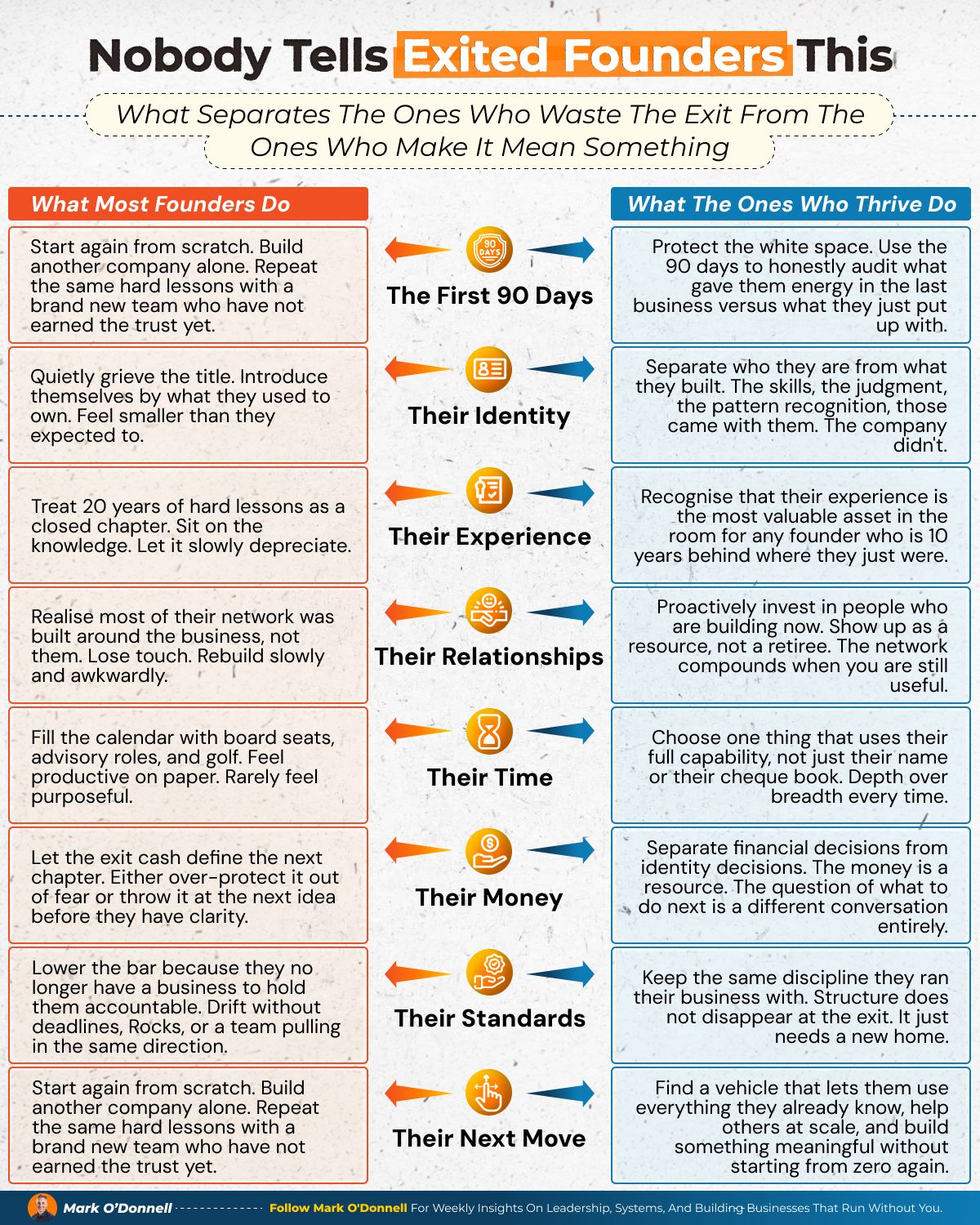
In a recent LinkedIn post, Mark O’Donnell explores the often-overlooked challenges founders face after selling their businesses, arguing that the true difficulty lies not in the exit itself, but in defining one’s identity and purpose in its aftermath.
O’Donnell highlights that founders spend years building towards an exit, only to find themselves adrift without a clear path forward once the deal is closed. He emphasizes that this transitional phase, the gap between the sale and the next chapter, is a critical juncture where success can be undermined if not navigated intentionally.
“Selling your business is the easy part. Figuring out who you are without it is where things get hard.”
The Identity Shift Post-Exit
A core theme in O’Donnell’s analysis is the struggle with identity. He points out that many founders become so intertwined with their company that they find it difficult to separate their personal identity from their former role. This can lead to a prolonged grieving process for their title and a tendency to still introduce themselves based on their past ownership.
As Mark O’Donnell notes, the key is to consciously decouple self-worth from the business built. He suggests that while the company may no longer be a part of their professional life, the personal attributes and achievements remain. This separation is crucial for moving forward constructively.
Navigating the First 90 Days
O’Donnell also provides actionable advice for the crucial initial period after an exit. He advises founders to resist the urge to immediately jump into a new venture to avoid confronting the silence.
“Protect the quiet. Audit what gave you energy versus what you just tolerated.”
This period of reflection, according to O’Donnell, is essential for understanding what truly energizes an individual, rather than merely what they tolerated during their entrepreneurial journey. This self-awareness is fundamental for making informed decisions about future endeavors.
Leveraging Experience and Network
The post further delves into how founders can best utilize their accumulated experience and network. O’Donnell argues against treating years of hard-earned lessons as a closed book. Instead, he advocates for recognizing this experience as an invaluable asset that can guide others who are earlier in their entrepreneurial path.
Furthermore, he stresses the importance of maintaining and leveraging one’s network. According to Mark O’Donnell, relationships often tied to the business can fade if not actively nurtured. He suggests a proactive approach:
“Show up as a resource to people who are building now. The network keeps growing when you’re still useful.”
This perspective frames the post-exit phase not as an ending, but as a pivot point, a fork in the road where intentional choices determine the direction forward.
Financial and Personal Standards
O’Donnell also addresses the complex interplay between finances and identity post-exit. He cautions against letting the exit valuation dictate future decisions, advocating for separating financial planning from identity-based choices. This distinction, he argues, prevents emotional overspending or overly protective financial behaviors driven by a lack of clarity on personal desires.
Moreover, O’Donnell encourages founders to maintain the rigor and discipline that led to their success. He points out that accountability structures simply need to be reimagined, not abandoned, after the exit. This includes making deliberate choices about how to spend time, focusing on activities that utilize one’s full capabilities rather than just superficial engagement.
The Importance of Clarity
In conclusion, Mark O’Donnell posits that many post-exit difficulties stem from a lack of clarity on what one truly wants. He shares his own experience, finding purpose as an EOS Implementer by applying two decades of lessons to help other founders. This personal anecdote underscores his belief that the exit is a transition, not a final destination, and that choosing the right path requires deliberate self-understanding and intention.
📝 About This Content
This article is based on insights shared by Mark O'Donnell on LinkedIn.
📅 Originally posted on March 27, 2026 | View original post on LinkedIn →