
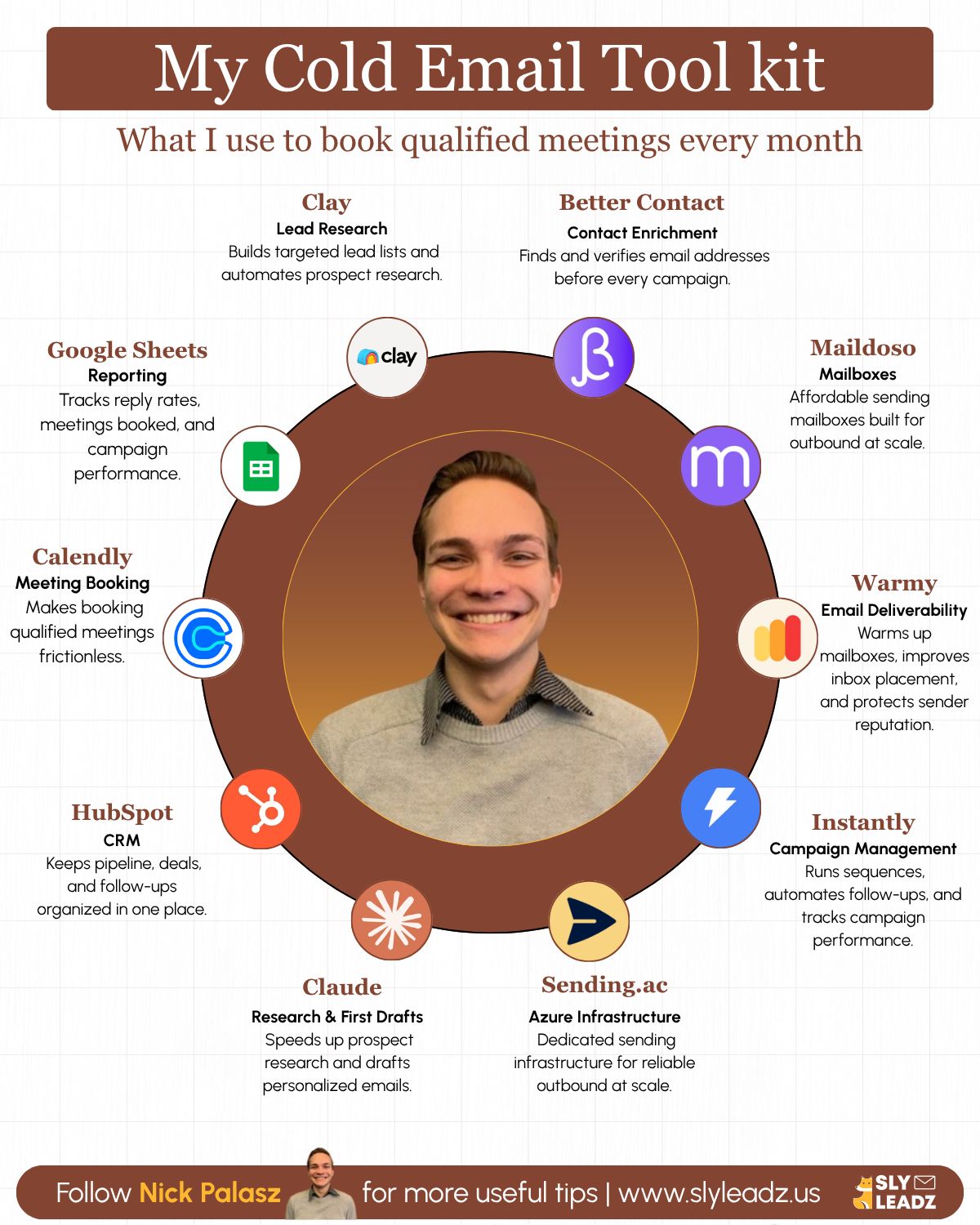
In a recent LinkedIn post, Nick Palasz shares the specific tools he relies on for his cold email outreach efforts, offering a detailed look at his “entire outbound stack.” Palasz, who frequently fields questions about his preferred software, aims to provide a comprehensive guide for others looking to refine their cold email strategies and improve meeting booking rates.
Palasz emphasizes that the effectiveness of a cold email strategy is not solely dependent on the number of tools used, but rather on the skillful application of a select few. He states:
“One thing I’ve learned… Buying more tools won’t fix a broken outbound strategy. The best results usually come from using a small stack really well.”
The Core Components of Palasz’s Outbound Stack
The tools Palasz highlights are categorized by their function in the outbound process, from initial prospect research to closing the deal.
Prospect Research and List Building
For identifying and researching potential clients, Palasz relies on two key platforms. He uses Clay for building highly targeted lead lists and automating prospect research. Complementing this, BetterContact is employed to find and verify email addresses before launching any campaign, ensuring a higher degree of accuracy and deliverability.
Email Deliverability and Infrastructure
Ensuring emails reach the inbox and maintain a good sender reputation is crucial. Palasz points to Maildoso for providing affordable mailboxes specifically designed for outbound sales. To further enhance inbox placement and sender reputation, he utilizes Warmy, which is described as a reliable tool for warming up email channels. For the underlying infrastructure, Palasz opts for sending.ac, leveraging its dedicated Azure infrastructure for outbound activities.
Campaign Management and Personalization
When it comes to executing campaigns and personalizing outreach, Palasz employs a combination of tools. Instantly.ai is used for running sequences, managing follow-ups, and overseeing the overall campaign. For crafting personalized first drafts and assisting with prospect research, Palasz turns to Claude, an AI assistant. As Nick Palasz notes, leveraging AI can streamline the initial stages of personalization.
Organization and Meeting Booking
To maintain organization and facilitate the sales process, Palasz integrates HubSpot into his workflow. This CRM is used to keep every lead, deal, and follow-up meticulously organized. For the critical step of booking meetings, he uses Calendly, highlighting its role in making the process effortless.
“These are the tools I rely on to research prospects, build campaigns, land in the inbox, and book qualified meetings every month.”
Performance Tracking
Finally, Palasz underscores the importance of tracking campaign performance. He uses Google Sheets to monitor replies, scheduled meetings, and overall campaign effectiveness, providing a clear view of what’s working and where improvements can be made.
The Philosophy Behind the Stack
Beyond the specific tools, Palasz shares a core philosophy regarding outbound strategy. He argues that the most significant gains often stem not from acquiring more software, but from mastering the tools already in use. His approach prioritizes efficiency and effectiveness through a well-honed, albeit potentially small, set of reliable tools.
“The best results usually come from using a small stack really well.”
Palasz concludes his post by inviting engagement from his network, asking about the indispensable tools others use and encouraging reposts for teams focused on outbound efforts. This interactive approach, according to Palasz, fosters a community of shared learning and practical strategy development.
📝 About This Content
This article is based on insights shared by Nick Palasz on LinkedIn.
📅 Originally posted on July 10, 2026 | View original post on LinkedIn →