
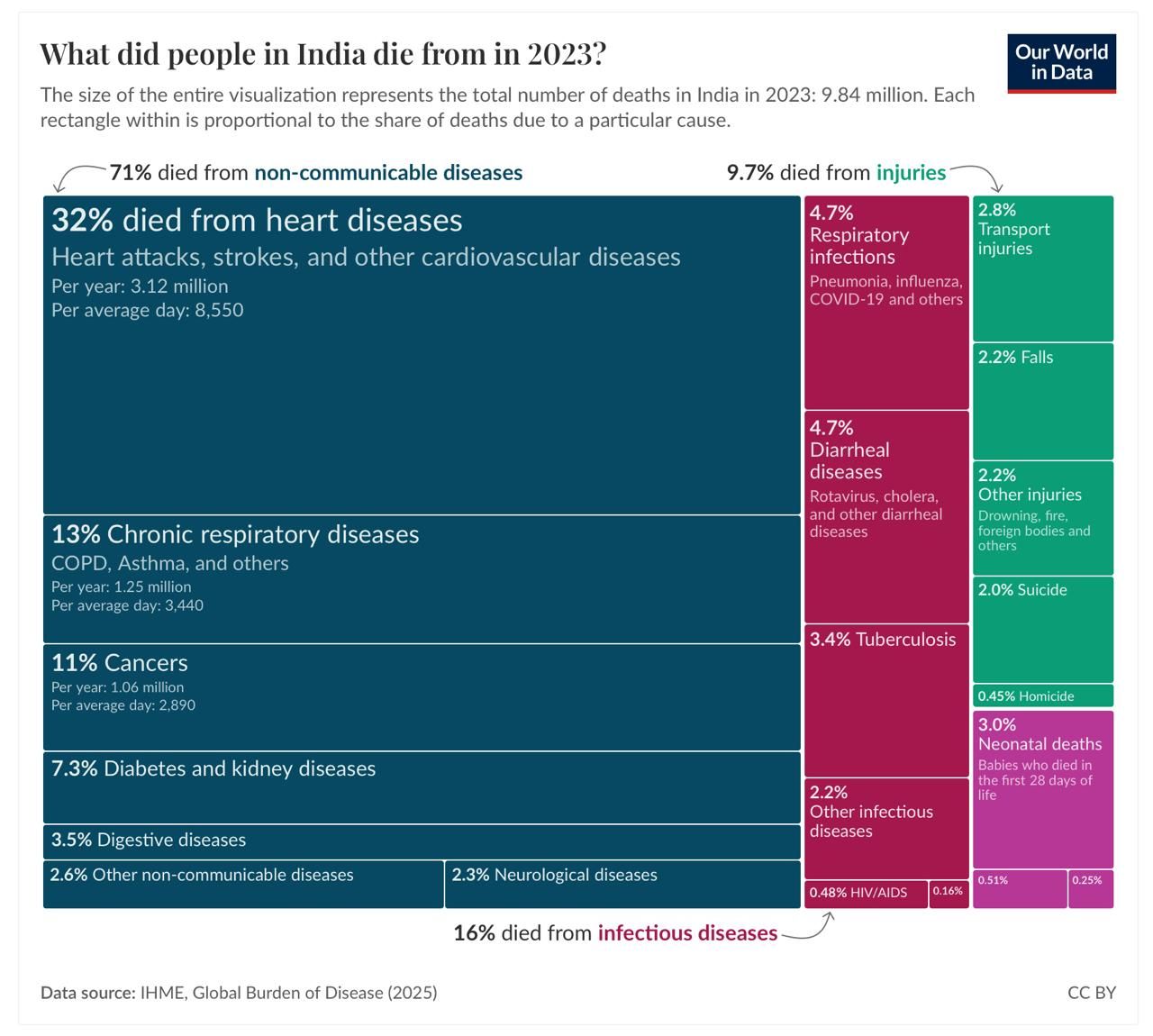
In a recent LinkedIn post, Nithin Kamath discusses the multifaceted nature of mortality, drawing attention to both systemic issues and personal agency in health outcomes. The post, accompanied by data from Our World in Data, aims to provide a nuanced perspective on what contributes to the end of life, distinguishing between factors largely outside of individual control and those that fall within our personal sphere of influence.
Systemic Factors Influencing Health
Kamath begins by acknowledging that a significant portion of what leads to death is rooted in broader societal and environmental conditions. He points to several key areas that represent systemic challenges, suggesting that these are often beyond the immediate reach of individual action.
“A lot of what kills us is systemic, like poor air quality (see link in comments), broken food systems, and infrastructure.”
As Kamath notes, these systemic factors can have a profound and widespread impact on public health. Poor air quality, for instance, is a well-documented contributor to respiratory and cardiovascular diseases. Similarly, challenges within food systems can lead to malnutrition or the prevalence of unhealthy diets, while inadequate infrastructure can affect everything from access to healthcare to safety and sanitation.
The Role of Personal Habits and Self-Care
Despite the significant influence of systemic issues, Kamath emphasizes that individuals are not powerless. He highlights that a substantial part of health and longevity is determined by personal choices and daily habits.
“But a meaningful chunk is also within our control, like how we eat, move, sleep, and take care of ourselves.”
According to Kamath, focusing on these controllable aspects of life can make a significant difference. This includes conscious decisions about diet, regular physical activity, sufficient sleep, and overall self-care practices. By taking responsibility for these personal habits, individuals can actively work towards improving their health and potentially mitigating some of the risks associated with broader systemic problems.
Empowering Individual Action
Kamath’s post serves as a reminder that while societal factors play a critical role in health outcomes, personal responsibility remains a key determinant. His insights suggest a balanced approach is necessary: advocating for systemic change while simultaneously empowering individuals to take charge of their own well-being through consistent, healthy lifestyle choices.
The data referenced by Kamath underscores the importance of understanding both macro and micro factors influencing human health and lifespan. By differentiating between systemic challenges and personal controllable factors, Nithin Kamath encourages a comprehensive view of health, prompting reflection on where efforts—both individual and collective—can be most effectively directed.
📝 About This Content
This article is based on insights shared by Nithin Kamath on LinkedIn.
📅 Originally posted on April 14, 2026 | View original post on LinkedIn →