
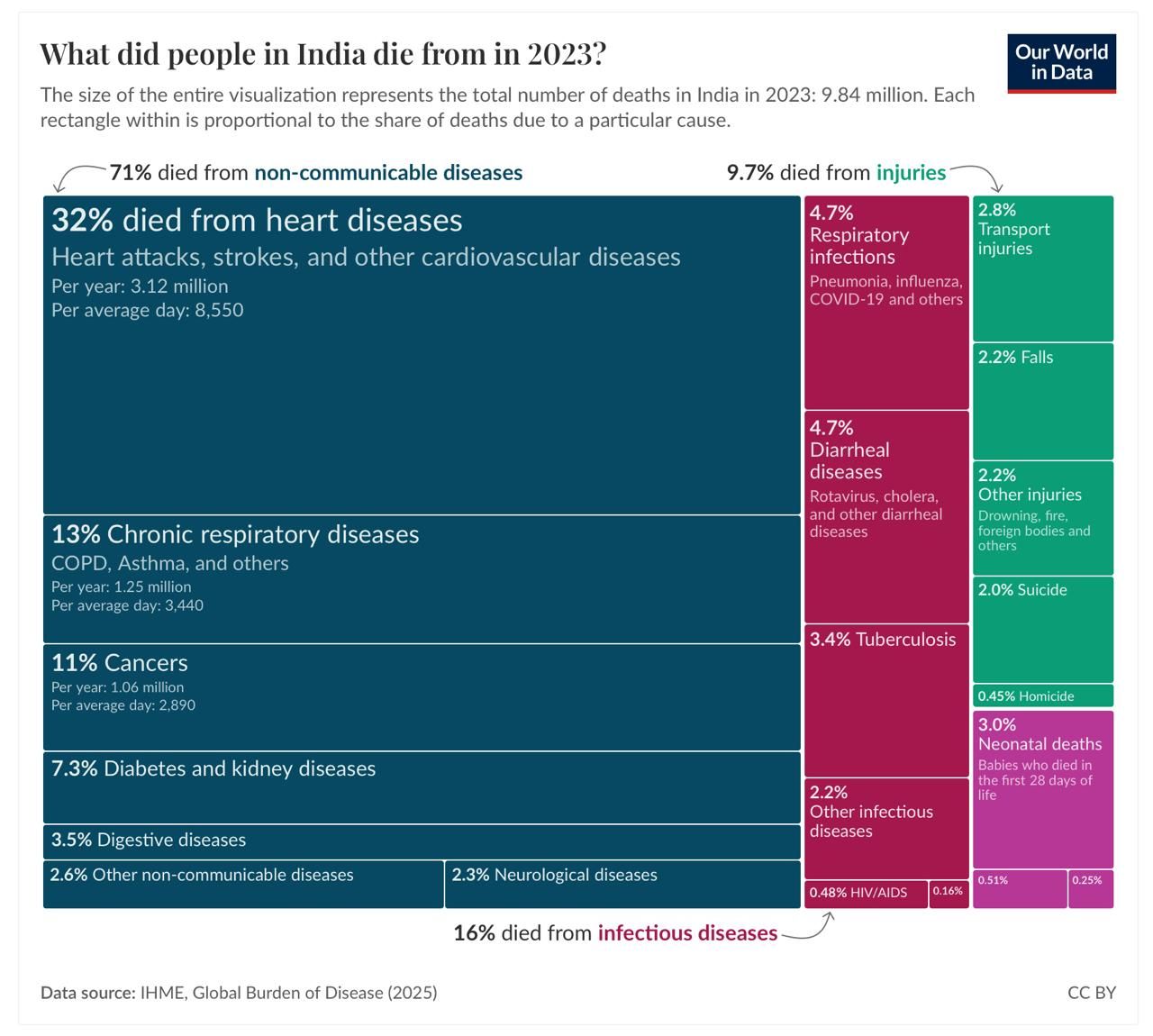
In a recent LinkedIn post, Nithin Kamath discusses the multifaceted factors contributing to mortality, drawing attention to both systemic issues and personal choices. The Zerodha co-founder shared insights that encourage a nuanced understanding of health and longevity, emphasizing areas within and outside of individual control.
Analyzing Mortality Factors
Nithin Kamath begins by acknowledging the data, even if its precise accuracy is uncertain, stating that the general trends are significant. He points out that a substantial portion of what leads to death is rooted in broader societal and environmental problems.
“A lot of what kills us is systemic, like poor air quality (see link in comments), broken food systems, and infrastructure.”
As Nithin Kamath highlights, these systemic factors are often beyond the immediate influence of individuals. Issues such as air pollution, inefficiencies in food supply chains, and inadequate infrastructure represent large-scale challenges that impact public health broadly. These are complex problems that require collective action and policy changes to address effectively.
The Role of Personal Responsibility
However, Kamath also emphasizes that individuals are not powerless. He contrasts the systemic factors with those that fall within personal purview, suggesting that a significant part of managing health and lifespan is a matter of individual agency.
“But a meaningful chunk is also within our control, like how we eat, move, sleep, and take care of ourselves.”
According to Nithin Kamath, focusing on these personal habits can make a considerable difference. He identifies key pillars of self-care: diet, physical activity, sleep, and general well-being. This perspective underscores the importance of lifestyle choices in mitigating health risks and promoting a longer, healthier life. Nithin Kamath’s post serves as a reminder that while external factors play a crucial role, personal responsibility in health management is equally vital.
Bridging Systemic and Personal Approaches
Kamath’s analysis suggests a dual approach is necessary for improving health outcomes. Addressing systemic issues requires societal and governmental efforts, while empowering individuals to take control of their personal health choices can lead to significant improvements in well-being. The insights shared on LinkedIn prompt a broader conversation about how individuals and society can work together to tackle the complex determinants of health and mortality.
📝 About This Content
This article is based on insights shared by Nithin Kamath on LinkedIn.
📅 Originally posted on April 14, 2026 | View original post on LinkedIn →