
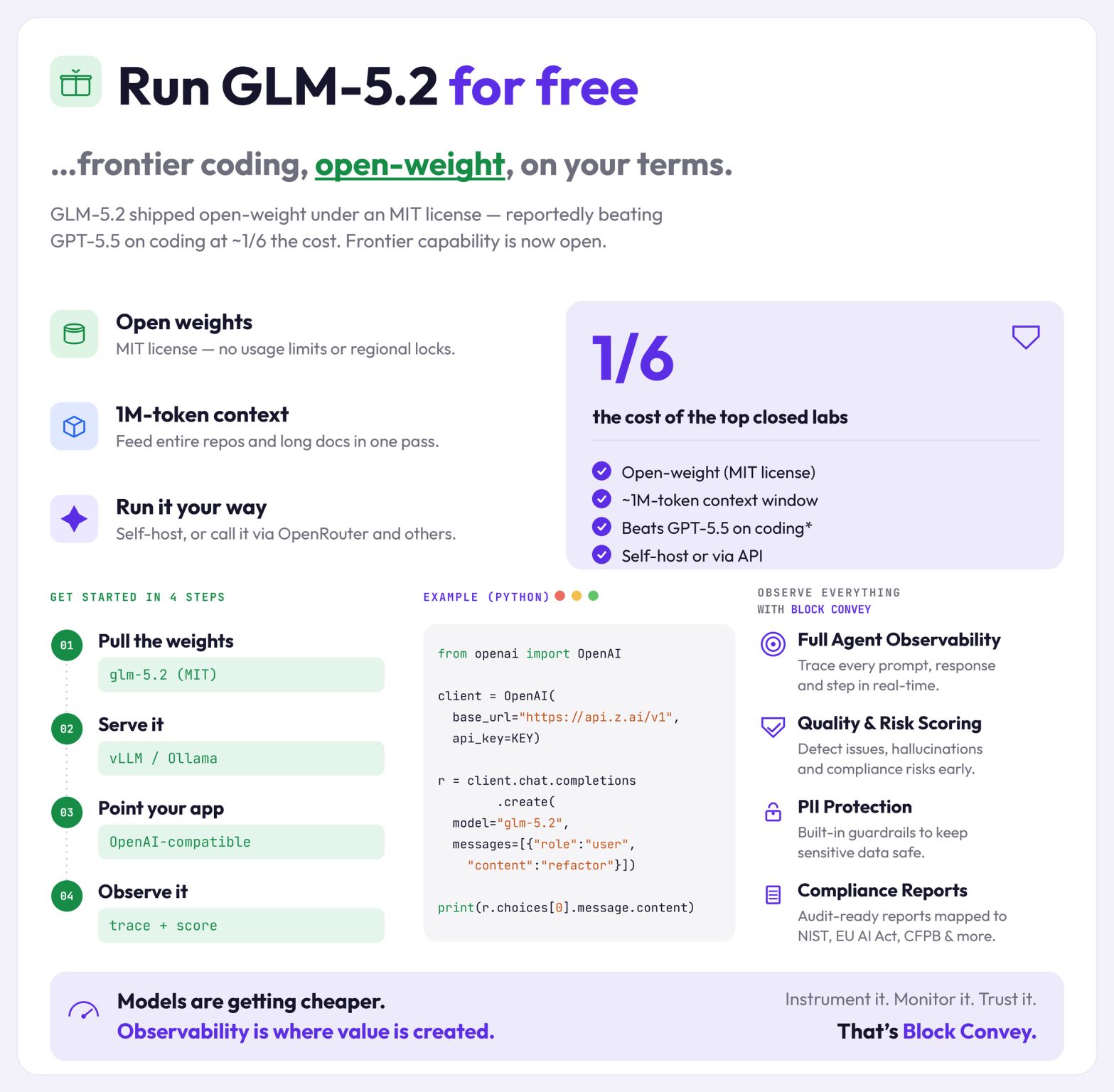
In a recent LinkedIn post, Arun P. highlights a significant shift in the artificial intelligence landscape, focusing on the implications of new, affordable open-weight models. Arun P. points out that the release of GLM-5.2 by Z.ai, an open-weight model with a substantial 1 million token context window, marks a pivotal moment where frontier-level AI capabilities are becoming accessible at a fraction of the cost of proprietary solutions.
The Shifting Economics of AI Models
Arun P. emphasizes that the cost and accessibility of advanced AI models are rapidly changing the competitive dynamics. The availability of powerful open-source models like GLM-5.2, which reportedly rivals top-tier proprietary models like GPT-5.5 in coding benchmarks while costing significantly less, challenges traditional business strategies. As Arun P. states:
When the model becomes a commodity, it stops being your moat. If anyone can run a top-tier model for pennies, “we use the best model” is no longer a strategy. It’s table stakes.
This observation suggests that relying solely on using advanced AI models as a competitive advantage is becoming obsolete. Arun P. argues that the value proposition is moving away from the model itself towards how it is implemented and managed.
Where True Value Lies in the AI Stack
According to Arun P., the real differentiation and value creation in the AI space are shifting upwards in the technology stack. With models becoming increasingly commoditized and interchangeable due to their lower cost and open accessibility, businesses must focus on other areas to build a sustainable competitive edge. Arun P. elaborates on this shift:
So where does the value go? Up the stack. To how you deploy these models, how you govern them, and whether you can actually see and trust what they do once they’re in production.
In Arun P.’s view, the future value lies in the practical application and operationalization of AI. This includes aspects like:
- Deployment Strategies: How effectively organizations integrate AI models into their existing workflows and products.
- AI Governance: Establishing robust frameworks for managing AI risks, ensuring compliance, and maintaining ethical standards.
- Observability: The ability to monitor, understand, and trust the behavior of AI models once they are deployed in production environments.
The Rise of Observability as a Differentiator
Arun P. identifies AI observability as a key area where businesses can create significant value. As models become cheaper and more ubiquitous, the ability to ensure their reliable, transparent, and secure operation becomes paramount. Arun P. concludes:
Models are getting cheaper every month. Observability is where value gets created.
This perspective positions observability not just as a technical requirement but as a strategic differentiator. The company Arun P. is involved with, Block Convey, is making a bet on this trend. The core question Arun P. poses to his audience is about the future differentiators in an AI landscape characterized by increasingly accessible and affordable models, implying that practical implementation, governance, and trustworthy operation will be key.
📝 About This Content
This article is based on insights shared by Arun P. on LinkedIn.
📅 Originally posted on June 29, 2026 | View original post on LinkedIn →