
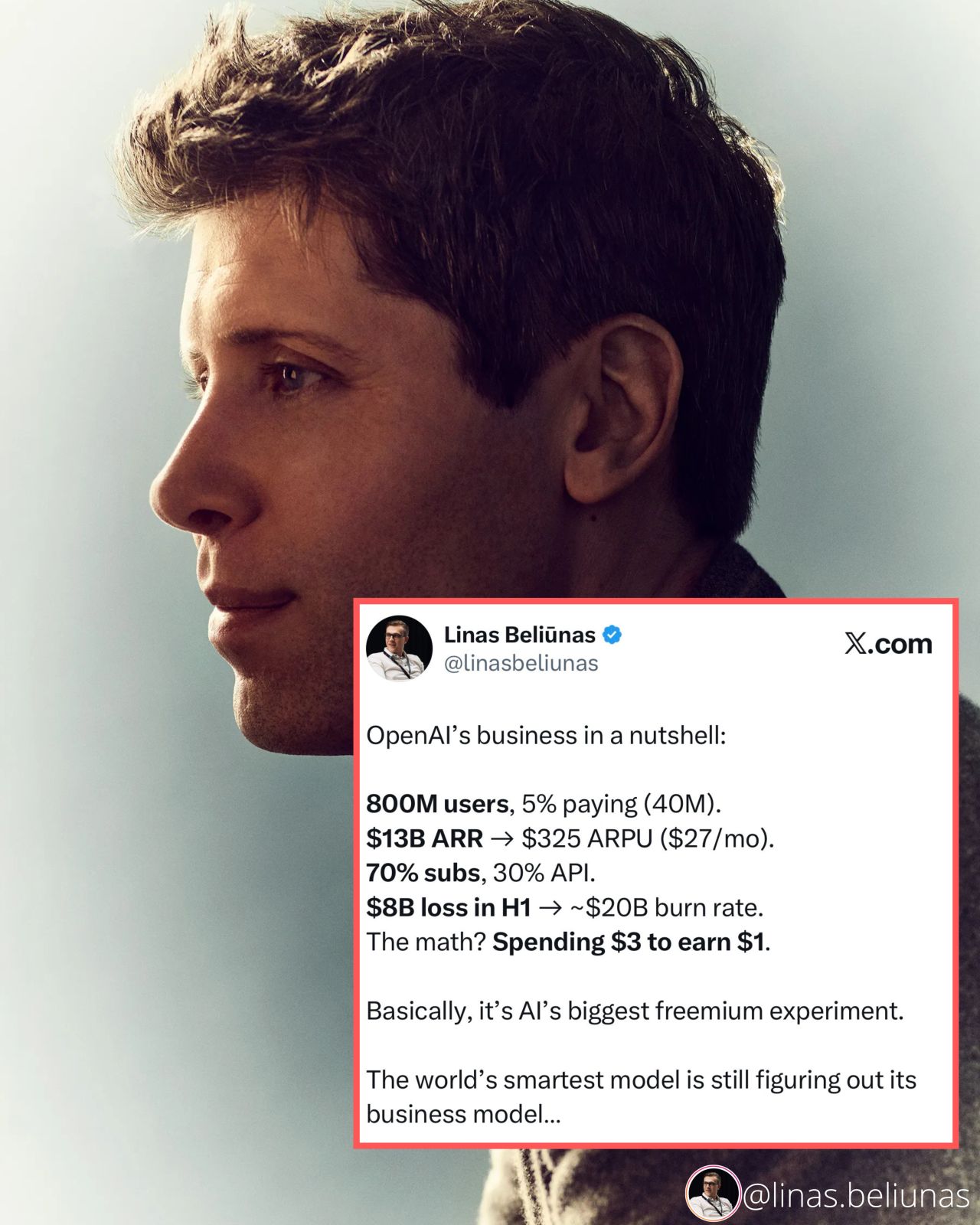
Recent figures from OpenAI, as reported by the Financial Times, paint a picture of staggering growth and immense ambition. The artificial intelligence giant is reportedly serving a colossal 800 million users weekly, a scale typically associated with social media platforms. However, this impressive user base comes with a unique set of financial challenges and strategic imperatives that define the current AI landscape.
The Freemium Paradox at Scale
OpenAI’s operational model presents a fascinating case study in the ‘freemium paradox.’ While achieving a user scale comparable to global social networks, the company operates with the financial burn rate of an early-stage startup, coupled with the capital expenditure of a sovereign nation when it comes to compute resources. The reported numbers highlight this dichotomy:
- 800 million weekly users: Demonstrates massive market penetration and product-market fit for its core offerings.
- 5% paying users: Indicates a significant portion of the user base is not yet monetized, presenting a key area for future revenue growth.
- $13 billion in Annual Recurring Revenue (ARR): A substantial revenue stream, underscoring the value proposition for its paying customers.
- $8 billion loss in H1: Reflects the enormous investment in R&D, infrastructure, and talent required to maintain its leading position.
- $1 trillion+ in compute pledges: Signifies the foundational reliance on and massive investment in computational power, a critical bottleneck and cost center in AI development.
Sam Altman’s Ambitious Five-Year Vision
CEO Sam Altman’s long-term strategy appears designed to navigate these complexities and cement OpenAI’s position as a dominant force. The plan hinges on several key pillars:
Diversifying Revenue Streams
Beyond its current offerings, OpenAI is exploring multiple avenues for new revenue generation:
- Sora Video: The potential of its advanced video generation model to unlock new markets and applications.
- AI Agents: Developing autonomous AI agents that can perform tasks, creating new service models.
- Shopping Tools: Integrating AI into e-commerce experiences to enhance personalization and efficiency.
- Advertising: Potentially introducing advertising, a common monetization strategy for platforms with large user bases, though this would need careful implementation to maintain user trust.
Strategic Financial Backing
Securing substantial debt financing, reportedly backed by significant chip deals with industry giants like Nvidia and AMD, provides the necessary capital to fuel its compute-intensive operations and future development.
Hardware Innovation
The rumored development of an AI device, designed in collaboration with Jony Ive, suggests a move towards a more integrated hardware-software ecosystem, potentially creating new user experiences and revenue streams.
The High Stakes: AWS of Intelligence or Most Expensive Experiment?
The success of OpenAI’s strategy carries profound implications. If they can successfully monetize their massive user base, diversify revenue, and leverage their technological advancements, they could indeed become the ‘AWS of intelligence’ – providing foundational AI capabilities and infrastructure for a vast array of businesses and applications.
Conversely, failure to execute this ambitious plan could result in OpenAI being remembered as the most expensive, albeit groundbreaking, experiment in technology history. The path forward requires meticulous execution, continuous innovation, and adept financial management.
This article is based on insights from a LinkedIn post by Linas Beliūnas. For more on the intersection of finance and technology, subscribe to his newsletter at linas.substack.com.
📝 About This Content
This article is based on insights shared by Linas Beliūnas on LinkedIn.
📅 Originally posted on October 15, 2025 | View original post on LinkedIn →