
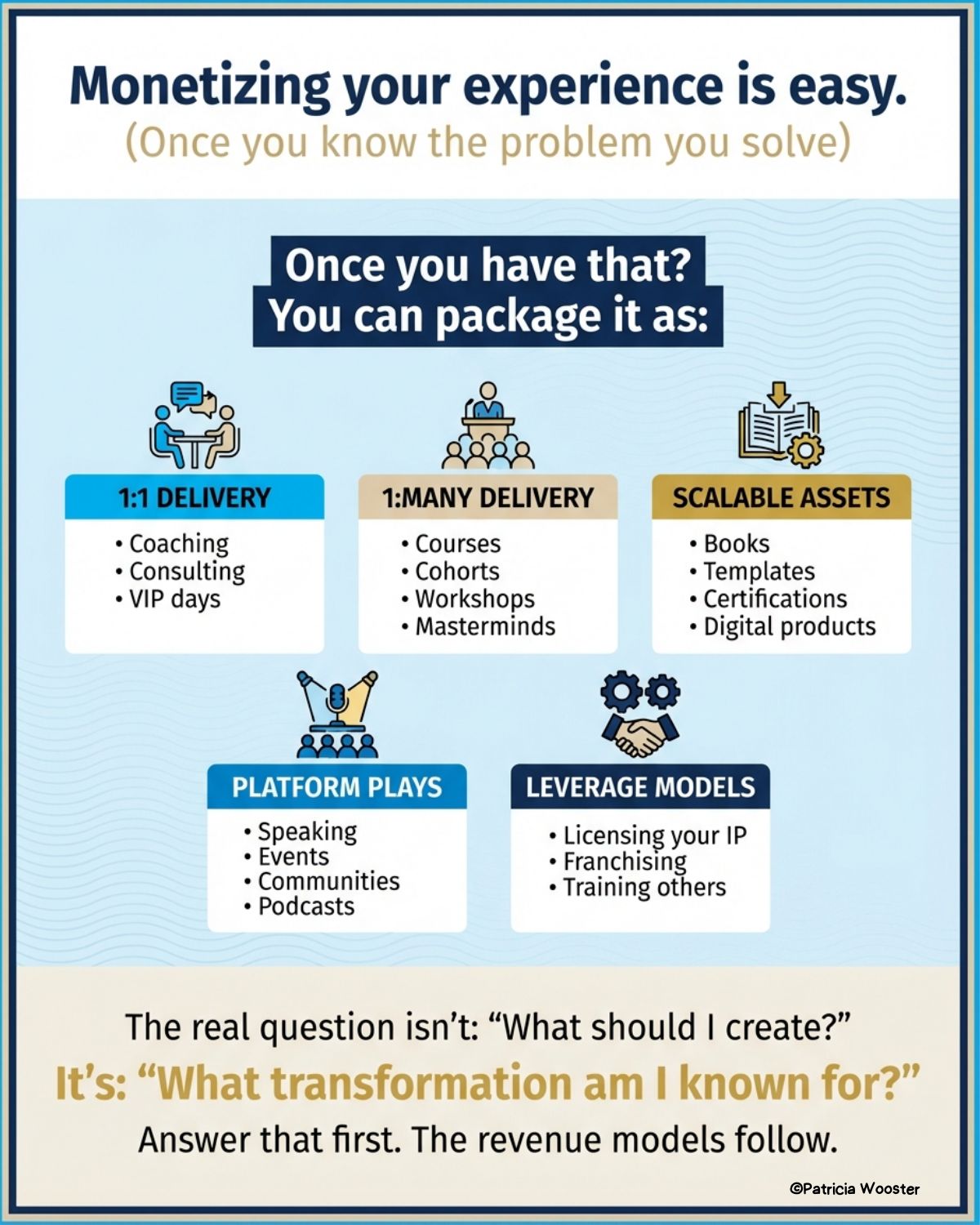
In a recent LinkedIn post, Patricia Wooster offers a strategic framework for experts looking to monetize their experience, emphasizing a foundational approach that prioritizes problem-solving and transformation over the delivery format.
Wooster’s core argument is that successful monetization hinges on clearly defining the specific result an expert provides, rather than selecting a delivery method first. She highlights a common pitfall where individuals choose a format, such as coaching or courses, before fully understanding the problem they solve and the tangible outcomes they deliver.
“Most experts skip the first step. They pick the format before they nail the promise. That’s backwards.”
The Primacy of the Problem and Solution
According to Wooster, the market’s willingness to pay is not based on credentials alone, but on the clarity of the transformation offered. She advises experts to first get crystal clear on three key elements:
- Who the offering is for
- What problem is being solved
- What specific result is created
“The market doesn’t pay for your credentials,” Wooster writes. “It pays for clarity about what changes.” This focus on tangible outcomes, she suggests, makes the subsequent choice of format a natural and obvious decision.
Unlocking Monetization Through Defined Results
Wooster outlines a comprehensive list of potential delivery models, illustrating how a clearly defined promise can be adapted to various formats. These include:
Direct Engagement Models
For those offering personalized support, Wooster identifies options like:
- 1:1 delivery: Coaching, Consulting, VIP days
Group and Scalable Offerings
For reaching a wider audience, she suggests:
- 1:Many delivery: Courses, Cohorts, Workshops, Masterminds
Asset-Based Monetization
Wooster also points to the creation of durable assets:
- Scalable assets: Books, Templates, Certifications, Digital products
Platform and Leverage Strategies
Furthermore, she touches on broader market plays and intellectual property utilization:
- Platform plays: Speaking, Events, Communities, Podcasts
- Leverage models: Licensing your IP, Franchising, Training others
Regardless of the chosen path, the underlying principle remains consistent: the value proposition must be rooted in a specific, desirable transformation.
The Central Question: Transformation, Not Creation
Wooster concludes by reframing the fundamental question for experts. Instead of asking, “What should I create?”, the more pertinent question, in her view, is, “What transformation am I known for?”
“The real question isn’t: ‘What should I create?’ It’s: ‘What transformation am I known for?’ Answer that first. The revenue models follow.”
By prioritizing the identification and articulation of the transformation provided, experts can more effectively build sustainable and profitable businesses around their knowledge and experience, according to Wooster’s analysis.
📝 About This Content
This article is based on insights shared by Patricia Wooster on LinkedIn.
📅 Originally posted on February 11, 2026 | View original post on LinkedIn →