
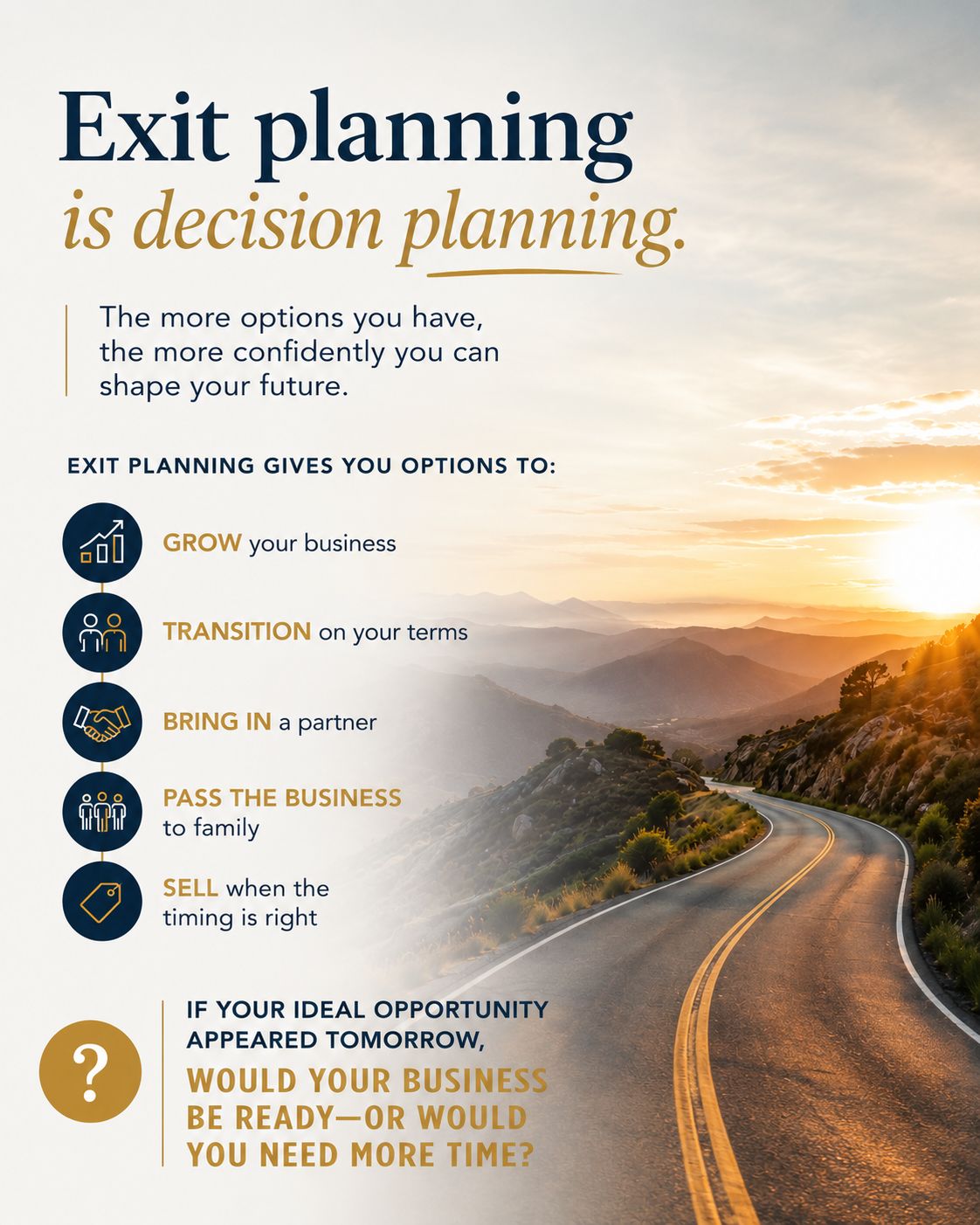
In a recent LinkedIn post, Marc Henn challenges the conventional wisdom surrounding business exit strategies, arguing that effective planning begins far earlier than most business owners assume. Henn emphasizes that true exit planning is not solely about preparing for a sale, but about cultivating a range of strategic options for the future.
As Marc Henn notes:
“Most business owners think exit planning starts when they’re ready to sell. I think it starts much earlier.”
Henn’s perspective shifts the focus from a reactive, end-of-lifecycle event to a proactive, ongoing process. He contends that this early and continuous preparation is key to business owner flexibility.
The Power of Options in Business Strategy
According to Henn, the owners who possess the greatest flexibility are not necessarily those with the largest companies, but rather those who have been intentional about their strategic groundwork. This intentionality, he explains, translates into a portfolio of choices.
Marc Henn highlights these potential outcomes:
- Options to grow the business
- Options to facilitate a smooth transition
- Options to bring in new partners
- Options to pass the business to family members
- Options to sell when the market conditions are optimal
“In reality, exit planning is about creating options,” Henn states in his post, underscoring that these aren’t just about selling but about a broader spectrum of future possibilities.
Foundational Elements of Proactive Exit Planning
Henn outlines several critical areas that business owners must understand to build this flexibility. He argues that a robust preparation involves a deep dive into the core drivers and risks within the business, as well as an alignment of personal and professional goals.
Understanding Business Value and Risks
Key to this preparation, as Marc Henn points out, is understanding:
- What specific factors drive the value of the business
- Where potential, often overlooked, risks exist
Aligning Personal and Business Goals
Furthermore, Henn stresses the importance of financial foresight and strategic decision-making:
- Whether personal financial aspirations are in sync with business objectives
- Which current decisions will pave the way for future opportunities
“You may not be planning to exit for another 10 or 15 years,” Henn writes, “But every strategic decision you make between now and then will shape the choices you have when that day comes.” This highlights the long-term impact of present-day strategic choices.
Clarity as the Starting Point
In conclusion, Marc Henn asserts that the most effective exit plans are not initiated by a purchase offer, but by achieving profound clarity about the business and its future trajectory. He poses a direct question to business owners to gauge their readiness:
“If your ideal opportunity appeared tomorrow, would your business be ready—or would you need more time?”
Henn’s insights encourage business leaders to view exit planning not as an endpoint, but as an integral part of strategic management that enhances options and secures long-term business resilience.
📝 About This Content
This article is based on insights shared by Marc Henn on LinkedIn.
📅 Originally posted on July 16, 2026 | View original post on LinkedIn →