
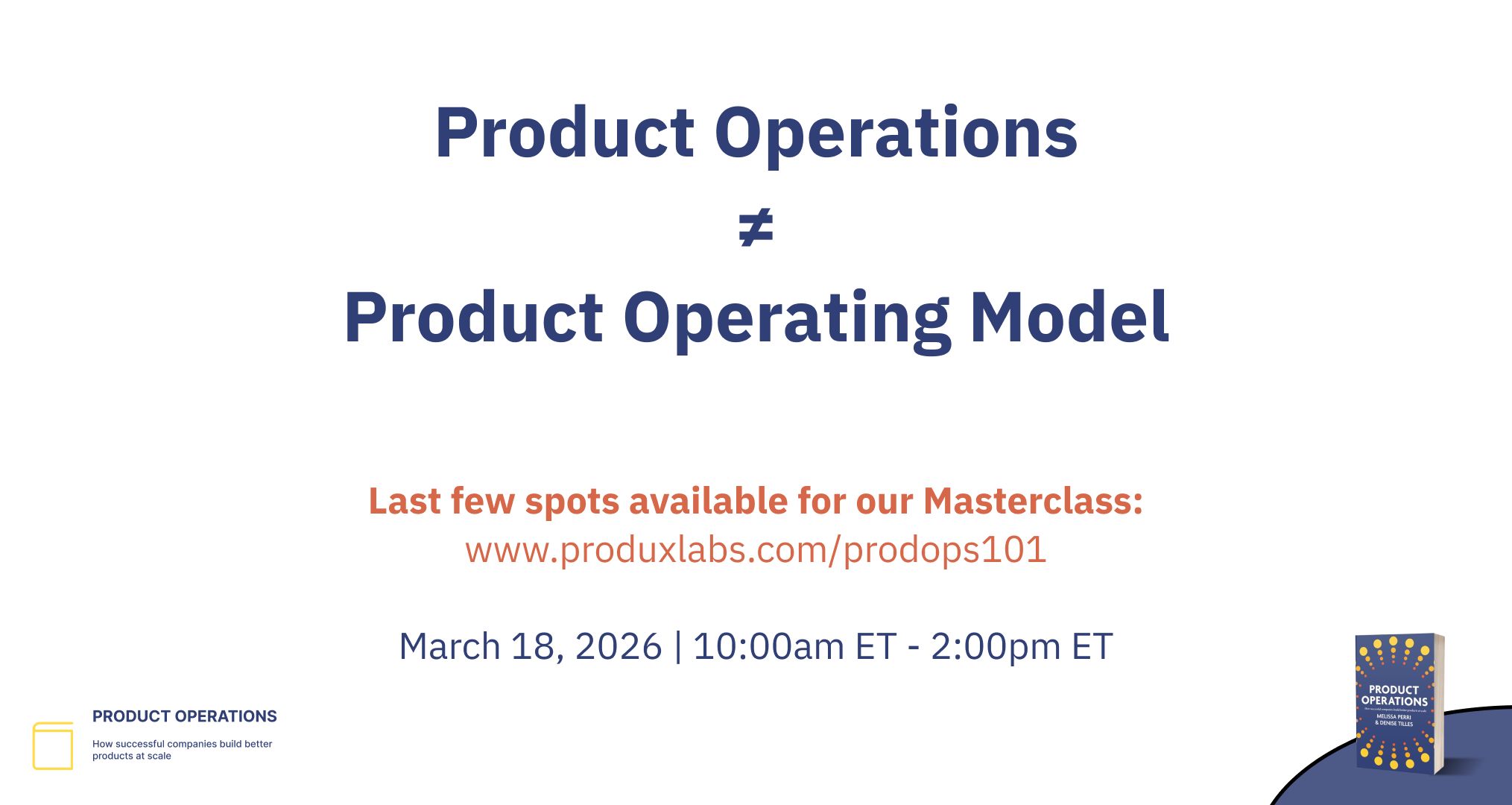
In a recent LinkedIn post, Melissa Perri, a prominent voice in product management, clarifies the often-confused concepts of Product Operations and the Product Operating Model, emphasizing that the distinction is crucial for organizational effectiveness.
Perri begins by stating the core issue: these two terms are frequently used interchangeably, leading to potential misunderstandings and misapplication of resources. She draws a clear analogy to explain their distinct roles within a product organization.
Product Operations is the engine: data infrastructure, tooling, experimentation, customer feedback loops. It keeps product teams running day to day.
According to Perri, Product Operations focuses on the practical, day-to-day machinery that enables product teams to function. This includes the essential tools, data pipelines, and feedback mechanisms that support iterative development and customer understanding.
The Blueprint vs. The Engine
Perri further elaborates on the Product Operating Model, defining it as the strategic framework that guides how a company operates its product functions. As Melissa Perri notes:
The Product Operating Model is the blueprint: how your org structures teams, makes decisions, deploys strategy, and funds the work.
This model, in Perri’s view, encompasses the higher-level architectural decisions regarding team structures, strategic alignment, decision-making processes, and resource allocation. It’s about *how* the product organization is set up to succeed.
The Perils of Imbalance
The core of Perri’s argument highlights the ineffectiveness that arises when one of these components is present without the other. She warns against optimizing processes within a flawed structure.
When you only have Product Operations without an operating model, you’re optimizing processes inside a broken structure.
This scenario, Perri explains, leads to wasted effort as teams might have efficient tools but lack a clear strategic direction or proper organizational support. Conversely, having a well-defined operating model without the necessary operational support creates a different kind of dysfunction.
When you only have an operating model without Product Operations, you have a beautiful org chart with no way to execute. Your teams are empowered on paper but can’t access the insights, tools, or data they need to make decisions.
In this situation, Perri points out, teams may appear empowered by their structure, but their actual ability to perform is severely hampered by a lack of essential operational capabilities and data access. This can lead to frustration and stalled progress.
The Necessity of Both
Perri’s central thesis is that both Product Operations and a Product Operating Model are indispensable for a high-functioning product organization. She succinctly summarizes the consequence of neglecting either:
You need both. One without the other is either chaos or theater.
The implications of this, as Perri details, are significant. Organizations often find themselves dealing with either the chaos of uncoordinated efforts or the hollow performance of well-structured but under-equipped teams.
Addressing the Gap
To help organizations navigate these complexities, Perri mentions an update to her Product Operations 101 Masterclass. This updated course, she indicates, will offer a practical examination of the Product Operating Model, helping participants identify if they have one and how Product Operations can support it.
Perri encourages leaders to assess their current state, whether they are building a product function from scratch or refining an existing one. She suggests that understanding the interplay between these two concepts is key to unlocking true product development potential and driving meaningful business outcomes.
📝 About This Content
This article is based on insights shared by Melissa Perri on LinkedIn.
📅 Originally posted on February 22, 2026 | View original post on LinkedIn →