
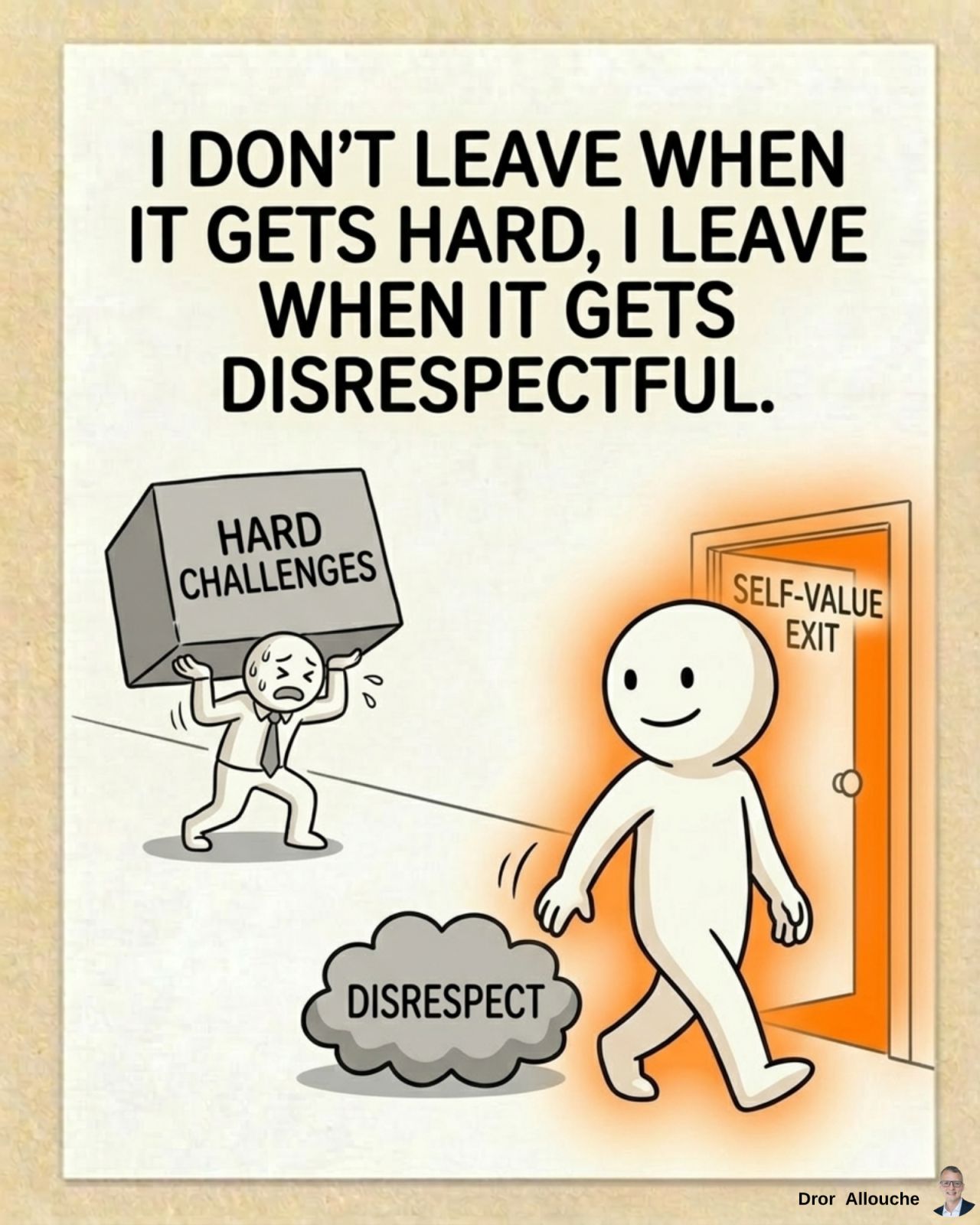
In a recent LinkedIn post, Dror Allouche discusses the critical distinction between challenging work and unacceptable behavior, offering advice to executives on how to protect their professional standing.
Allouche emphasizes that while executives are expected to handle difficult situations like missed targets and strategy shifts, disrespect is not part of the job description. He argues that tolerating poor conduct does not foster teamwork but rather makes individuals a target.
“Tolerating bad behavior doesn’t make you a team player. It makes you a target.”
Setting Boundaries to Preserve Focus and Value
Dror Allouche outlines five key rules designed to help leaders safeguard their focus, value, and careers from the corrosive effects of bad behavior. The first rule, “You Dictate Your Treatment,” posits that individuals teach others how to treat them through their tolerance levels.
As Allouche notes, identifying a recurring boundary violation in meetings and addressing it directly is crucial. He prompts leaders to ask themselves, “What unacceptable behavior am I reinforcing by staying silent?” This self-reflection is presented as the first step in reclaiming control over how one is treated in a professional setting.
Navigating Conflict and Recognizing Value
The second rule, “The Conflict Baseline,” addresses the nature of high-stakes decision-making. Allouche asserts that while intense debate is necessary, personal attacks are not. He suggests pausing discussions immediately when they turn personal and reframing the situation by stating, “We are debating the problem, not the person.” This distinction is vital for maintaining a professional environment.
Furthermore, Allouche’s third rule, “The Value Check,” tackles the issue of unacknowledged contributions. He argues that while hard work is expected, consistently ignored value is a clear signal to consider moving on. According to Allouche, leaders should present the objective return on investment (ROI) of their work, and if it remains unacknowledged, they should begin planning their exit strategy without issuing empty threats.
“Hard work builds your career. Tolerating disrespect destroys it.”
Implementing Clear Consequences and Managing Energy
In his fourth rule, “The ‘Two Strikes’ Policy,” Dror Allouche differentiates between occasional mistakes and persistent disrespect. He advocates for giving a clear second chance after a professional boundary is crossed but strongly advises against offering a third. This policy encourages accountability without being overly punitive.
The final rule, “The Tolerance Limit,” focuses on the finite nature of a leader’s energy. Allouche states that attempting to fix a toxic colleague is often futile, and the more effective approach is to sever ties. He advises identifying individuals who consistently drain focus without adding value and reducing interaction with them to an absolute minimum.
“Your energy is finite. You cannot fix a toxic colleague. You can only cut links.”
Dror Allouche concludes his post by reiterating that while hard work builds a career, tolerating disrespect can dismantle it. He urges leaders to actively protect their boundaries.
“You teach people how to treat you by what you tolerate.”
His advice provides a practical framework for executives navigating the complexities of workplace dynamics and preserving their professional integrity.
📝 About This Content
This article is based on insights shared by Dror Allouche on LinkedIn.
📅 Originally posted on April 18, 2026 | View original post on LinkedIn →