
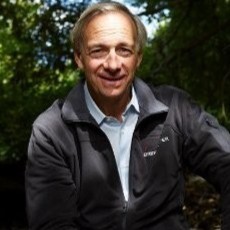
In a recent LinkedIn post, Ray Dalio discusses the interconnected nature of global conflicts, arguing that current events are part of a larger historical pattern he terms ‘The Big Cycle.’ Dalio, the founder of Bridgewater Associates, emphasizes the need to view individual events, such as the Iran war, within the context of a shifting world order to grasp their full implications.
Understanding Global Conflicts Through Historical Patterns
Dalio posits that major conflicts do not arise in isolation but are instead symptoms of deeper, cyclical shifts in power and economics. He advocates for a systemic approach to understanding geopolitical tensions, moving beyond a singular focus on isolated incidents.
“History shows us that these conflicts don’t happen independently. They emerge as interconnected parts of a larger pattern — a Big Cycle involving power, economics, and shifting world orders.”
According to Dalio, recognizing these cyclical dynamics is crucial for comprehending the trajectory of current global affairs. He suggests that by examining the ‘whole system,’ individuals can gain a more accurate perspective on unfolding events.
The ‘Big Cycle’ and World Order Shifts
Dalio’s framework, which he elaborates on in his article “The Big Thing: We Are in a World War That Isn’t Going to End Anytime Soon,” centers on the idea of a ‘Big Cycle.’ This cycle, as described by Dalio, encompasses the rise and fall of empires, shifts in economic dominance, and the evolution of global power structures.
“To understand what’s happening and the implications of the Iran war, you have to see the whole system instead of looking at just one event.”
As Dalio notes, this historical perspective is essential for interpreting the significance of contemporary conflicts. He argues that viewing events through the lens of these larger cycles provides a more robust analytical framework than focusing on isolated news items.
Implications of the Current ‘World War’
In his post, Dalio points to the ongoing global tensions as evidence of this cyclical pattern. He suggests that the current era is characterized by a form of ‘World War’ that is not necessarily defined by traditional, overt declarations of war but by a complex interplay of economic, political, and ideological struggles.
“I break this down in my latest article, ‘The Big Thing: We Are in a World War That Isn’t Going to End Anytime Soon,’ available to read here: https://lnkd.in/e46Qtsts”
Ray Dalio encourages readers to delve deeper into his analysis to understand the long-term implications of these cycles. In his view, the current geopolitical landscape is a manifestation of historical forces that have shaped and reshaped the world order throughout history. By understanding these forces, he posits, one can better anticipate future developments and navigate the complexities of the present.
📝 About This Content
This article is based on insights shared by Ray Dalio on LinkedIn.
📅 Originally posted on April 21, 2026 | View original post on LinkedIn →