
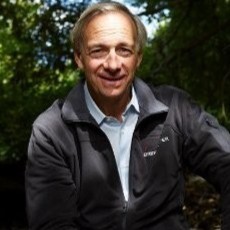
In a recent LinkedIn post, Ray Dalio discusses the current global conflicts and societal shifts, attributing them to a predictable pattern he identifies as the “Big Cycle.” Dalio, founder of Bridgewater Associates, argues that many observers are surprised by recent events, such as the Minneapolis and Greenland conflicts, because they fail to grasp the underlying breakdown of established post-World War II orders.
According to Dalio, these breakdowns are not random but follow historical precedents. He references his book, “Principles for Dealing With the Changing World Order,” where he detailed how these “Big Cycles” unfold in distinct stages. He posits that understanding this historical framework is key to comprehending present-day turmoil.
“In my opinion, that’s because they don’t understand what’s going on with the breakdown of the post-World War II monetary, domestic political, and international political orders.”
Understanding the ‘Big Cycle’ Framework
Dalio’s central thesis is that history rhymes, and major societal and geopolitical shifts occur in cyclical patterns. He explains that his “Big Cycle” theory outlines specific stages, each with identifiable characteristics and cause-and-effect relationships. By analyzing these stages, one can better predict future developments.
Identifying the Current Stage
Applying this historical lens to current events, Dalio asserts that the world is currently navigating a critical juncture within this cycle. He identifies the present period as Stage 5, characterized as the “pre-breakdown of the orders period,” and suggests we are on the verge of Stage 6, the “breaking down of the old orders.” This perspective, he believes, clarifies why recent events, which may seem shocking in isolation, are in fact part of a larger, recurring historical process.
“With that perspective, it is clear to me that we are in Stage 5 (the pre-breakdown of the orders period) and on the brink of Stage 6 (the breaking down of the old orders).”
Dalio further elaborates in his post that his latest article delves into the specific developments that mark Stages 5 and 6. He aims to connect these historical markers to the unfolding events in the contemporary world, providing a structured way to interpret the chaos.
The Importance of Historical Perspective
The veteran investor emphasizes that a lack of historical awareness leads to surprise and confusion when significant global shifts occur. By understanding the “Big Cycle,” Dalio suggests, individuals and institutions can better prepare for and navigate the inevitable transitions that mark the end of one world order and the beginning of another.
“In that book, I described how the Big Cycle unfolds in stages with clear characteristics, and I outlined the cause-and-effect relationships one can follow to identify where we are in the Big Cycle and what is likely to happen next.”
Dalio invites discussion on these insights, encouraging his audience to engage with his framework for understanding the changing world order. His work serves as a reminder of the value of historical analysis in making sense of complex contemporary issues.
📝 About This Content
This article is based on insights shared by Ray Dalio on LinkedIn.
📅 Originally posted on January 31, 2026 | View original post on LinkedIn →