
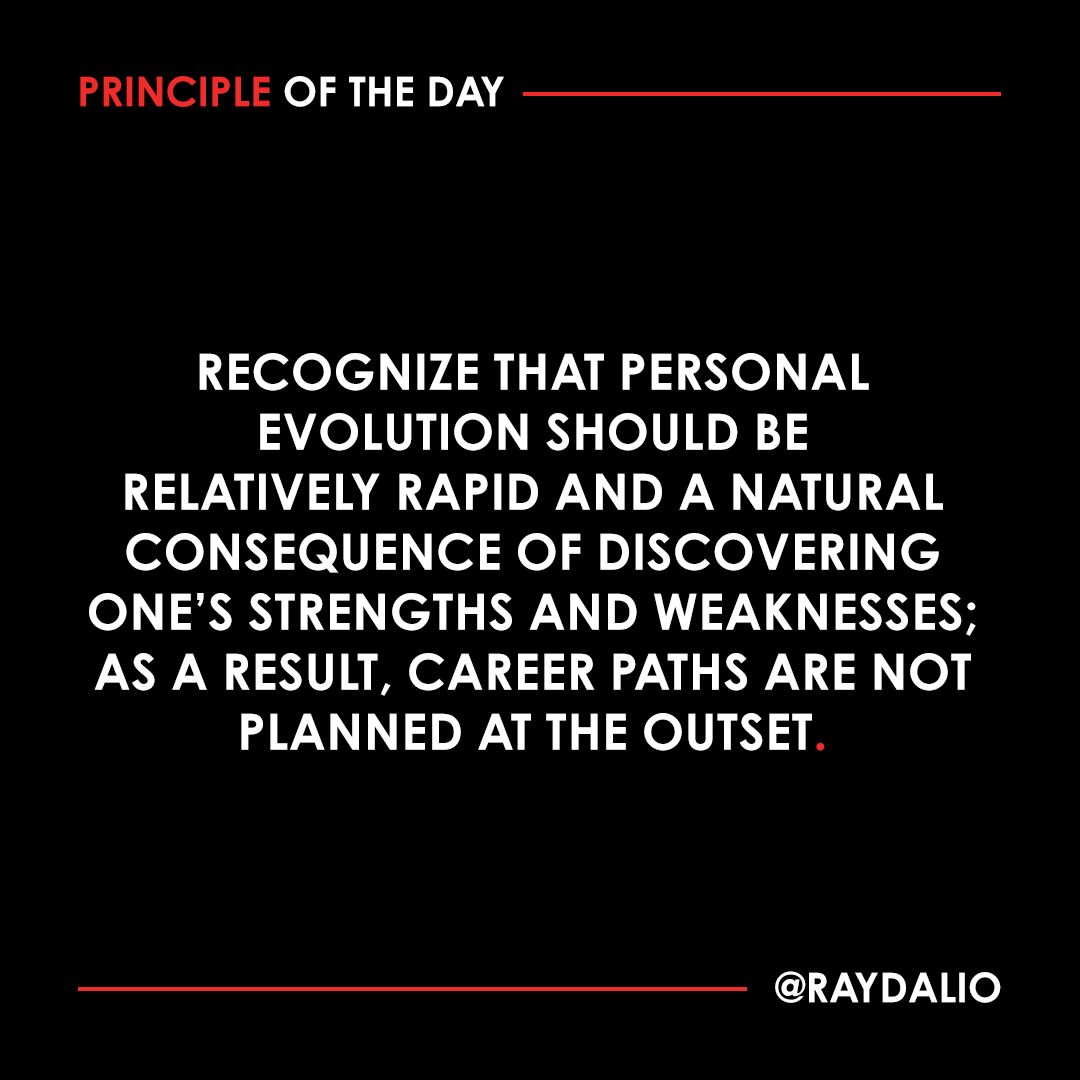
In a recent LinkedIn post, Ray Dalio explores the fundamental principles driving career evolution and personal development within organizations. Dalio, the founder of Bridgewater Associates, emphasizes that an individual’s professional journey is deeply intertwined with the process of self-discovery, particularly concerning their innate preferences and capabilities.
Dalio highlights the core mechanism of this evolutionary process:
“The evolutionary process is about discovering people’s likes and dislikes as well as their strengths and weaknesses; it occurs when people are put into jobs they are likely to succeed at, but in which they have to stretch themselves.”
The Role of ‘Stretching’ in Development
According to Dalio, true professional growth doesn’t happen in comfort zones. He argues that the optimal environment for an individual’s career to unfold is one that presents challenges pushing them beyond their current limitations. This ‘stretching’ allows for the revelation of both latent talents and areas requiring further development.
Dalio elaborates on this concept, stating:
“Each person’s career will evolve based on what we all learn about what the person is like.”
This suggests a continuous feedback loop where both the individual and the organization gain insights. Success in these stretched roles provides validation and builds confidence, while the struggle inherent in stretching illuminates areas where support or different approaches might be needed. It’s through this iterative process of challenge and learning that a clearer picture of an individual’s true aptitudes emerges.
Understanding Likes and Dislikes
Beyond just identifying strengths and weaknesses, Dalio points to the importance of understanding an individual’s preferences. Discovering what a person genuinely enjoys and dislikes in their work is as crucial as recognizing their raw ability. This understanding, he implies, is key to long-term engagement and sustained high performance.
In Dalio’s view, effective management involves carefully observing and learning about employees. This knowledge then informs placement and development strategies. The goal is to align individuals with roles where they can not only succeed but also thrive, driven by a combination of their inherent capabilities and their genuine interests.
Implications for Leadership and Management
Dalio’s insights offer a compelling framework for leaders aiming to foster talent. The principle suggests that rather than solely relying on traditional performance reviews or self-assessments, leaders should actively engineer opportunities for employees to test their mettle in demanding yet achievable situations. This approach is not about setting people up for failure, but rather about providing the right conditions for them to discover their own potential.
The emphasis on learning about the individual implies a need for deep observation and empathetic management. As Dalio notes, this collective learning process shapes the trajectory of a person’s career. By understanding an individual’s ‘likes and dislikes’ alongside their ‘strengths and weaknesses,’ leaders can make more informed decisions about assignments, training, and career pathing, ultimately leading to a more effective and fulfilled workforce.
📝 About This Content
This article is based on insights shared by Ray Dalio on LinkedIn.
📅 Originally posted on June 28, 2026 | View original post on LinkedIn →