
In a recent LinkedIn post, Ray Dalio explores the multifaceted nature of learning, drawing parallels between natural selection and personal evolution. Dalio, the founder of Bridgewater Associates, highlights that true progress often stems from processes that operate beyond conscious thought and direct guidance.
The Limitations of Conscious Learning
Dalio begins by introducing the concept of natural selection as a powerful, albeit unconscious, driver of improvement. He then applies this analogy to human learning, identifying distinct categories that contribute to our development. Initially, Dalio admits to prioritizing conscious, memory-based learning.
“I used to think that memory-based, conscious learning was the most powerful, but I’ve since come to understand that it produces less rapid progress than experimentation and adaptation.”
This reflection suggests a significant shift in his perspective, moving away from an over-reliance on rote memorization and conscious information intake towards a more dynamic approach to acquiring knowledge and skills.
Three Types of Learning for Evolution
The investment pioneer outlines at least three kinds of learning that foster evolution, moving beyond the conventional understanding of education. Dalio details these as:
- Memory-based learning: This involves consciously storing and recalling information. It’s the traditional form of learning that many associate with academic success.
- Subconscious learning: This occurs through experiences, where lessons are absorbed without direct conscious awareness but still influence decision-making and behavior.
- Learning without thinking: Dalio likens this to the biological process of changes in DNA that enable species to adapt to their environments, suggesting an innate, instinctual form of adaptation.
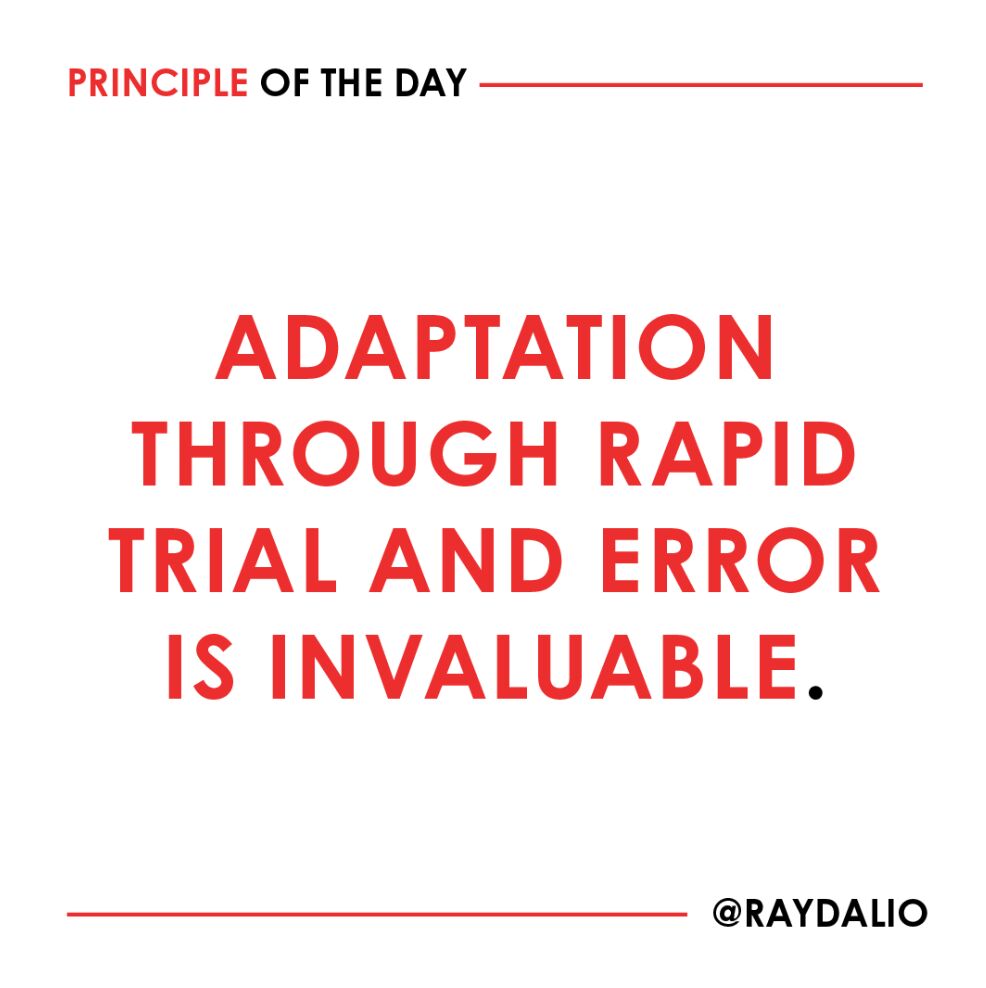
As Dalio notes, the process of natural selection operates through trial and error, allowing for improvement without an external guiding hand or complete understanding. This mirrors his view on effective human learning, where embracing experimentation and adaptation can lead to more rapid progress than simply accumulating facts.
Embracing Experimentation and Adaptation
Dalio argues that while memory-based learning is crucial for building a foundational knowledge base, it is the less conscious forms of learning—subconscious absorption from experience and even innate adaptation—that drive the most significant and rapid evolution. This perspective encourages a broader view of how individuals and organizations can learn and adapt in complex environments.
“Natural selection’s trial-and-error process allows improvement without anyone understanding or guiding it. The same can apply to how we learn.”
According to Dalio, understanding these different learning mechanisms can unlock greater potential for personal and collective growth. By embracing experimentation and learning from the outcomes, even those that aren’t consciously processed, individuals can foster a more robust and adaptive approach to navigating challenges and opportunities.
“There are at least three kinds of learning that foster evolution: memory-based learning… subconscious learning… and ‘learning’ that occurs without thinking at all…”
Dalio’s insights underscore the importance of experiential learning and adaptation, suggesting that true mastery comes not just from knowing, but from doing, experiencing, and evolving through the natural processes of trial and error.
📝 About This Content
This article is based on insights shared by Ray Dalio on LinkedIn.
📅 Originally posted on March 18, 2026 | View original post on LinkedIn →