
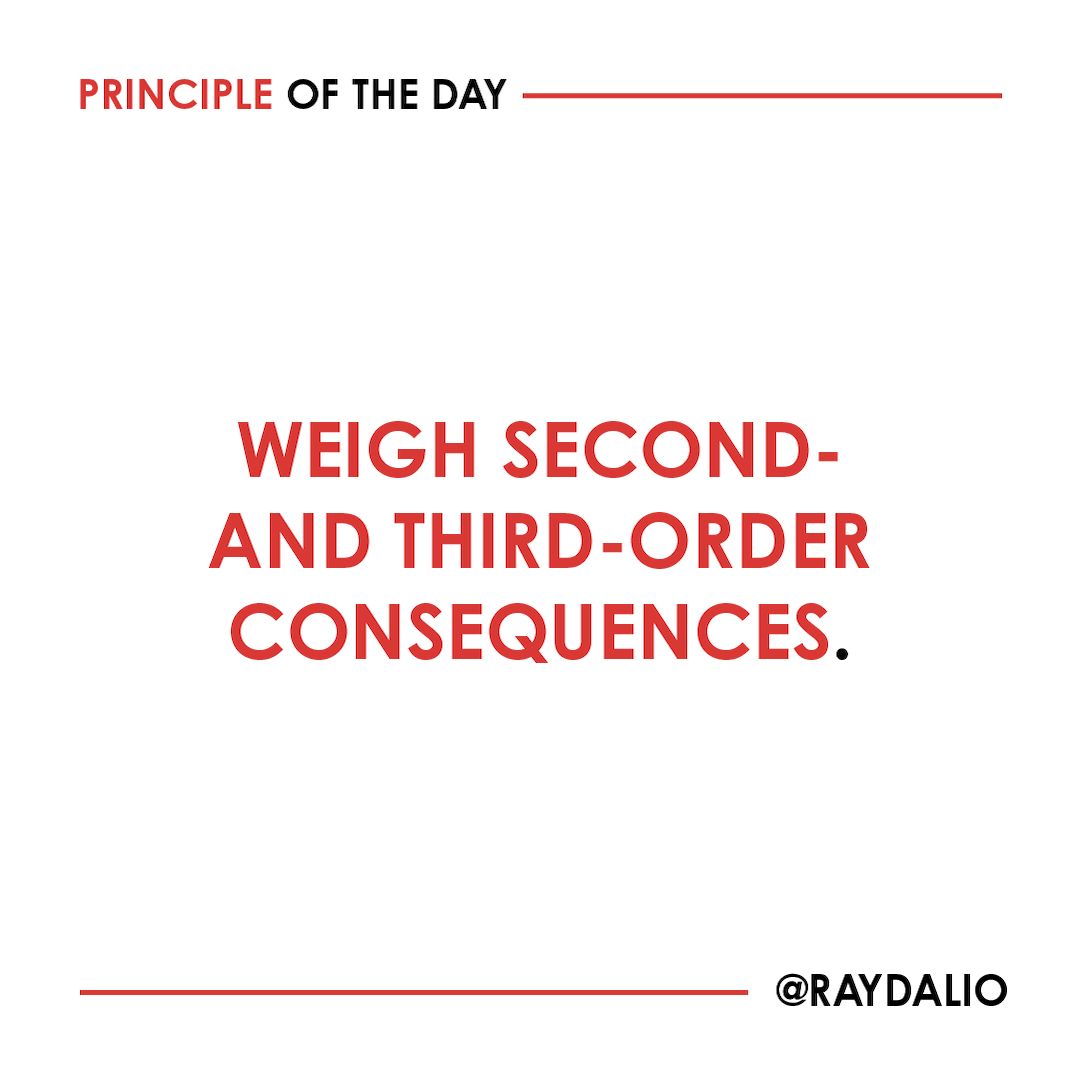
In a recent LinkedIn post, Ray Dalio discusses a fundamental principle for effective decision-making: the critical importance of considering second- and subsequent-order consequences, rather than solely focusing on immediate outcomes. Dalio, the founder of Bridgewater Associates, highlights how an overemphasis on first-order results can lead individuals astray from their long-term objectives.
The Pitfalls of First-Order Thinking
Dalio argues that many people fall into a decision-making trap by weighing the immediate benefits or drawbacks of a choice without fully appreciating its ripple effects. He points out that these initial consequences often possess an inverse desirability compared to the longer-term impacts, making them a misleading guide for strategic choices.
“By recognizing the higher-level consequences nature optimizes for, I’ve come to see that people who overweigh the first-order consequences of their decisions and ignore the effects of second- and subsequent-order consequences rarely reach their goals.”
According to Dalio, this tendency to prioritize the immediate can result in significant errors. He uses relatable examples to illustrate his point, underscoring how what seems undesirable in the short term can lead to highly desirable long-term outcomes, and vice versa.
Exercise: A Case Study in Consequence Awareness
A prime example Dalio provides is the act of exercising. He notes that the immediate experience of physical activity often involves discomfort and the expenditure of time, which are commonly perceived as negative. However, the delayed benefits—improved health and a more appealing physique—are precisely what most individuals seek.
“For example, the first-order consequences of exercise (pain and time spent) are commonly considered undesirable, while the second-order consequences (better health and more attractive appearance) are desirable.”
This contrast, as Dalio emphasizes, shows how focusing only on the pain of the workout would lead someone to avoid it, thereby missing out on the substantial health and aesthetic advantages. This principle extends beyond personal fitness, applying to numerous areas of life and business.
Broader Implications for Decision-Making
Dalio extends this concept to other aspects of life, suggesting that the foods we choose often present a similar dilemma. What tastes good in the moment may have detrimental effects on our health down the line, while healthier options might require a more acquired taste.
“Similarly, food that tastes good is often bad for you and vice versa.”
In essence, Ray Dalio’s insight on LinkedIn serves as a powerful reminder for business leaders and individuals alike to adopt a more comprehensive view of their decisions. By consciously evaluating not just the immediate effects but also the cascading, or second- and subsequent-order, consequences, one can make choices that are more aligned with achieving sustainable, long-term success.
📝 About This Content
This article is based on insights shared by Ray Dalio on LinkedIn.
📅 Originally posted on December 20, 2025 | View original post on LinkedIn →