
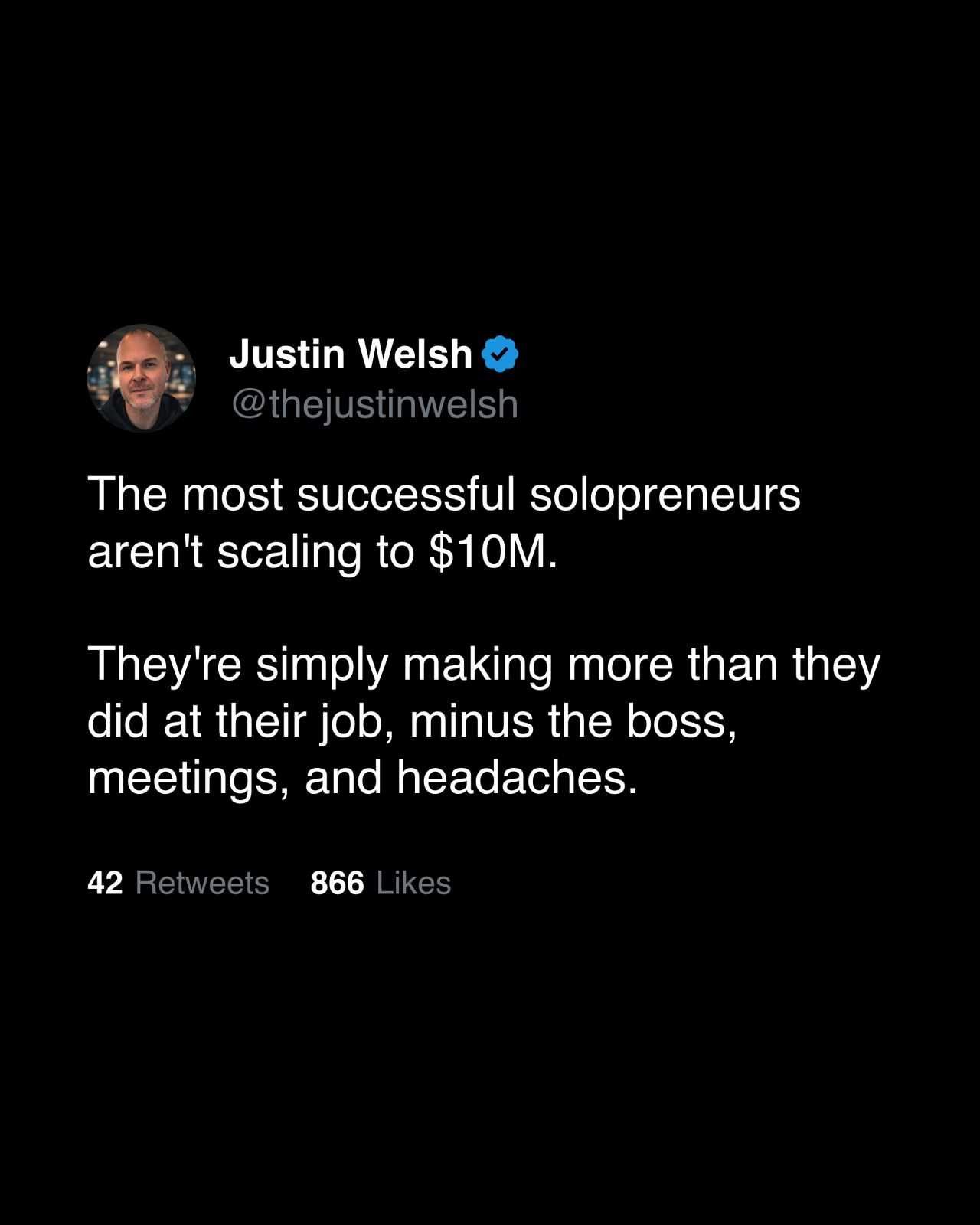
In a recent LinkedIn post, Justin Welsh challenges conventional metrics of business success, arguing that the ultimate goal should be architecting a fulfilling lifestyle rather than solely maximizing revenue. Welsh posits that true achievement lies in building a business that grants freedom and time, not one that consumes it.
The entrepreneur and content creator shared his perspective on what constitutes a “great life” in the business world. He contends that many successful individuals he observes are not necessarily those with astronomical revenue figures, but rather those who have achieved significant autonomy.
“Success in business isn’t about maximizing the amount of money you make. It’s about architecting the perfect lifestyle for you and your family.”
Welsh elaborates on this by contrasting the typical image of hyper-growth entrepreneurship with a more balanced approach. He highlights the benefits of working without a boss, minimizing meetings, and reducing overall stress, all while maintaining or even improving financial standing. This perspective reframes success from a purely financial or scale-based achievement to one centered on personal well-being and life design.
The True Cost of Scale
A core theme in Welsh’s post is the potential trade-off between business scale and personal life. He questions the value of building an immense, complex business if it comes at the expense of time spent with loved ones or pursuing personal interests.
As Justin Welsh notes:
“Because what’s the point of building a huge, powerful, scalable monstrosity if it means that you spend less time with your family? Or friends… Or time on hobbies… Or with folks in your community… There isn’t a point.”
This rhetorical question underscores his belief that a business should serve as a vehicle for a better life, not an end in itself that detracts from life’s most meaningful aspects. He emphasizes that no one, on their deathbed, regrets not having a larger business scorecard at the expense of their relationships.
Cultivating Intentionality in Work and Life
Following this realization, Welsh states he began writing weekly essays to explore these themes further. His essays focus on work, money, and the deliberate construction of a chosen life, distinguishing it from externally imposed definitions of success.
He introduces the concept of “Synthetic purpose,” a phenomenon where individuals create or magnify problems when none truly exist, often driven by societal pressures or conventional business narratives. According to Welsh, addressing this involves a conscious effort to align one’s work with authentic personal values and lifestyle goals.
Justin Welsh points out the value of this intentional approach:
“Once I realized this, I started writing a short essay every Saturday on work, money, and building a life you *actually* choose. Not someone else’s idea of a great life.”
His work aims to provide a counter-narrative to the often-unrelenting pursuit of scale, offering a framework for building businesses that support, rather than hinder, a rich and fulfilling personal existence. Welsh invites readers to join a community of over 180,000 individuals who engage with his weekly essays, seeking a more authentic path to professional and personal satisfaction.
📝 About This Content
This article is based on insights shared by Justin Welsh on LinkedIn.
📅 Originally posted on April 16, 2026 | View original post on LinkedIn →