
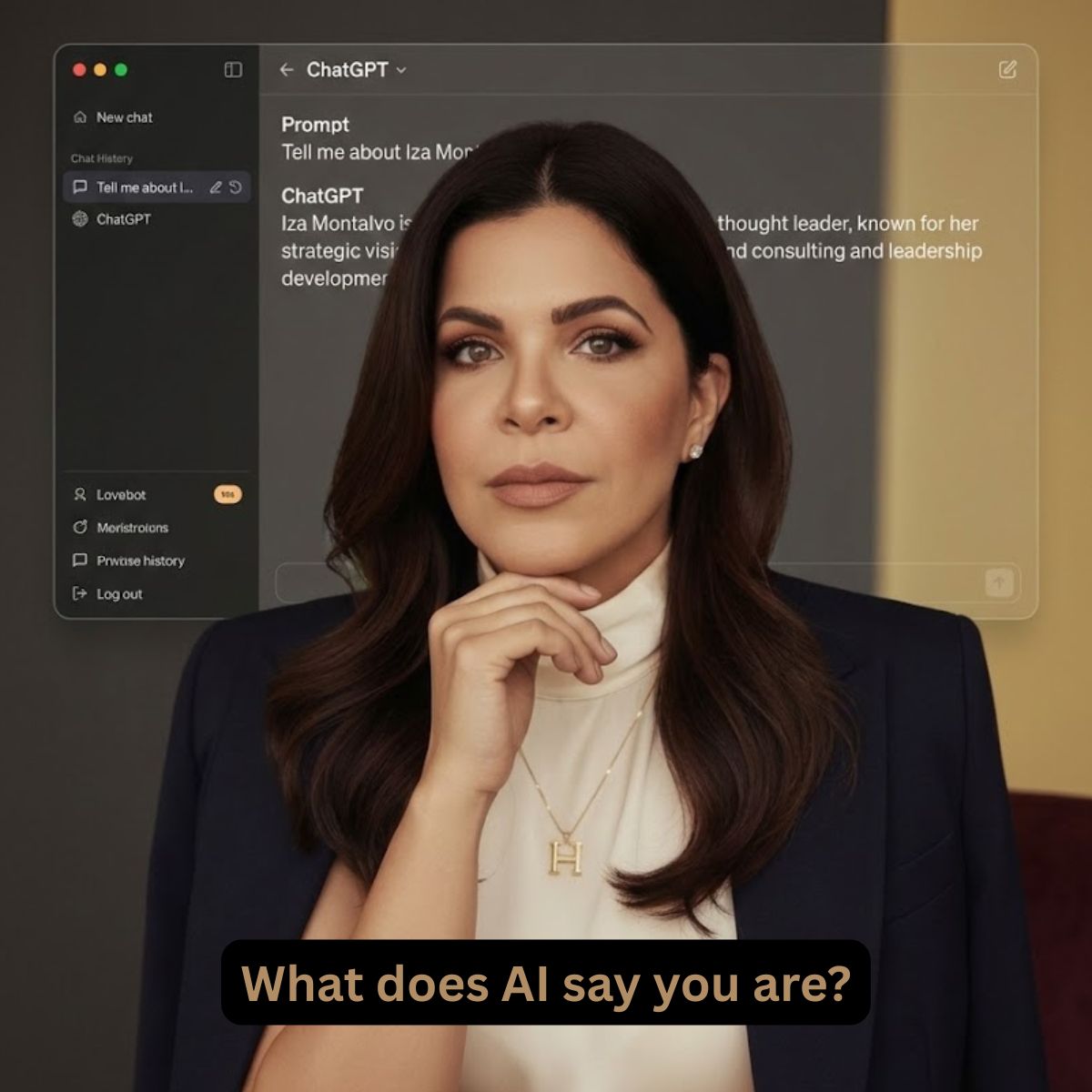
In a recent LinkedIn post, IZA MONTALVO explores the seismic shift in how professional reputations are formed and perceived in the age of artificial intelligence. Montalvo highlights a conversation with an editor who revealed a new modus operandi: foregoing traditional Google searches for direct AI queries to assess individuals.
This evolution, Montalvo argues, moves reputation from what is easily discoverable to what an AI system synthesizes. The implications are profound, affecting visibility, opportunities, and funding.
“Reputation has changed. It used to be what people could find. Now it is what a system says.”
Montalvo points to the staggering growth and adoption of AI tools like ChatGPT, noting that its widespread use means AI-generated summaries are increasingly becoming the first—and sometimes only—impression individuals make. With AI search traffic surging and AI summaries appearing in a significant portion of Google searches, the way professionals are evaluated is fundamentally changing.
The Mechanics of AI Reputation Building
IZA MONTALVO explains that AI does not ‘study’ individuals in a human sense. Instead, it identifies patterns based on an individual’s output, recurring themes, and external linkages. The AI then constructs a descriptive summary based on these observed patterns.
As Montalvo puts it:
“AI does not study you. It looks for patterns. What you repeat. What you build. What others link you to. Then it produces a description.”
The clarity and strength of this AI-generated description are directly tied to the consistency of the individual’s work and public presence. A strong, singular focus leads to a robust AI summary, while a fragmented approach can result in a weaker, less defined representation.
The Impact of AI Summaries on Professional Opportunities
The insights shared by Montalvo underscore the critical role these AI summaries now play in professional gatekeeping. These automated evaluations are influencing key decisions, shaping:
- Who receives invitations for collaborations or events.
- Who is considered for new roles or projects.
- Who secures funding for their ventures.
- Who, conversely, might be overlooked.
Montalvo emphasizes that this AI-driven reputation is a direct reflection of one’s produced work. “AI reflects what you have produced,” Montalvo states, adding that these summaries have a tangible impact: “Those summaries shape: Who gets invited. Who gets considered. Who gets funded. Who gets ignored.”
Strategies for Navigating the AI Reputation Landscape
Addressing the challenge of AI-driven reputation, Montalvo advises against relying solely on traditional methods like updating a bio. The core strategy, according to Montalvo, lies in cultivating consistency and repetition.
IZA MONTALVO advocates for a deliberate approach:
“You do not fix this with a better bio. You fix it with repetition. Say one thing. Build around it. Repeat it until no other pattern competes.”
This means focusing on a clear, consistent message and building professional activities and content around that central theme. The goal is to create an unmistakable pattern that AI systems can easily recognize and accurately summarize.
Testing Your AI Reputation
To help individuals assess their current standing, Montalvo suggests a practical exercise: pasting one’s name into an AI tool and asking for a summary of what they are known for. This direct query can reveal whether the AI’s perception aligns with the individual’s desired professional identity.
“That sentence is working for you. Or against you,” Montalvo warns, prompting a crucial self-reflection on the strength and clarity of one’s professional signal. Montalvo concludes by posing a critical question to readers: “If your reputation were summarized today, would it hold?” For those seeking to understand where their professional signal might be breaking down, Montalvo offers a free executive visibility audit.
📝 About This Content
This article is based on insights shared by IZA MONTALVO on LinkedIn.
📅 Originally posted on February 19, 2026 | View original post on LinkedIn →