
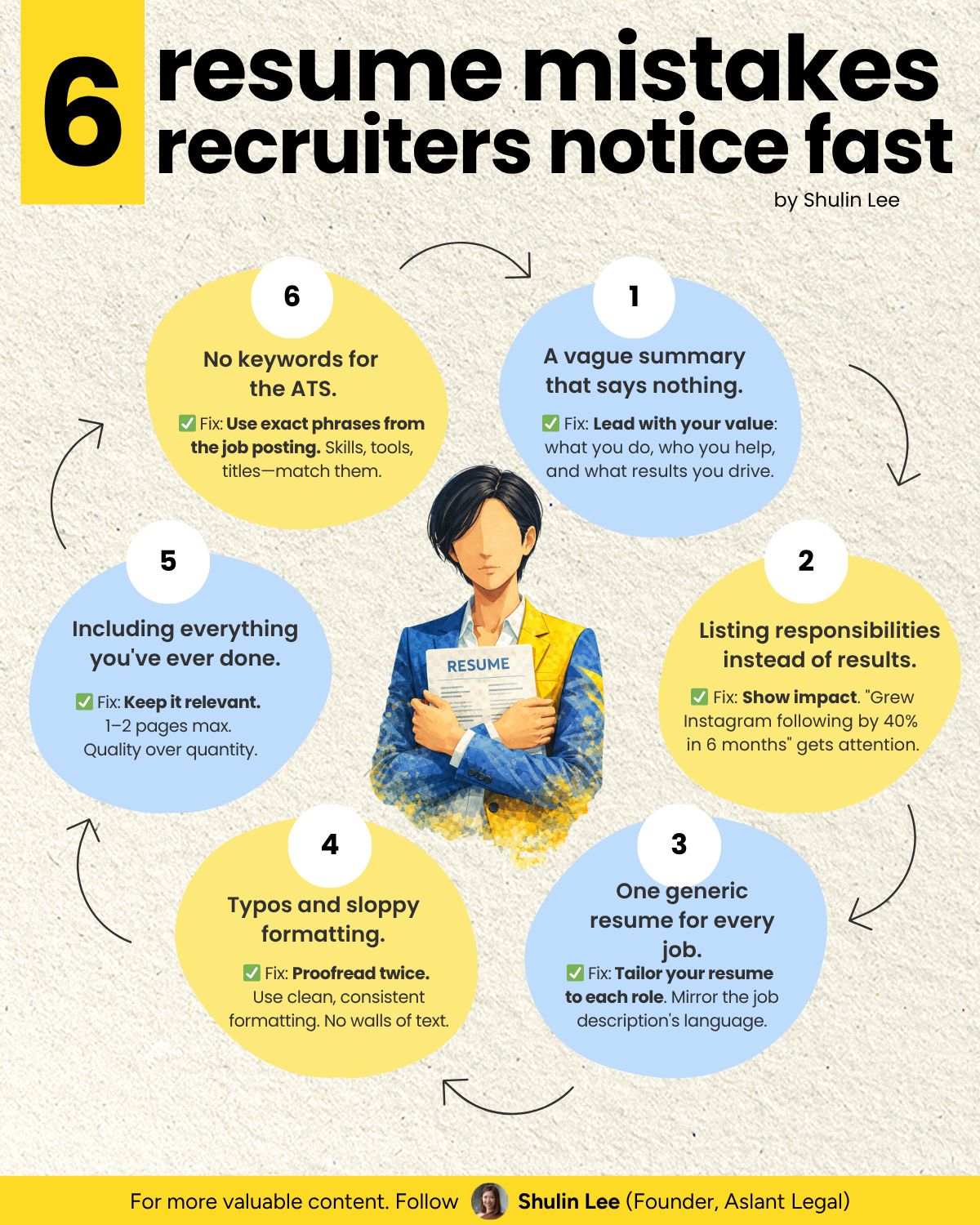
In a recent LinkedIn post, Shulin Lee, a seasoned recruiter with over 15 years of experience, highlights a critical shift in how job applications are processed and advises job seekers on how to make their resumes more effective. Lee emphasizes that a resume must be more than a historical record; it needs to function as a compelling marketing document tailored to future roles.
Lee begins by challenging a common misconception about the resume review process. “Your resume isn’t being read. It’s being scanned,” Shulin Lee states, immediately setting the stage for a discussion on the realities of modern recruitment.
The Reality of Resume Scanning
Shulin Lee elaborates on the initial stages of resume evaluation, explaining that applicant tracking systems (ATS) and busy recruiters are the first hurdles. According to Lee, the time available for a resume to make an impact is extremely limited. “You have seconds (not minutes) to make an impression, and if your resume doesn’t pass the first filter, your experience doesn’t matter,” the post reads. This underscores the necessity of optimizing resumes for both software and human scanners from the outset.
Beyond Qualifications: The Power of Storytelling
A key insight shared by Shulin Lee is that the most successful candidates are not always those with the most impressive paper qualifications. Instead, Lee points to individuals who excel at narrative construction. “The best candidates I’ve placed over 15+ years in recruitment aren’t always the most qualified on paper. They’re the ones who know how to tell their story in a way that’s clear, relevant, and impossible to ignore,” Lee shares. This suggests that clarity, relevance, and a compelling narrative can often outweigh extensive, but poorly presented, experience.
“Your resume isn’t a record of everything you’ve done. It’s a marketing document for where you’re going.”
This perspective reframes the purpose of a resume. Shulin Lee argues that it should be forward-looking, focusing on how past experiences align with the requirements and aspirations of the target role, rather than simply listing past duties. Lee also addresses the common frustration of receiving no response after applying for jobs.
Diagnosing the Application Problem
For those struggling to get noticed, Shulin Lee suggests the issue often lies not with their capabilities but with their presentation. “If you’re applying and hearing nothing back, the problem usually isn’t you. It’s how you’re presenting yourself,” Lee asserts. This provides a constructive avenue for job seekers to re-evaluate their approach.
Focusing on Outcomes, Not Just Duties
Reinforcing the marketing document analogy, Shulin Lee concludes with a potent piece of advice: “A great resume doesn’t list duties. It sells outcomes.” This final point encourages job seekers to quantify their achievements and demonstrate the tangible results they have delivered in previous roles, making their value proposition clear and persuasive to potential employers.
Shulin Lee’s insights offer a practical framework for job seekers aiming to navigate the competitive landscape by transforming their resumes into strategic tools for career advancement.
📝 About This Content
This article is based on insights shared by Shulin Lee on LinkedIn.
📅 Originally posted on July 2, 2026 | View original post on LinkedIn →