
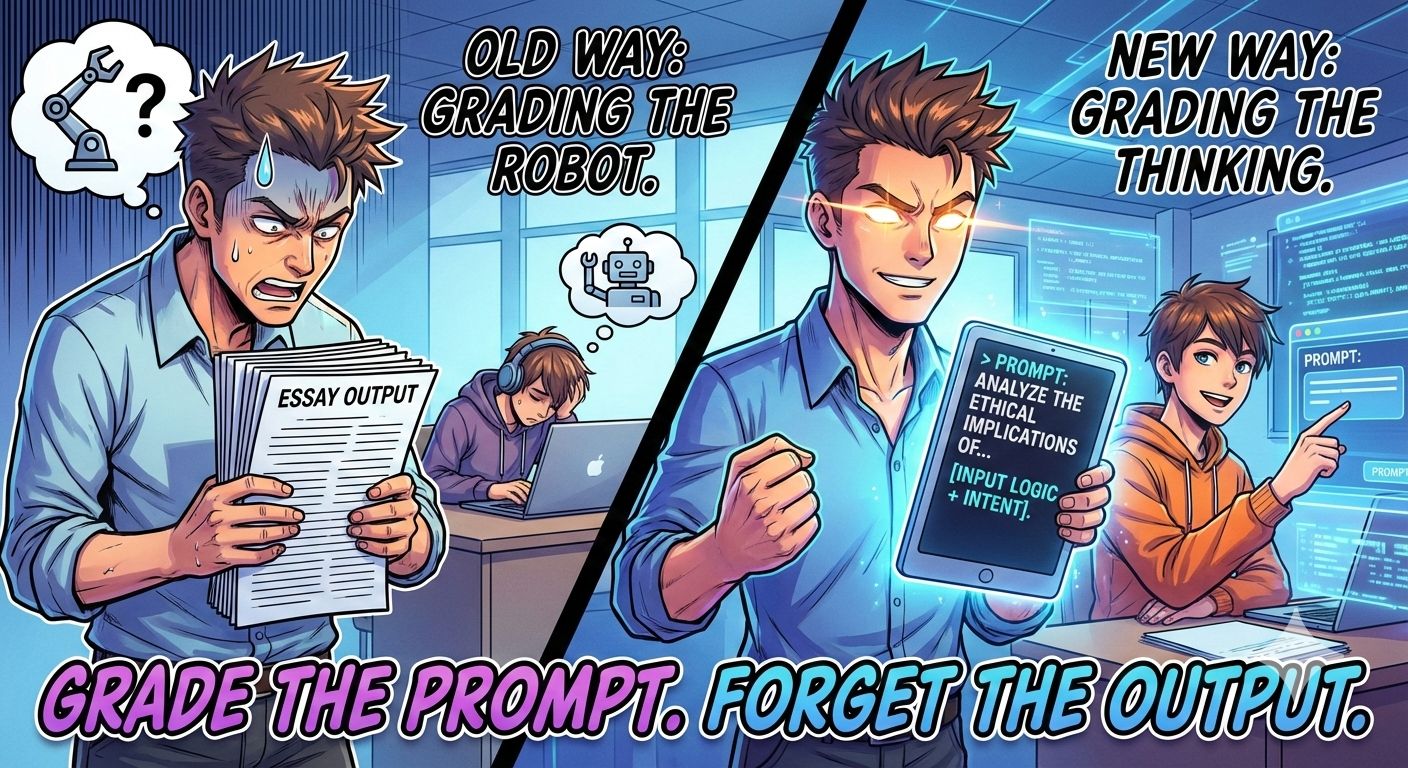
In a recent LinkedIn post, Parin Mehta explores the evolving challenges educators face with the rise of AI in student assignments, specifically questioning the traditional methods of essay evaluation. Mehta, a keen observer of educational trends, highlights the shift in intellectual effort from the essay itself to the prompts used to generate AI-driven content.
The Shifting Landscape of Academic Integrity
The core of Mehta’s argument centers on the difficulty of detecting AI-generated essays and the subsequent implications for grading. He points out the fundamental change in how students are engaging with the writing process when using AI tools. Instead of focusing on the mechanics of writing, the emphasis has moved to the strategic use of prompts.
As Parin Mehta notes:
The output is an essay, the input is a prompt.
The prompt is where the logic and the creativity now lives.
This observation by Mehta suggests that the traditional approach to assessing written work may no longer be sufficient. The intellectual heavy lifting, according to his analysis, is now embedded in the prompt engineering rather than the final written product.
Grading the Prompt, Not the Essay?
Mehta proposes a fundamental shift in how educators should approach assessment in the age of AI. He posits that the focus of evaluation might need to move from the essay’s content to the quality and intent behind the prompt used to generate it. This perspective challenges educators to consider new metrics for evaluating student understanding and effort.
According to Parin Mehta:
The prompt shows the intent and the intuition.
In Mehta’s view, the prompt serves as a more direct indicator of a student’s understanding of the assignment’s requirements and their ability to articulate a clear direction for the AI. This aligns with his central question regarding the future of academic assessment.
Parin Mehta directly asks:
Is it time to grade the prompt rather than grade the essay?
This rhetorical question, central to his post, invites a broader discussion within the educational community about adapting assessment strategies. Mehta’s insights suggest that educators might need to develop new skills and frameworks to evaluate the prompt-generation process, thereby assessing genuine student engagement and critical thinking, even when AI tools are involved. The implication is that understanding how a student frames a problem or task is becoming as, if not more, important than the solution presented.
Implications for Educators and Students
The discussion initiated by Parin Mehta has significant implications. If the prompt is where the true intellectual work now resides, educators may need to incorporate prompt design and analysis into their curriculum and grading rubrics. This could involve teaching students how to craft effective prompts and evaluating the sophistication of their prompts as a measure of their understanding and creativity. For students, it means a potential shift in how they approach assignments, focusing on articulating their ideas clearly and strategically to guide AI tools effectively.
As Parin Mehta’s post suggests, the conversation around AI in education is not just about detection, but about a fundamental rethinking of what constitutes learning and how to assess it authentically in a rapidly changing technological landscape.
📝 About This Content
This article is based on insights shared by Parin Mehta on LinkedIn.
📅 Originally posted on February 25, 2026 | View original post on LinkedIn →