
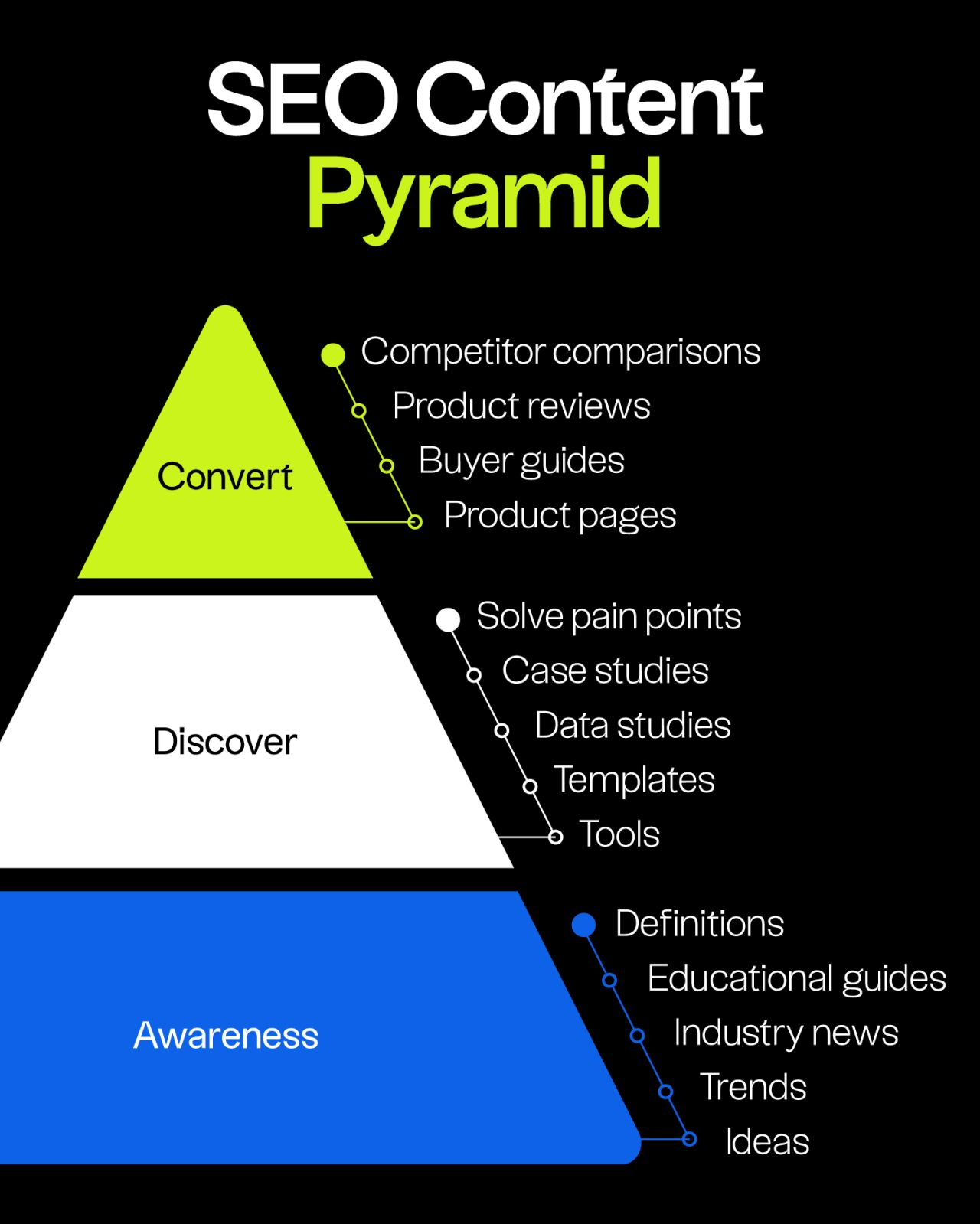
In a recent LinkedIn post, Rob Hoffman discusses a strategic shift in SEO content creation, advocating for a “pyramid” approach that prioritizes high-intent content over broad educational topics. Hoffman illustrates this with an anecdote about a SaaS company that invested heavily in “awareness” content, leading to increased traffic but no corresponding revenue growth.
Hoffman recounts the experience of a SaaS company that spent six months and produced 60 blog posts on foundational topics like “what is email marketing” and “benefits of newsletters.” While this strategy successfully boosted website traffic, it failed to translate into business results, prompting Hoffman to develop his “SEO Content Pyramid” framework.
As Rob Hoffman notes:
“We literally live and breathe this SEO framework. 5 years ago, we watched a SaaS company burn through 6 months of content budget. 60 blog posts on topics like “what is email marketing” and “benefits of newsletters.” Their traffic skyrocketed, but their revenue flatlined.”
The SEO Content Pyramid Framework
Hoffman’s framework inverts the traditional approach, placing conversion-focused content at the apex of the pyramid. He structures the pyramid into three main tiers: Convert, Discover, and Awareness.
1. Convert (Top of Pyramid)
This tier is dedicated to content that targets users who are ready to make a purchase. Hoffman identifies several types of high-intent content within this category:
- Competitor Comparisons: Such as “beehiiv vs Kit” or “Kit alternatives.”
- Product Reviews: Including brand-specific reviews like “beehiiv reviews” and competitor reviews like “Kit review.”
- Buyer Guides: For example, “Best newsletter platforms in 2026” or “Best newsletter tools for beginners.”
- Product Pages: Covering terms like “Email newsletter software” and “Newsletter platform pricing.”
Hoffman emphasizes that this is where SEO efforts should begin.
2. Discover (Middle of Pyramid)
The middle tier focuses on users who are exploring solutions but are not yet ready to buy. This includes content that addresses pain points and showcases success:
- Solve Pain Points: Content like “How to start a newsletter” or “Newsletter best practises.”
- Case Studies: Demonstrating success, such as “Email marketing case studies” or “How [Brand] grew to 100k subscribers.”
- Data Studies: Providing industry benchmarks, like “Open rate benchmarks 2026” or “Email marketing statistics.”
- Templates and Tools: Offering practical resources like “Newsletter templates” or “Email subject line generator.”
3. Awareness (Bottom of Pyramid)
This foundational tier is for users who are just beginning to learn about a topic. According to Rob Hoffman, this content should be tackled last:
- Definitions: Explaining basic concepts, such as “What is open rate” or “Email deliverability explained.”
- Educational Guides: Offering advice on “How to increase email open rate” or “How to write engaging emails.”
- Industry Trends and News: Covering developments like the “Gmail manage subscriptions feature” or “Email marketing trends 2026.”
- Ideas: Inspiring content such as “Newsletter content ideas” or “Email campaign ideas for holidays.”
Hoffman’s core argument is that businesses should reverse the typical content funnel. He states:
“Start at the top with Convert content. Only move to Discover once you’ve covered every competitor comparison, product review, and buyer guide. Then tackle Awareness last.”
By prioritizing conversion-oriented content first, Hoffman suggests that businesses can more effectively align their SEO efforts with revenue generation. He concludes with a bold claim about the potential impact of this strategy:
“This framework will 10x your SEO results.”
In Rob Hoffman’s view, this structured approach ensures that resources are allocated to content that directly addresses the needs of users closest to making a purchasing decision, thereby maximizing the return on investment for SEO efforts.
📝 About This Content
This article is based on insights shared by Rob Hoffman on LinkedIn.
📅 Originally posted on March 10, 2026 | View original post on LinkedIn →