
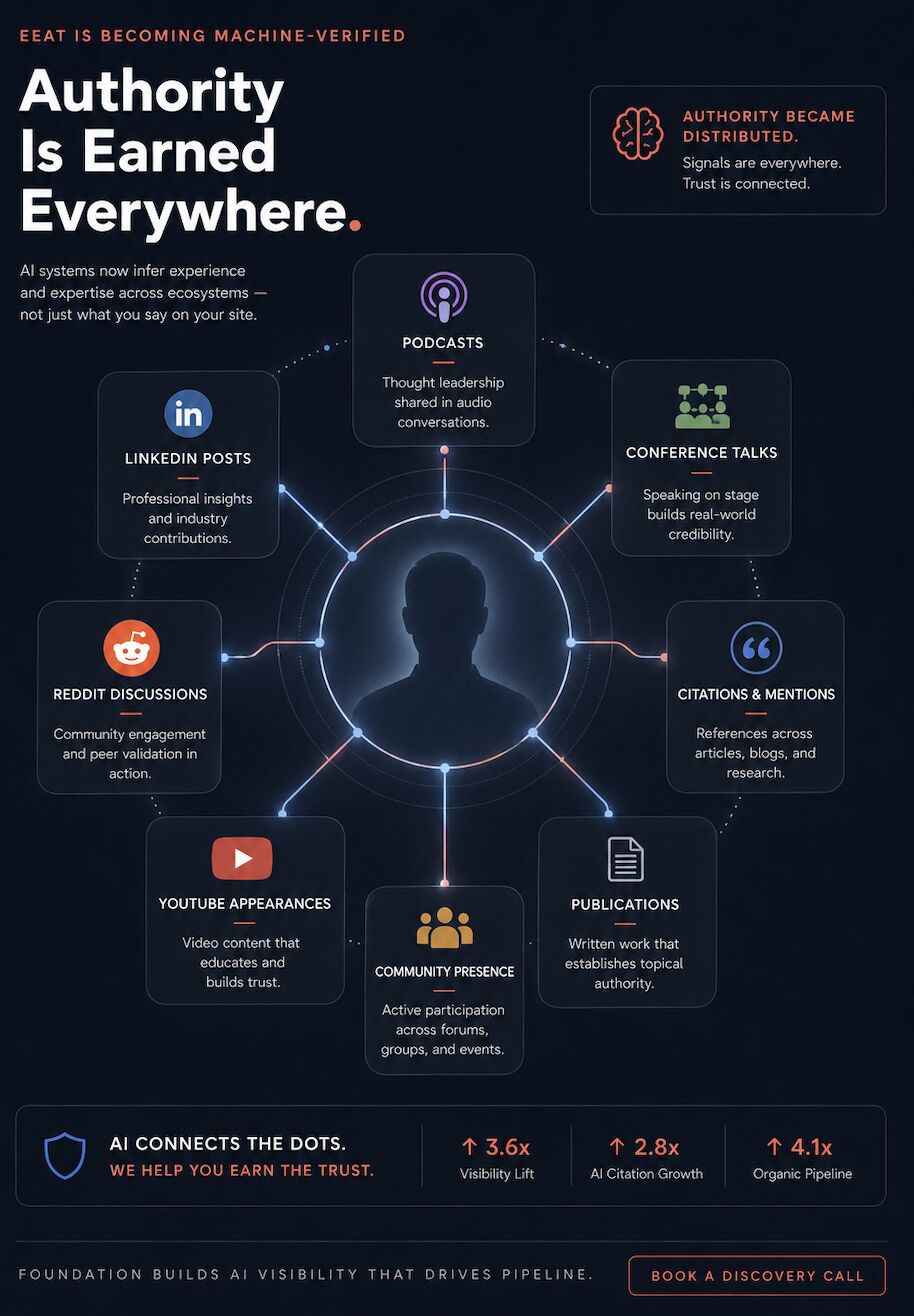
In a recent LinkedIn post, Ross Simmonds discusses the critical role of EEAT (Experience, Expertise, Authoritativeness, Trustworthiness) signals in achieving visibility within AI search in 2026. Simmonds, a prominent voice in content marketing, argues that artificial intelligence models are increasingly prioritizing content that demonstrates strong EEAT principles, moving beyond sheer volume of publications.
Simmonds highlights how Large Language Models (LLMs) modify user queries and actively seek evidence to validate the information they provide. This process, he explains, favors brands that have invested in creating high-quality, expert-driven, and thoroughly researched content.
“Brands who have spent the last few years ignoring the desire to publish 20,000 blog posts in a single month… and instead focused on building the most expert driven, research backed, high quality content possible are being cited by the LLMs at a higher rate than ever before.”
A key takeaway from Simmonds’ analysis is the strategic advantage gained by distributing content beyond a brand’s own website. He points to a study conducted with AirOps, which found that over 80% of high-priority keywords in LLMs for B2B SaaS resulted in citations from external domains.
The Power of External Citations for AI
Simmonds elaborates on why this external distribution is so effective for AI visibility. He explains that LLMs build their case for trustworthiness by drawing from a wide array of sources. Therefore, brands that successfully spread their stories across various platforms are more likely to be referenced by these AI models.
“Because the LLMs are using a large surface area to build a case. And smart brands… Smart marketing teams… And smart chief marketing officers… Are ensuring that they are spreading their stories beyond just their site.”
This strategy, according to Simmonds, is essential for marketing teams aiming to capture attention in the evolving AI landscape. He stresses that different LLMs have distinct preferences for where they find reliable information.
Understanding LLM Preferences
Simmonds provides specific examples of these LLM preferences, underscoring the need for tailored strategies:
- Perplexity has shown a preference for content found on LinkedIn.
- Gemini frequently cites content from YouTube.
- ChatGPT often references information from Reddit.
The implication, as Simmonds points out, is that a one-size-fits-all approach to content distribution will not suffice. Marketers must conduct their own analyses to understand which platforms are most influential for their specific niche and target audience.
“Different LLMs prefer different sites. We did one study and found that Perplexity loves LinkedIn. We did another study and found that Gemini loves YouTube. (duh) And we did another that found that ChatGPT loves Reddit.”
Ultimately, Simmonds concludes that winning in AI visibility requires a robust marketing playbook centered on EEAT principles. This involves not only creating exceptional content but also strategically disseminating it across platforms that AI models trust and reference.
The Path Forward: A Playbook Rooted in EEAT
Simmonds advocates for a proactive approach, urging marketing leaders to:
- Conduct independent analysis to understand LLM citation patterns.
- Develop reports based on this data.
- Implement a marketing strategy deeply rooted in EEAT to ensure AI visibility.
By focusing on these elements, Simmonds suggests, businesses can position themselves for success in the increasingly AI-driven search environment of 2026 and beyond.
📝 About This Content
This article is based on insights shared by Ross Simmonds on LinkedIn.
📅 Originally posted on May 27, 2026 | View original post on LinkedIn →