
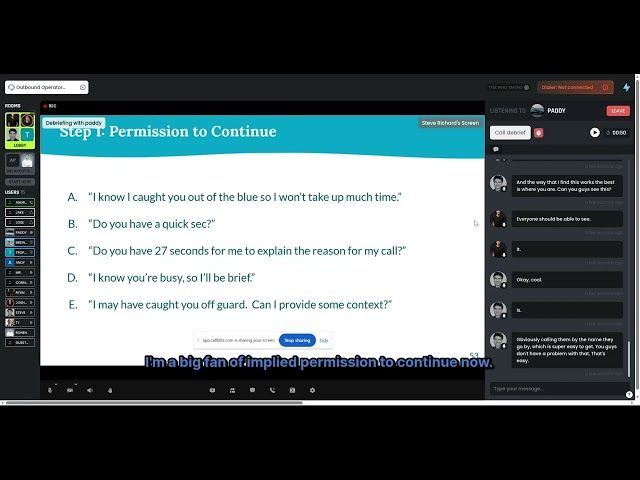
In a recent LinkedIn post, Ryan 🏋️☎️ Reisert discusses a common pitfall in sales calls: confirming a prospect’s role too late in the conversation. This delay, as Ryan 🏋️☎️ Reisert points out, can lead to defensiveness and hinder effective communication.
Ryan 🏋️☎️ Reisert emphasizes that addressing a prospect’s responsibilities upfront is crucial for a smoother and more productive sales engagement. He notes the tendency for sales representatives to probe for role confirmation only after significant discussion has already occurred.
The Pitfall of Late Role Confirmation
According to Ryan 🏋️☎️ Reisert, the timing of confirming a prospect’s role is critical. Waiting too long can create an adversarial dynamic, making the prospect less willing to share information or be open to solutions. This is because they may feel their time has been wasted or that the salesperson is not adequately prepared.
Ryan 🏋️☎️ Reisert states:
Most reps confirm the prospect’s role too late on a call.
If at all.
Confirming too late = they get too defensive to answer.
This observation underscores a fundamental challenge in sales conversations. When a salesperson fails to establish early on whether they are speaking with the correct decision-maker or influencer, the entire interaction can be compromised.
Ryan 🏋️☎️ Reisert’s Recommended Solution
To counteract this issue, Ryan 🏋️☎️ Reisert advocates for a proactive approach, drawing from a coaching session with Steve Richard. The proposed fix involves confirming responsibilities at the beginning of the call. This establishes clarity and respect for the prospect’s time and position.
Ryan 🏋️☎️ Reisert suggests specific phrasing to achieve this:
“𝘔𝘺 𝘶𝘯𝘥𝘦𝘳𝘴𝘵𝘢𝘯𝘥𝘪𝘯𝘨 𝘪𝘴 𝘺𝘰𝘶’𝘳𝘦 𝘪𝘯 𝘤𝘩𝘢𝘳𝘨𝘦 𝘰𝘧…” or
“𝘐 𝘸𝘢𝘴 𝘱𝘰𝘪𝘯𝘵𝘦𝘥 𝘪𝘯 𝘺𝘰𝘶𝘳 𝘥𝘪𝘳𝘦𝘤𝘵𝘪𝘰𝘯 𝘢𝘴 𝘰𝘷𝘦𝘳𝘴𝘦𝘦𝘪𝘯𝘨…”
This direct yet polite method aims to quickly ascertain the prospect’s involvement without being overly aggressive. The key is to frame it as the salesperson’s current understanding, opening the door for correction.
Pivoting When Necessary
A vital part of Ryan 🏋️☎️ Reisert’s strategy is the immediate pivot if the initial confirmation is incorrect. If the person on the call is not who the salesperson intended to reach or does not hold the relevant responsibility, the next step is to identify the right contact.
As Ryan 🏋️☎️ Reisert advises:
If the prospect says no, you pivot to “𝗪𝗵𝗼 𝗱𝗼𝗲𝘀?”
This agile response ensures that the sales effort remains focused and efficient, preventing wasted time on misdirected conversations. By quickly identifying the correct point of contact, sales professionals can maximize their chances of engaging with the appropriate decision-makers.
In essence, Ryan 🏋️☎️ Reisert’s insights from his LinkedIn post offer a practical and effective method for sales professionals to improve their call structure, enhance prospect engagement, and ultimately drive better sales outcomes by respecting the prospect’s role and time from the outset.
📝 About This Content
This article is based on insights shared by Ryan 🏋️☎️ Reisert on LinkedIn.
📅 Originally posted on April 30, 2026 | View original post on LinkedIn →