
In a recent LinkedIn post, 1johncastro discusses a counterintuitive approach to business scaling, arguing that simply acquiring more clients is not the answer for sustainable growth. According to 1johncastro, if a business owner is still indispensable for daily operations, adding more clients can paradoxically worsen their situation.
1johncastro highlights this point by referencing a construction business owner he is working with, who generates approximately £1.6 million annually and is fully booked for the next 6-9 months. Despite this apparent success, the business owner faces challenges not related to sales, but to internal structure.
“His problem is not getting clients. His problem is taking the right clients at the right margin.”
1johncastro explains that the business owner is too overwhelmed with less profitable projects to properly analyze his business’s financial health. This situation, 1johncastro contends, is not a sales issue but a fundamental structural one.
Addressing Structural Deficiencies for Scalability
The core of 1johncastro’s argument centers on the idea that true scalability comes from building a robust internal structure that can handle growth without the owner’s constant, hands-on involvement. He elaborates on the solution implemented for the construction business owner:
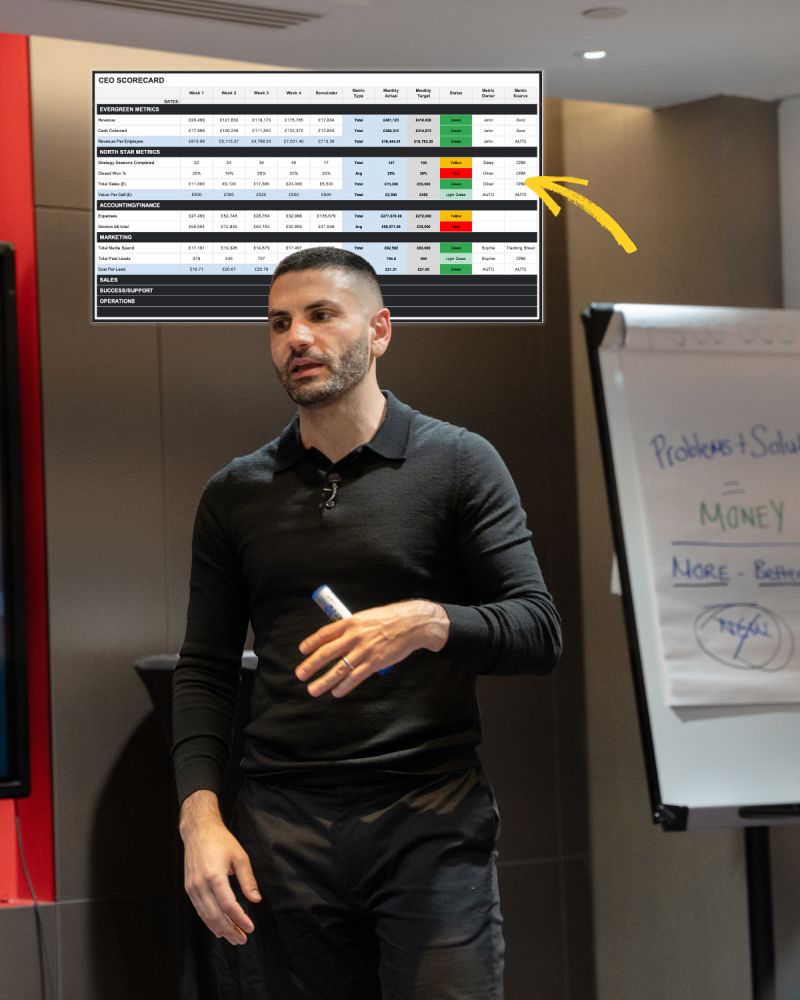
“So we built him a series of scorecards. Now he can see which jobs are truly profitable. And he can go and get more of those.”
These scorecards provide the clarity needed to identify and prioritize the most profitable ventures. As 1johncastro notes, this data-driven approach empowers both the owner and the team to focus their efforts effectively. The result is a business that no longer solely relies on the owner’s presence, enabling him to achieve a better work-life balance.
The Impact of Structural Solutions on Business Freedom
1johncastro emphasizes that structural problems require structural solutions. By implementing scorecards and gaining a clear view of profitability, the construction business owner has experienced significant improvements in his quality of life.
Achieving Business Autonomy
The post details the tangible benefits of this structural overhaul:
- The business owner has already taken three holidays by May, indicating a reduced need for his constant attention.
- The team can now operate with clarity, knowing where to focus based on the data provided by the scorecards.
- This shift allows the business to scale effectively because its operations are no longer bottlenecked by the owner’s availability.
1johncastro concludes by suggesting that business owners often face challenges because they are unaware of what they don’t know about their own operations. He offers his “Self-Scaling Memo” newsletter as a resource, which includes scorecard templates designed to help businesses build systems that run without constant owner intervention.
“Structural problems have structural solutions.”
This perspective challenges the common advice that more clients are always the key to scaling, instead advocating for a focus on internal efficiency and profitability analysis as the true drivers of sustainable business growth.
📝 About This Content
This article is based on insights shared by 1johncastro on LinkedIn.
📅 Originally posted on May 28, 2026 | View original post on LinkedIn →